(551) 291-1010
Home
Solid Hardwood
PrefinishedSite-Finished
Engineered Hardwood
PrefinishedSite-Finished
Waterproof & LVP
Waterproof & LVP →
Which Floor?ContractorsAboutGalleryContact
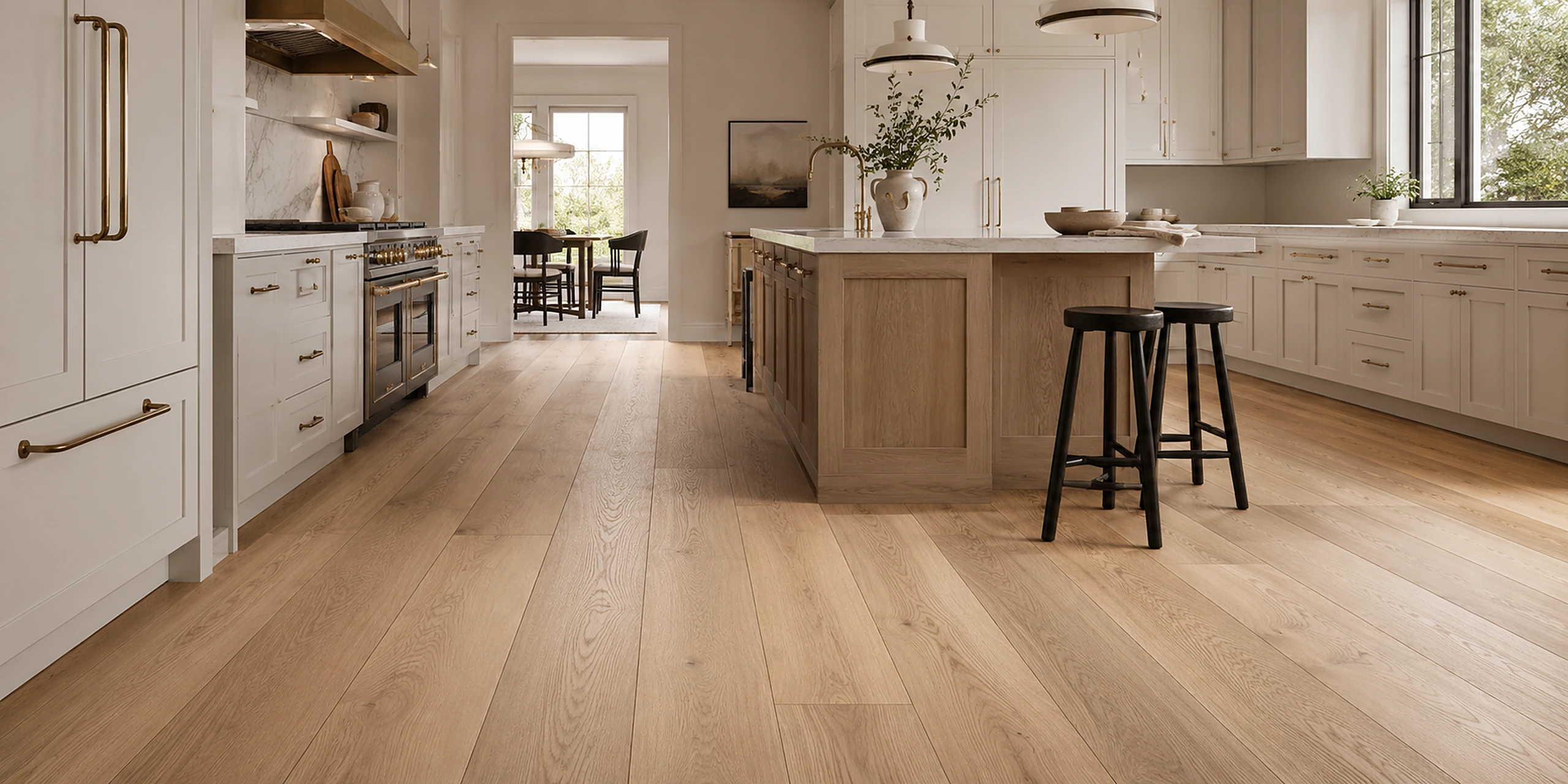
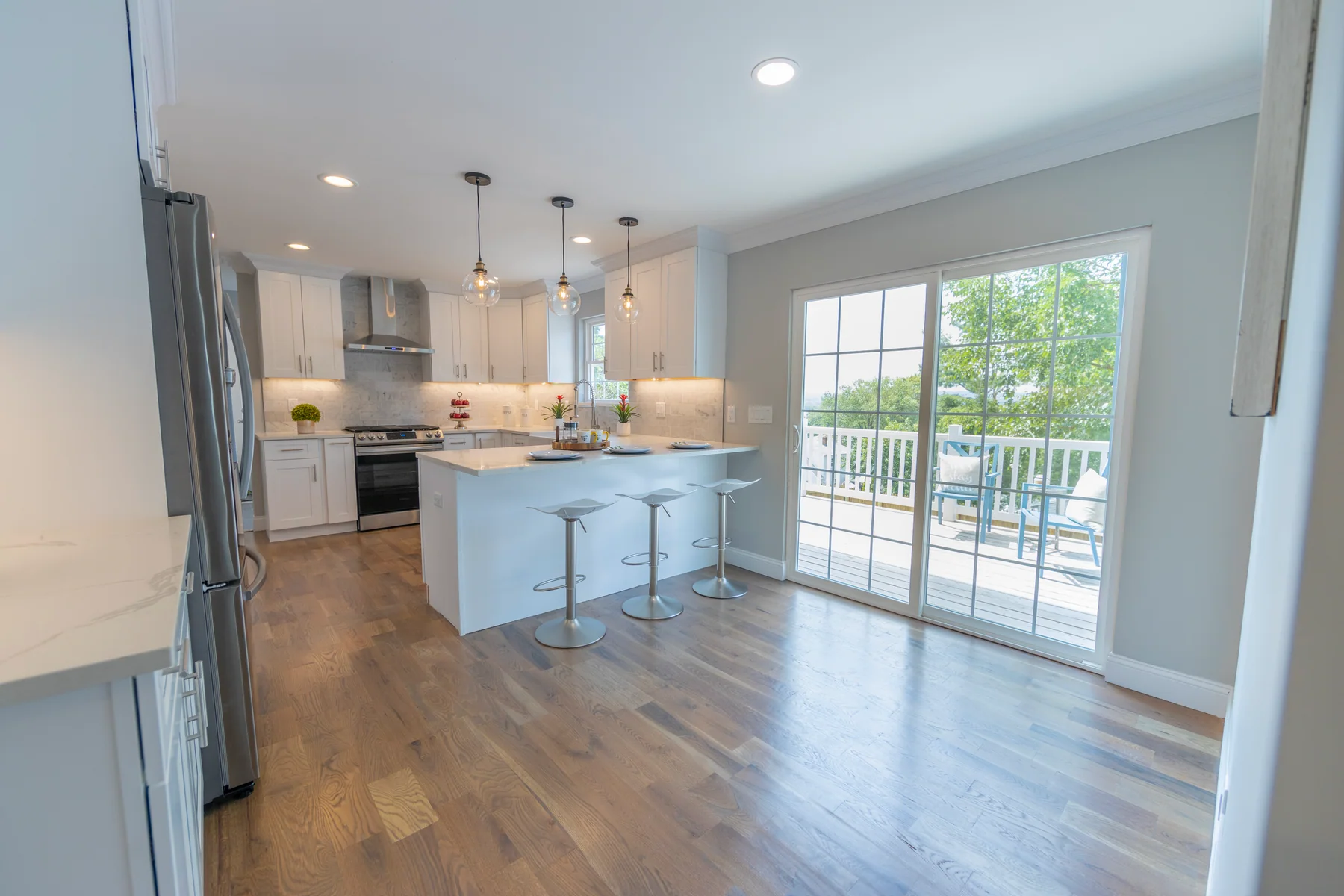
Wide-plank white oak engineered floor in a sunlit open-plan kitchen
Engineered Hardwood · Prefinished

Real Hardwood,
Engineered to Go Anywhere.

Real wood over a stable engineered core, finished at the factory. Goes where solid can't — basements, concrete slabs, radiant heat.

Access to leading manufacturers — every species, tone & texture in this category
Construction

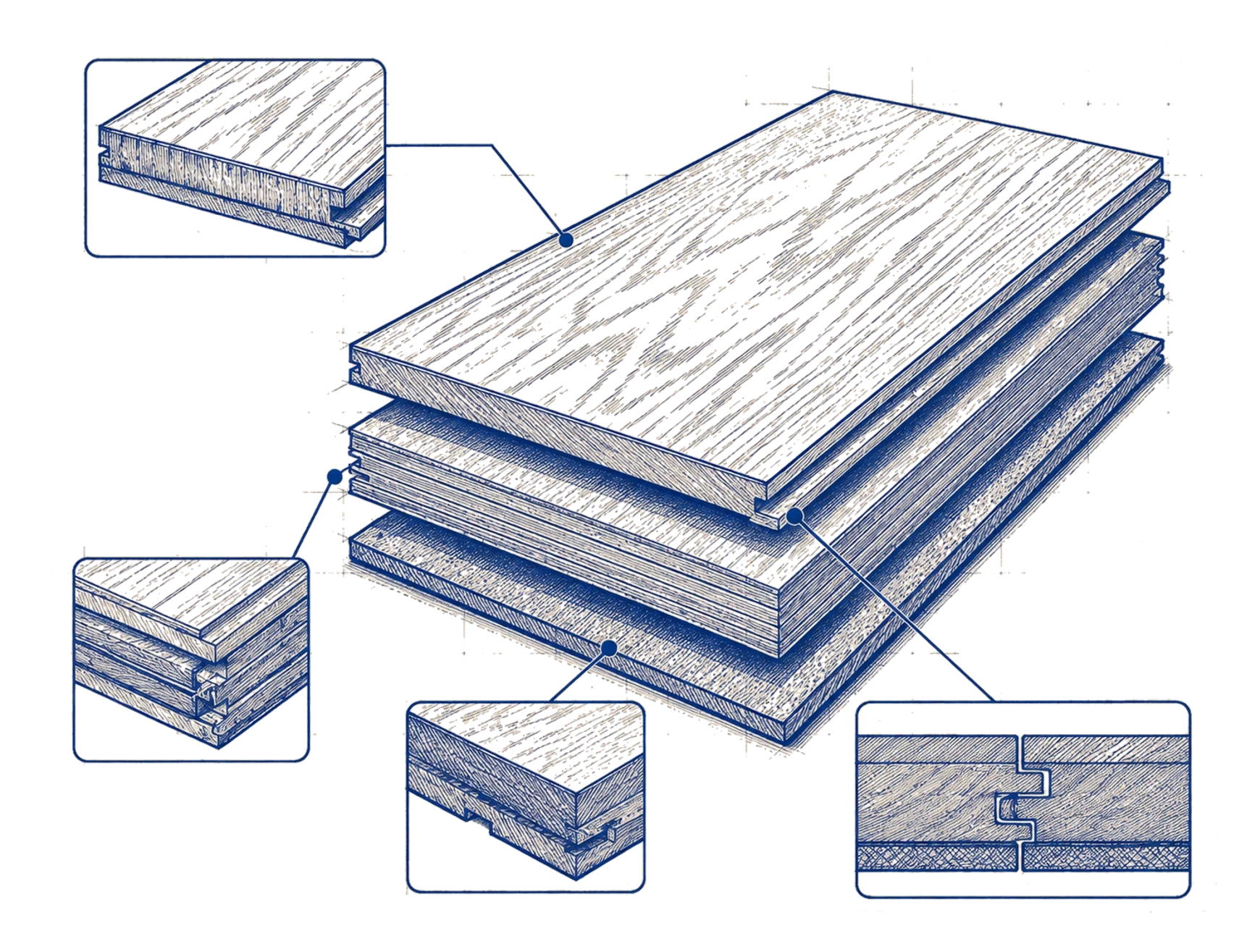
Real wood on top. Engineering underneath.

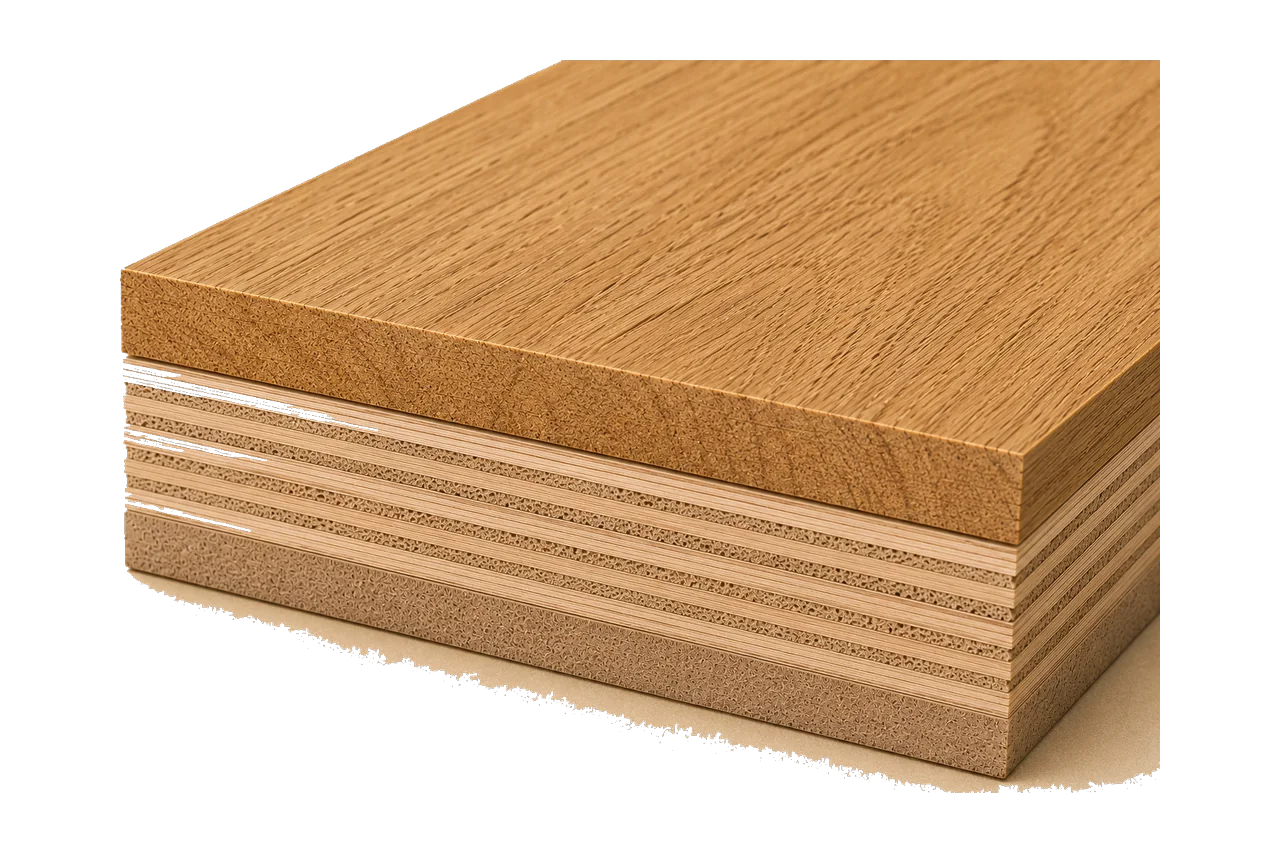
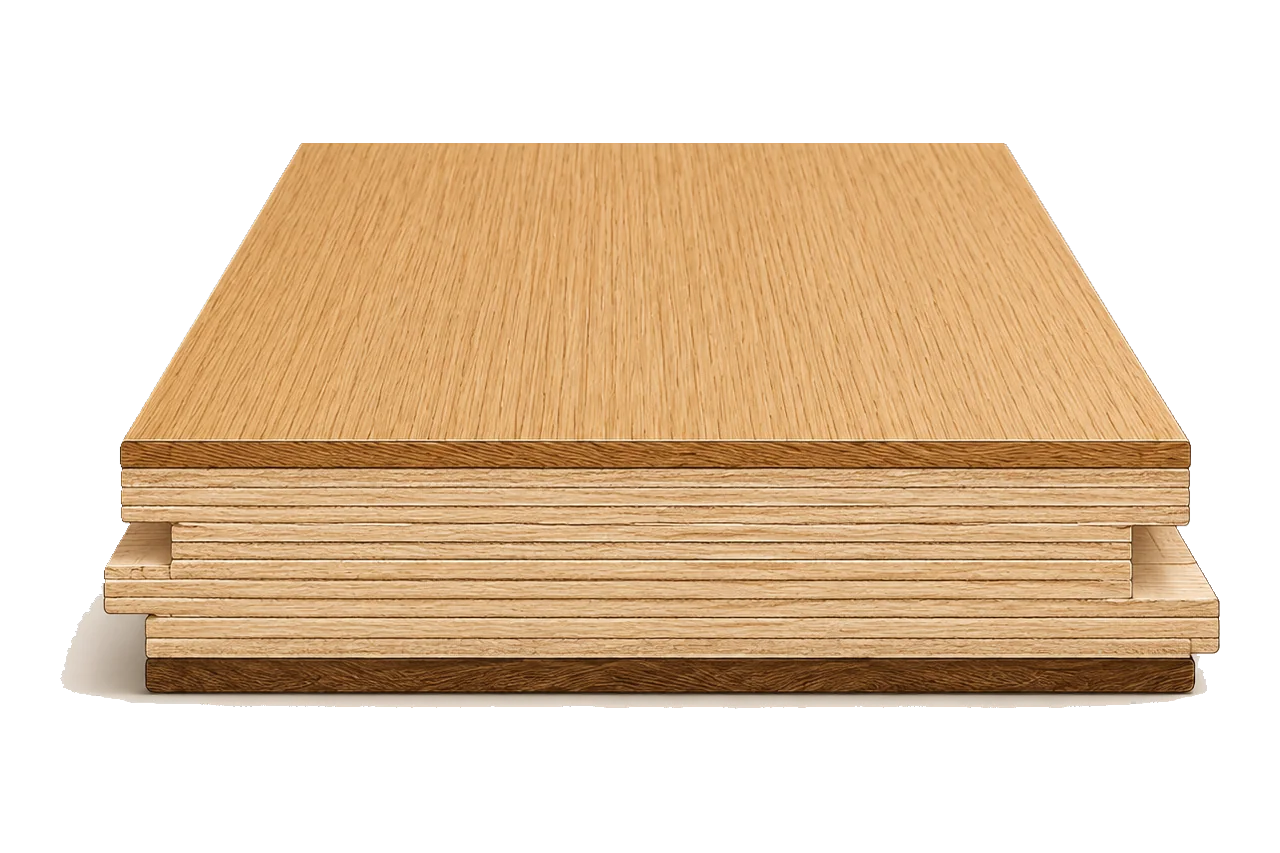
Engineered hardwood is genuine hardwood — the surface you see and walk on is real wood, the same species and character as solid plank. Underneath, layers of crossed wood plies replace the single board, giving the floor its stability.
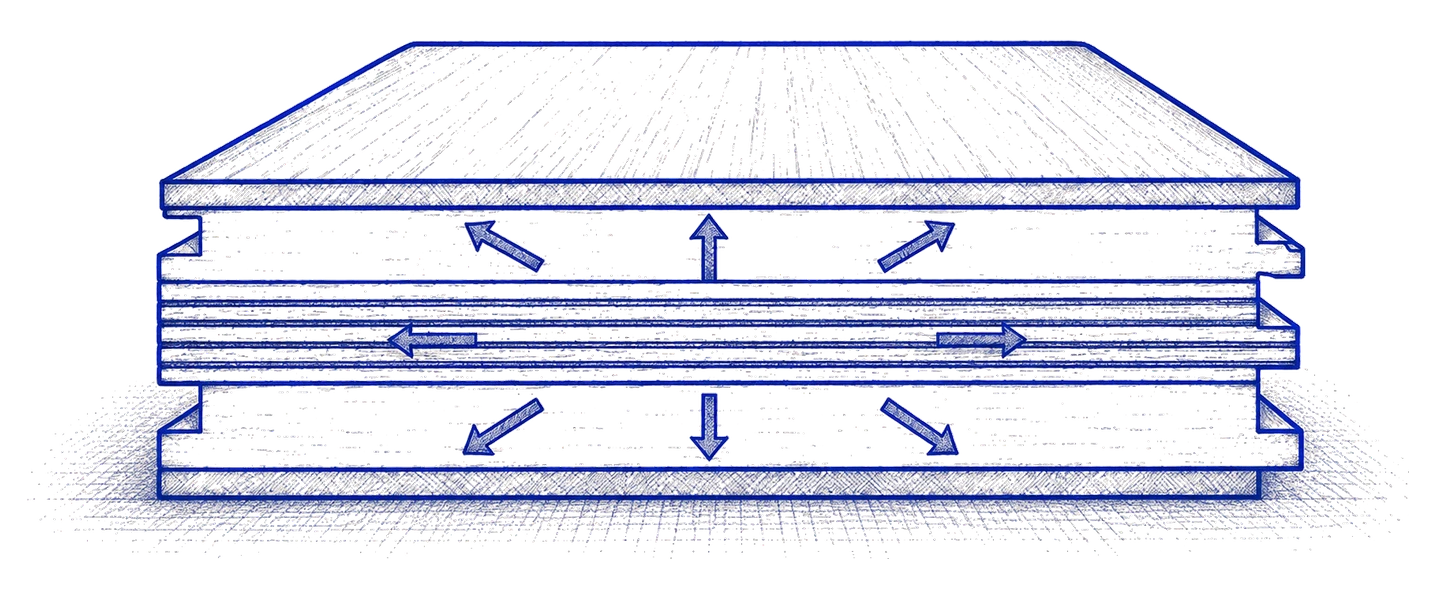
Blueprint cutaway of an engineered plank with arrows showing each ply running perpendicular to the one below1
Blueprint exploded view of engineered hardwood: a real-wood wear layer above cross-grain core plies and a balancing backing, with detail insets for the wear layer, the layered core, the backing, and the tongue-and-groove joint.2345
1Cross-Grain ConstructionEach ply runs perpendicular to the one below, reducing natural wood movement
2Wear Layer — Real Hardwood SurfaceGenuine hardwood on top — the surface you see, walk on, and live with · 0.6–6 mm
3Core — Stabilizing LayersMultiple wood plies — plywood or HDF — bonded under pressure give the plank its structure and stability
4Backing — Balance LayerA balancing bottom layer that helps the plank stay stable over the subfloor
5Tongue & Groove EdgesPrecision-milled edges lock planks together for a tight, even fit
6Movement, BalancedExpansion along the grain is resisted by the layered core, helping the plank stay flat
Blueprint side view of an engineered plank with arrows showing expansion along its length balanced by the layered core pressing it flat6

The result: a floor that handles seasonal humidity swings better than a single solid board.

Real Hardwood Surface

The same real wood species, grain, and feel you expect from hardwood.

Built for Stability

Helps resist seasonal movement from humidity and temperature changes.

Refinish Potential

Thicker wear layers can often be sanded and refinished in the future.

Explore the Look

Find your floor by look, not by spec sheet

Start with the look you want, then we'll help narrow the right species, grade, cut, and width. Species sets the grain and character; on a prefinished engineered floor the color comes from the collection you choose — so you pick the grain, then choose the collection color and finish.
Domestic Hardwoods
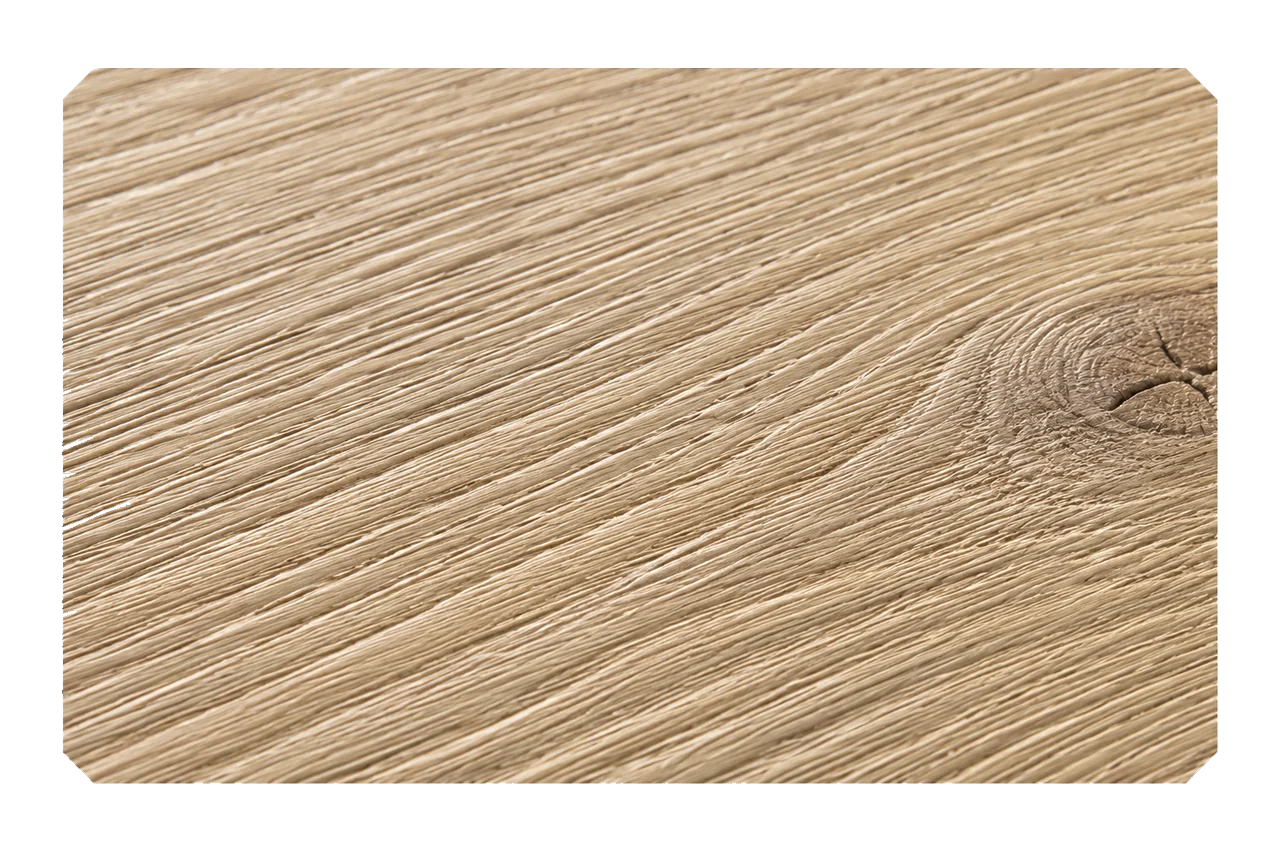
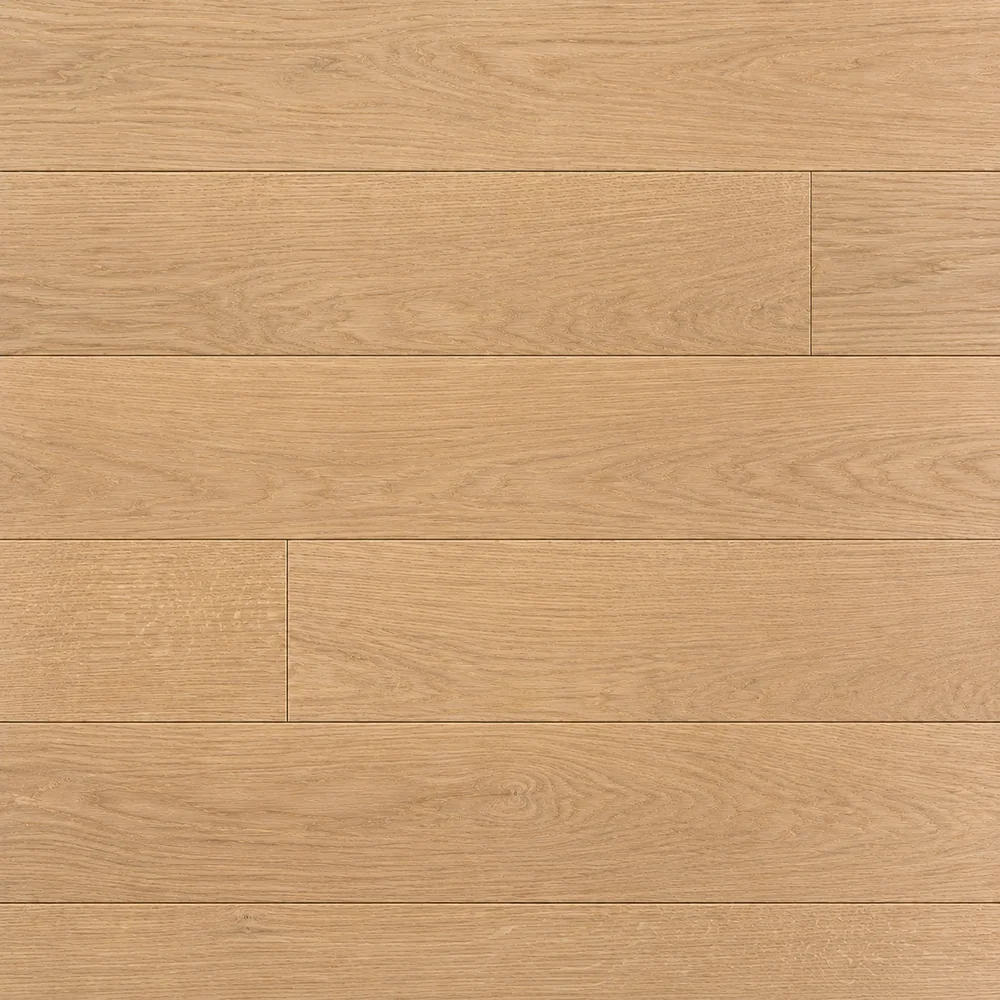
White Oak close-up
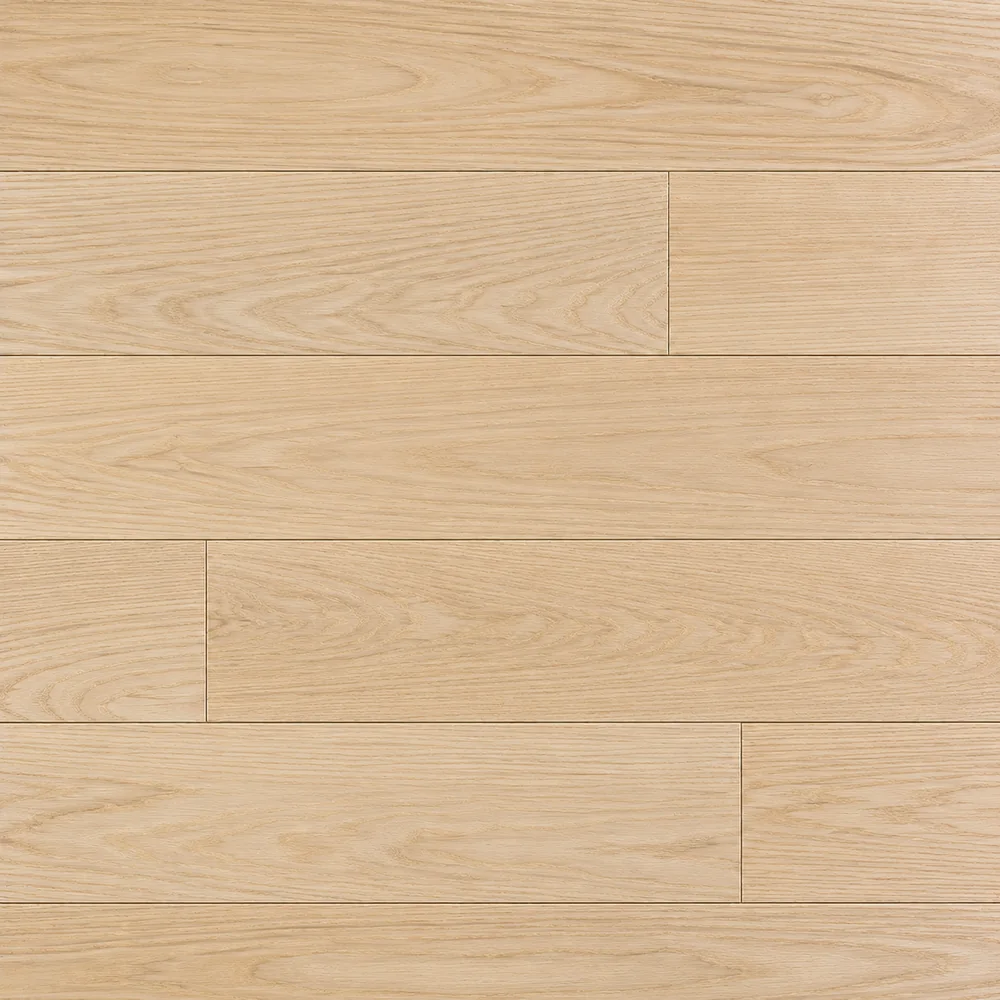
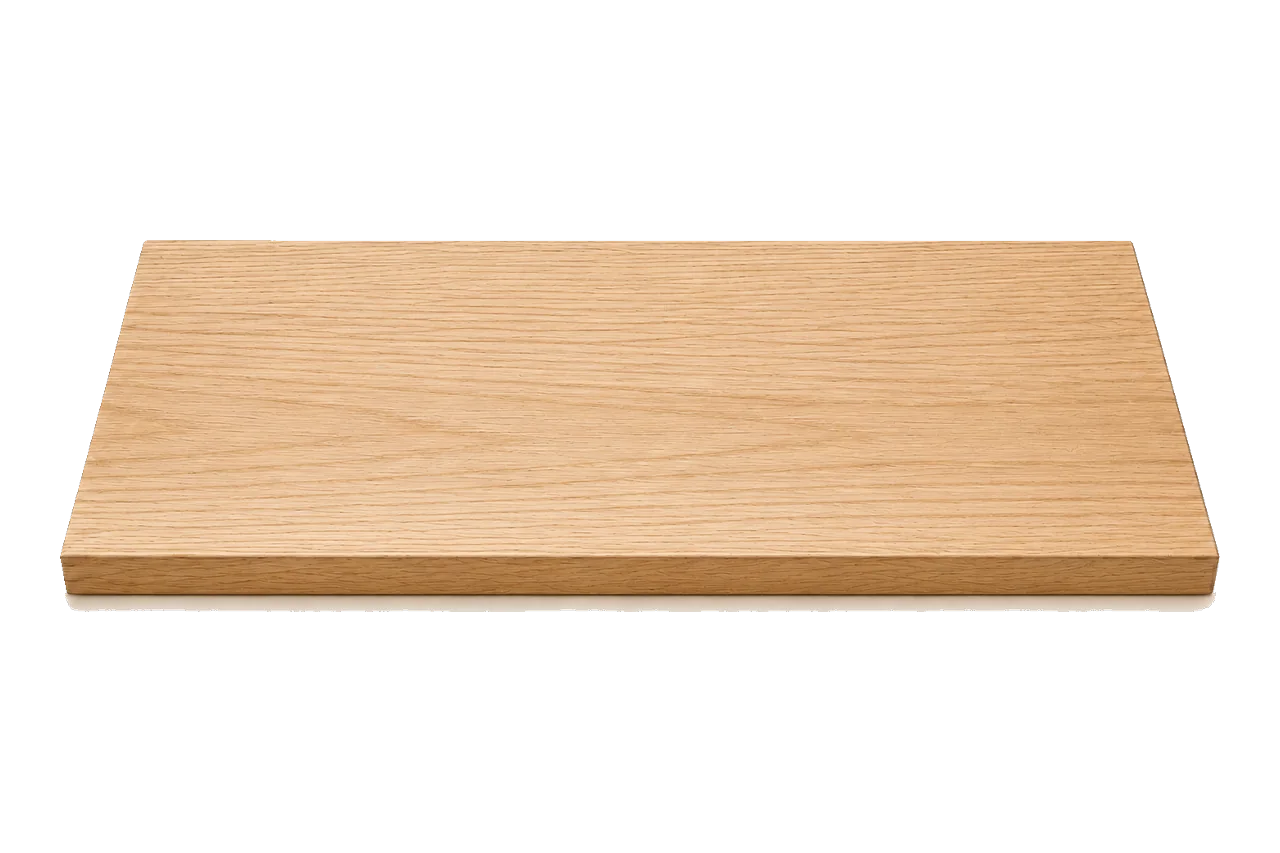
White Oak
Modern, neutral, and versatile
Janka 1,360 · Eastern & Central U.S.
A current favorite for modern interiors. White oak's neutral undertone works well with natural, light golden, beige, grey, and warm brown stains, while its tighter grain gives the floor a clean, timeless look.
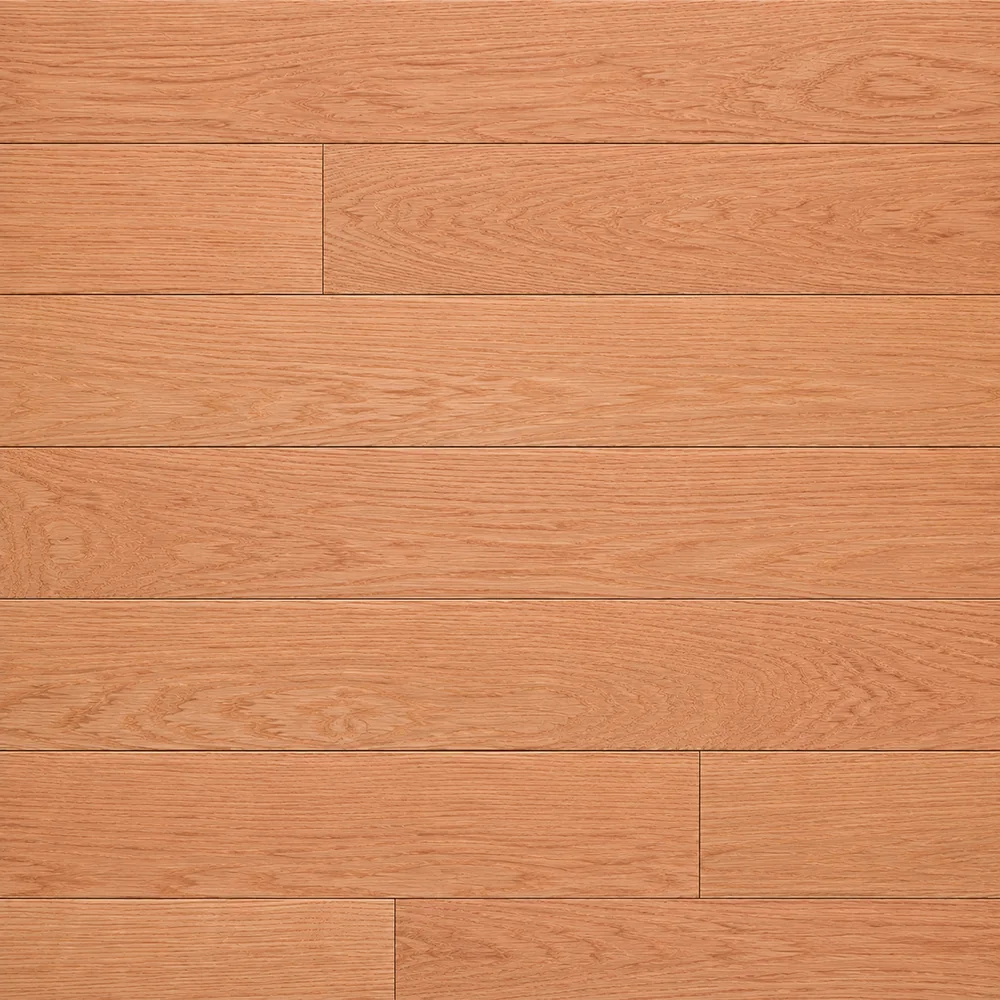
Red Oak close-up
Red Oak
Classic, warm, and traditional
Janka 1,290 · Eastern U.S. & Canada
A classic American flooring species with a more open, visible grain. Red oak takes stain well and remains a strong choice for traditional homes, warm interiors, and refinishing projects where existing red oak is already in place.
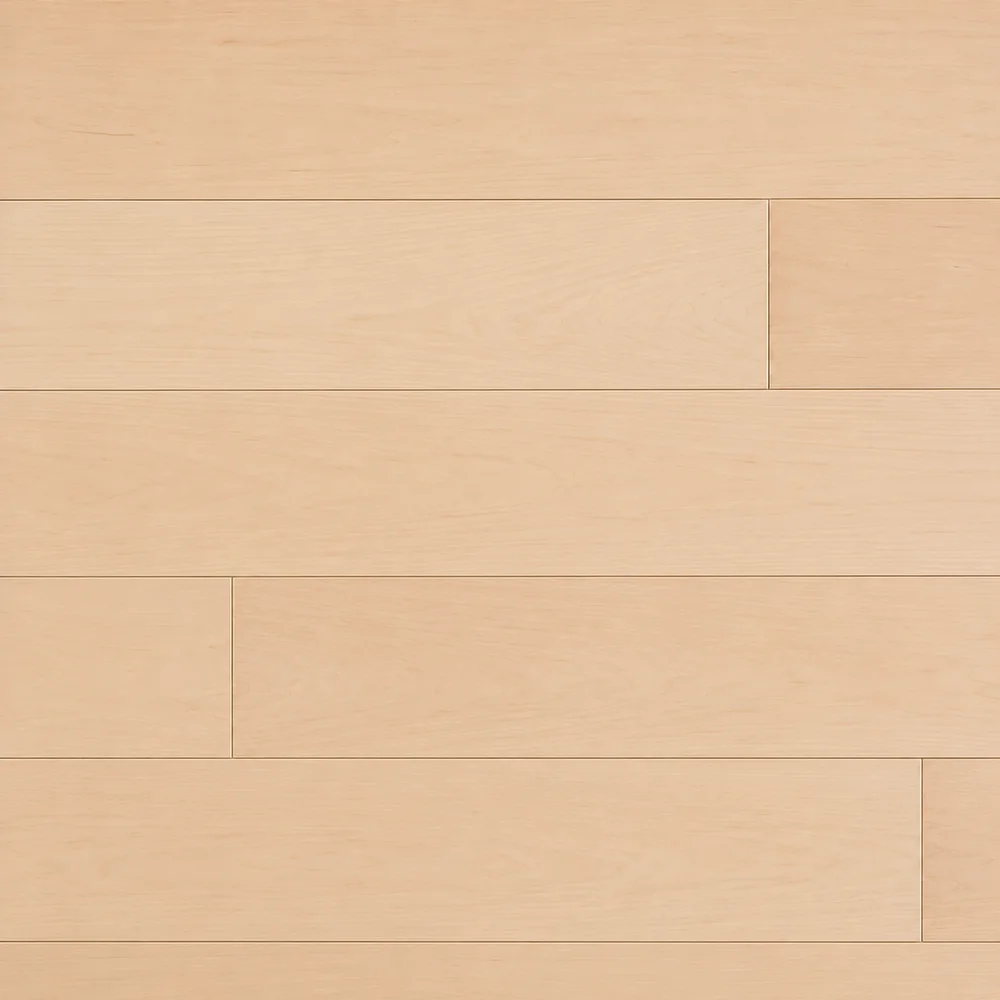
Hard Maple close-up
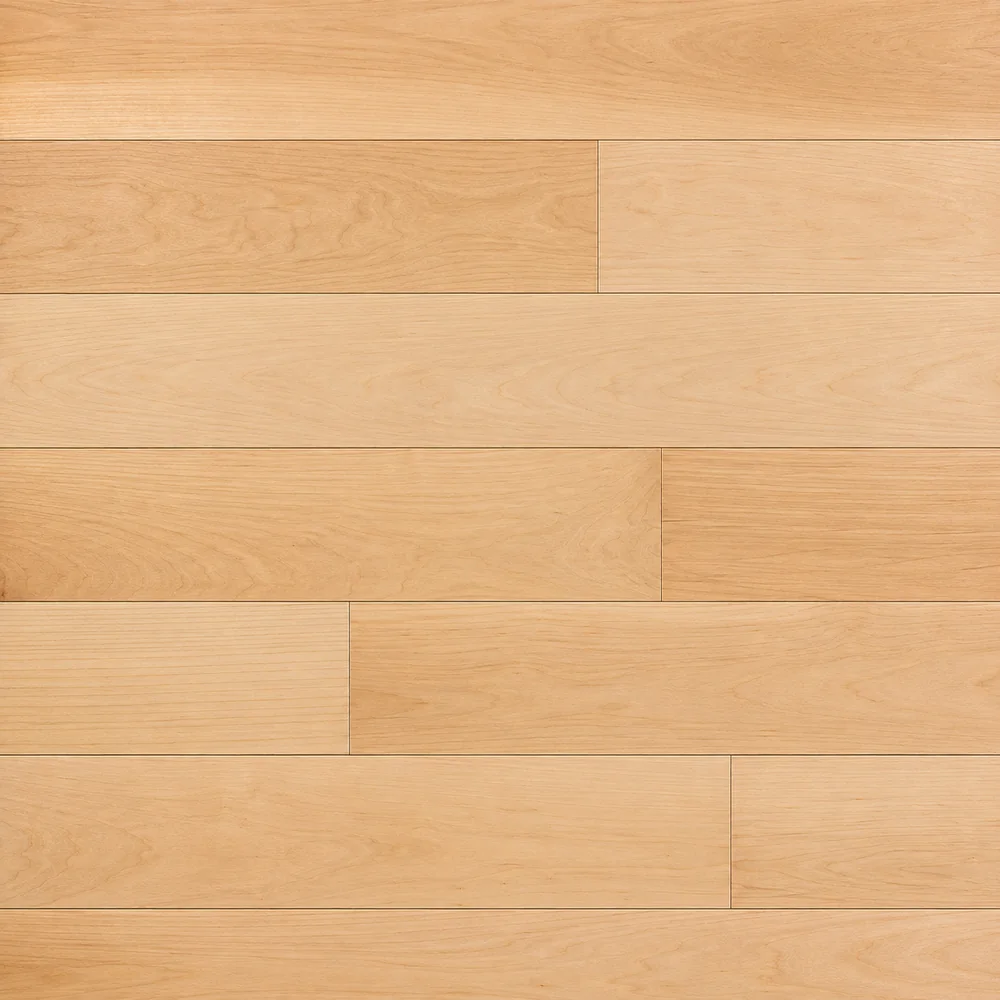
Hard Maple
Smooth, bright, and contemporary
Janka 1,450 · Northeastern U.S. & Canada
A dense, smooth-grained hardwood with a bright, clean appearance. Maple works well in modern spaces, though its tight grain can make stain selection more sensitive than oak.
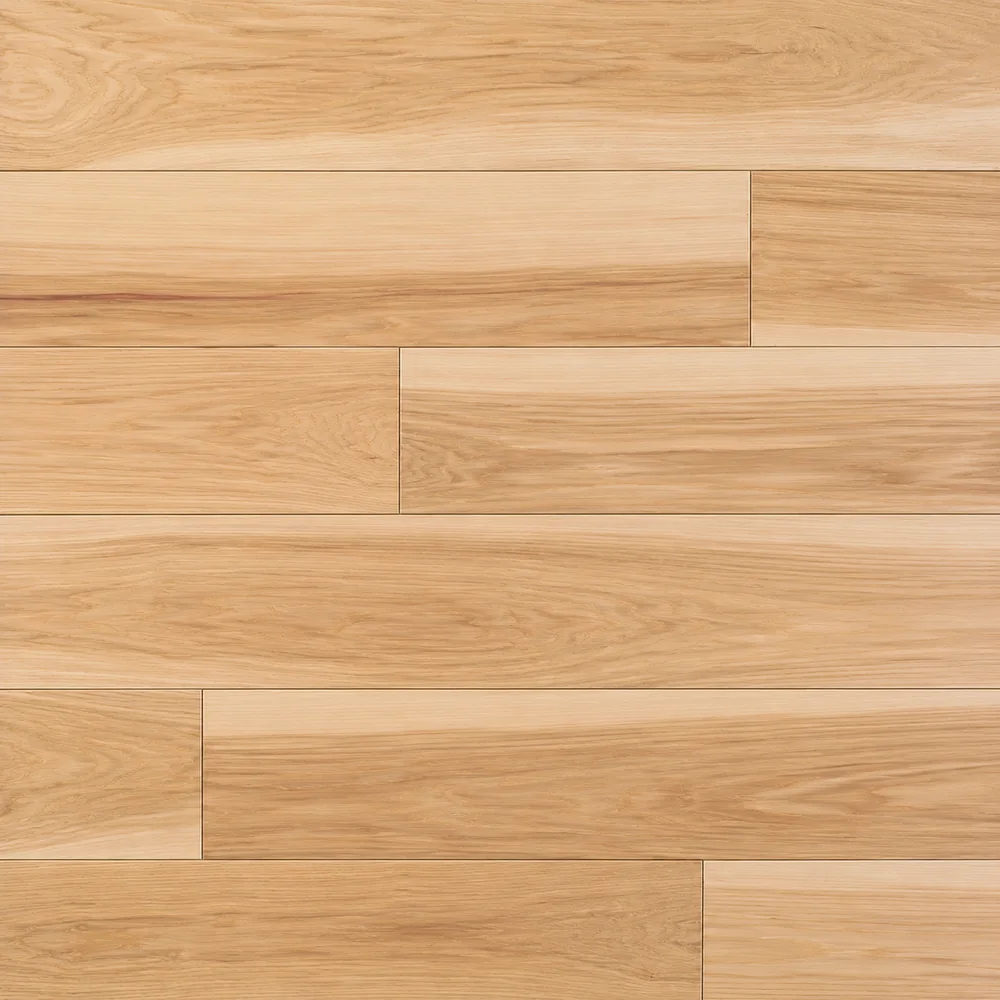
Hickory close-up
Hickory
Bold, rugged, and character-rich
Janka 1,820 · Eastern & Central U.S.
A very hard domestic hardwood with bold grain movement and strong natural color variation. Hickory is a good fit when you want a floor with visible character, contrast, and durability.
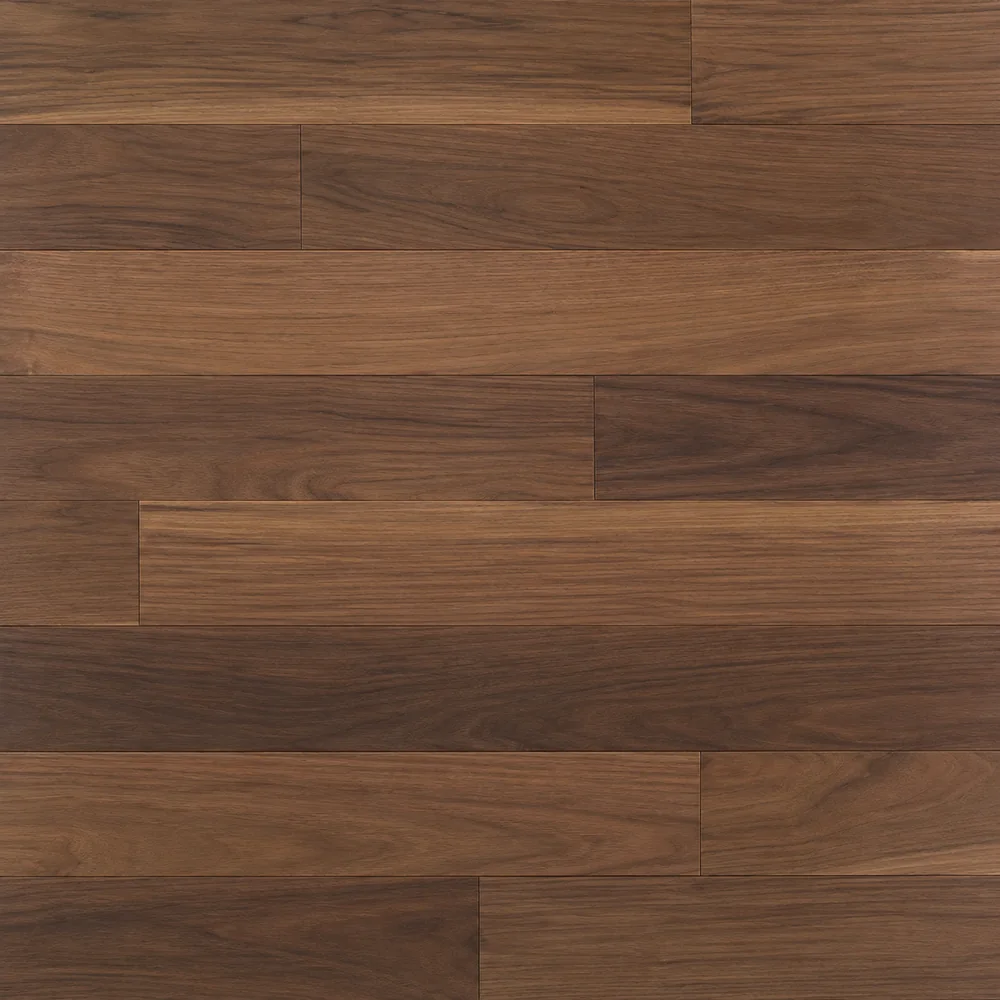
American Black Walnut close-up
American Black Walnut
Rich, warm, and sophisticated
Janka 1,010 · Central & Eastern U.S.
Known for its rich chocolate-brown color and elegant grain. Walnut is softer than oak or hickory, so it's often chosen for its warmth and luxury feel rather than maximum hardness.
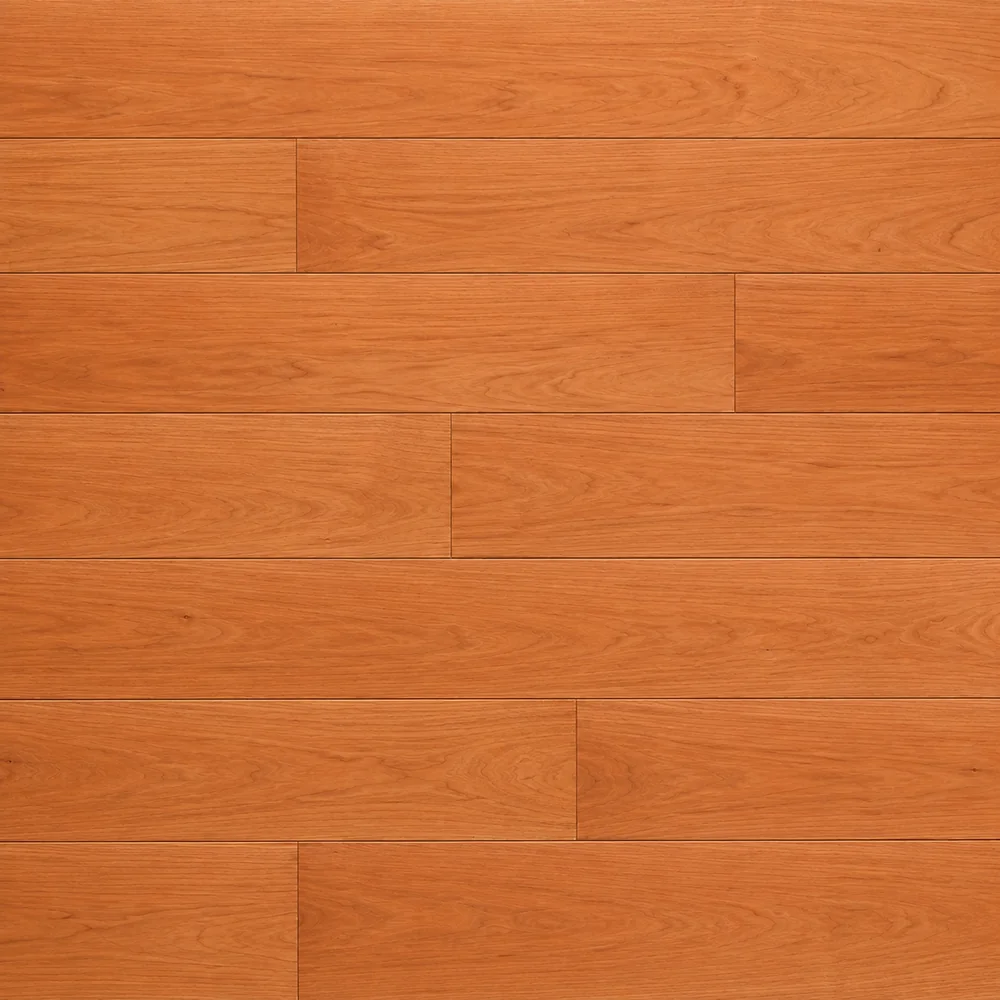
American Cherry close-up
American Cherry
Warm, elegant, and traditional
Janka 950 · Eastern U.S.
A warm hardwood with a smooth, flowing grain that darkens noticeably with age and sunlight. Cherry is best for clients who like a richer, more traditional color story.
Birch (Yellow / Sweet) close-up
Birch (Yellow / Sweet)
Clean, subtle, and softly figured
Janka 1,260 · Northeastern U.S. & Canada
A lighter domestic hardwood with subtle grain movement and occasional figure. Birch can offer a clean look at a more approachable price point than some premium species.
Ash close-up
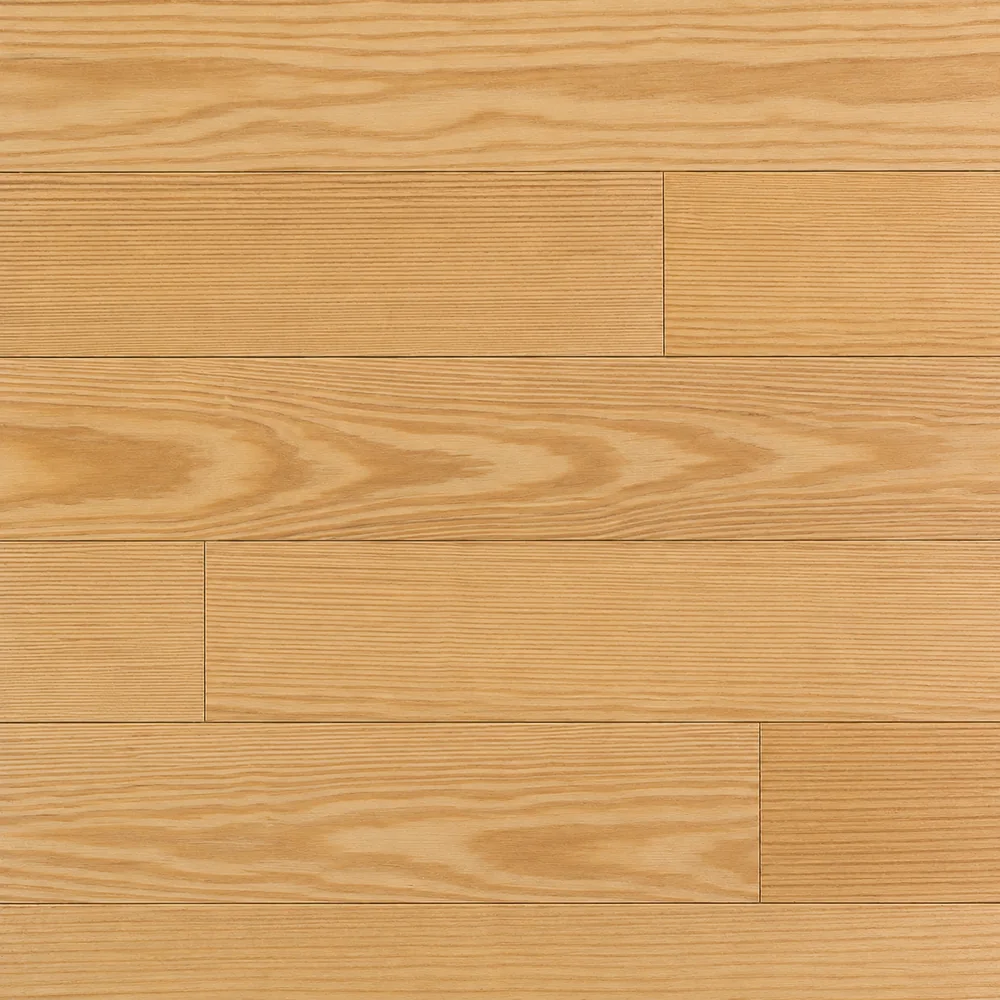
Ash (American White)
Bright, open-grained, and lively
Janka 1,320 · Eastern U.S. & Canada
Ash has a bright tone and prominent grain, giving it a lively look similar to oak but often lighter in appearance. Availability can vary, so it's worth checking current sourcing.
Southern Yellow Pine close-up
Southern Yellow Pine
Warm, traditional, and full of character
Janka 690–870 · Southeastern U.S.
Technically a softwood, Southern Yellow Pine has a warm tone and traditional character. In engineered form it’s usually offered as a surface veneer, which suits older homes, country interiors, and more relaxed spaces.
Imported Exotic Hardwoods

Imported and exotic species can offer dramatic color, hardness, and grain, but availability, sourcing, color change, and installation considerations vary widely. We'll help confirm whether a species makes sense for your project before recommending it.
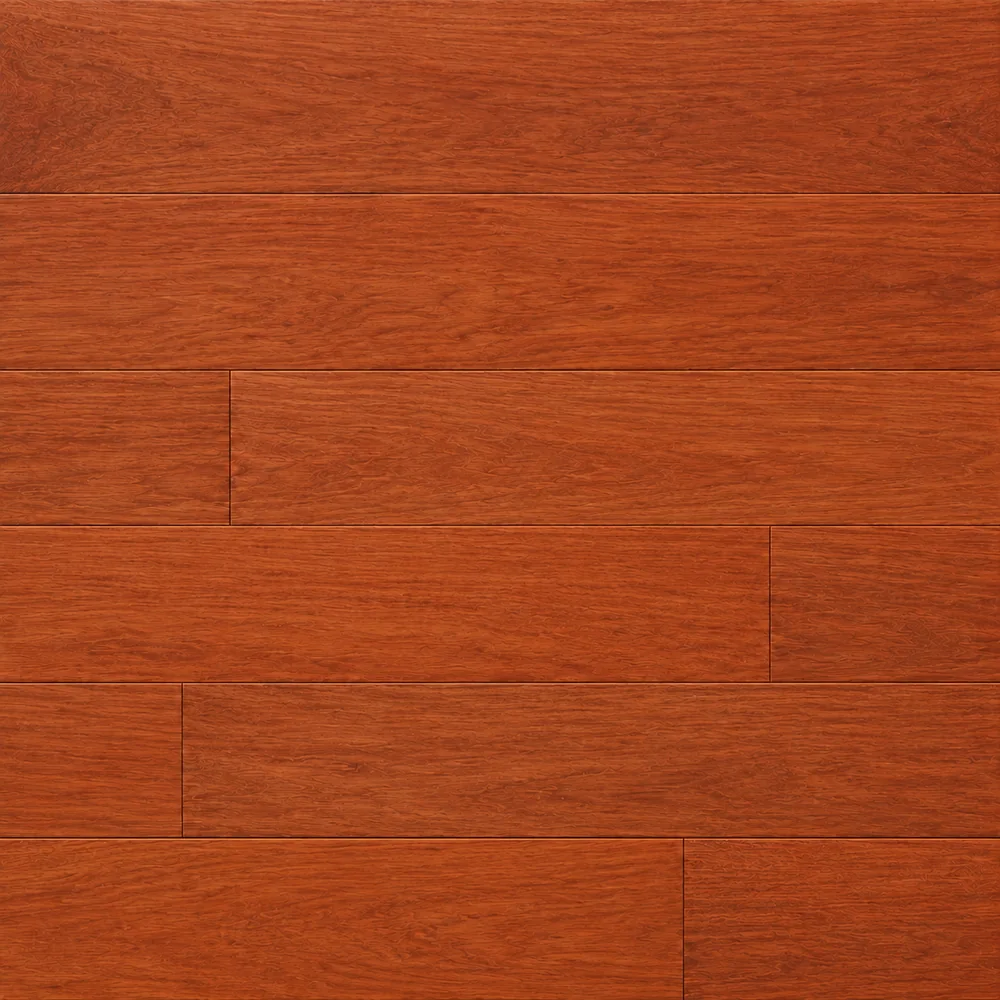
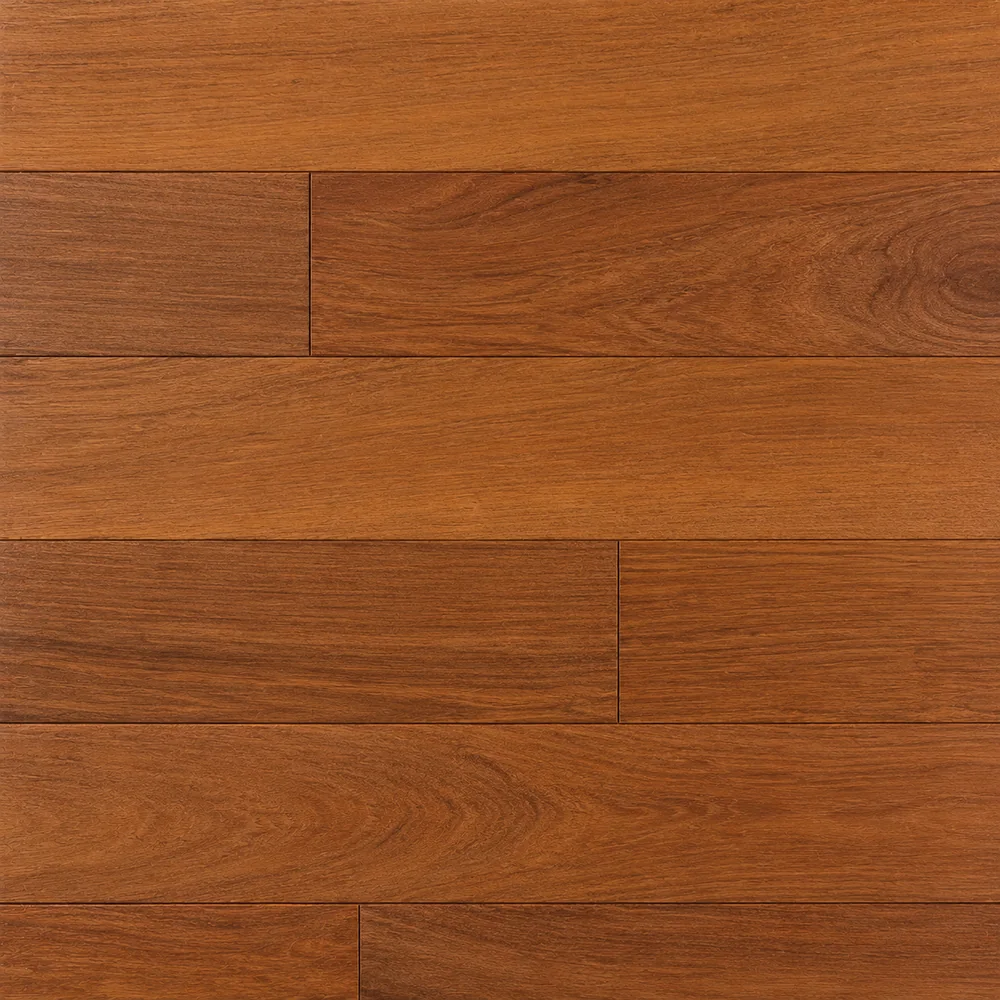
Brazilian Cherry (Jatoba) close-up
Brazilian Cherry (Jatoba)
Rich red-brown and amber tones
Janka 2,350 · Central & South America
A dense exotic hardwood known for warm red-brown and amber tones that deepen significantly with light exposure. Best for clients who want a bold, traditional exotic look.
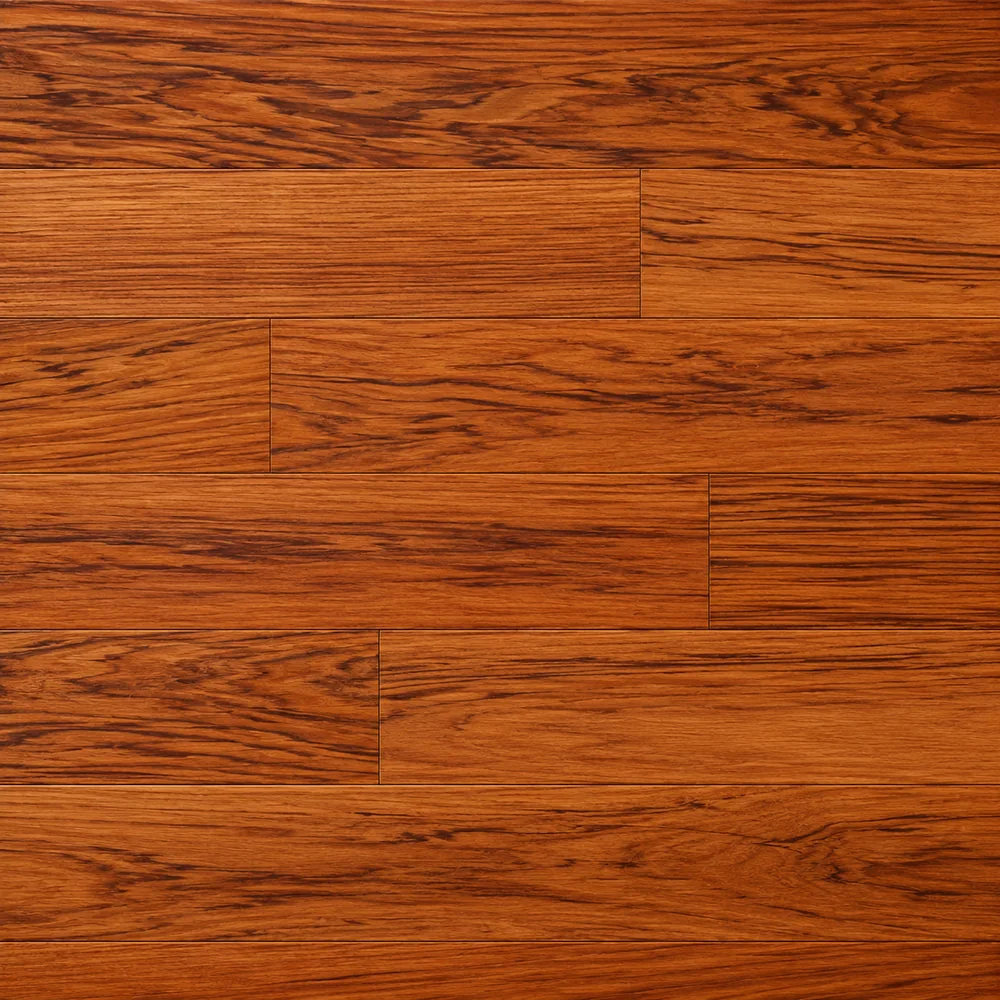
Tigerwood close-up
Tigerwood
Bold, striped, and dramatic
Janka 1,850 · South America
A high-contrast exotic hardwood with orange-brown tones and dark striping. Tigerwood is best when the floor is meant to be a major design feature.
Ipe close-up
Ipe
Dark, dense, and highly durable
Janka 3,680 · Central & South America
An extremely dense hardwood with deep brown to near-black tones. As an engineered veneer, Ipe brings that dramatic, durable look with easier handling than a solid board of the same species.
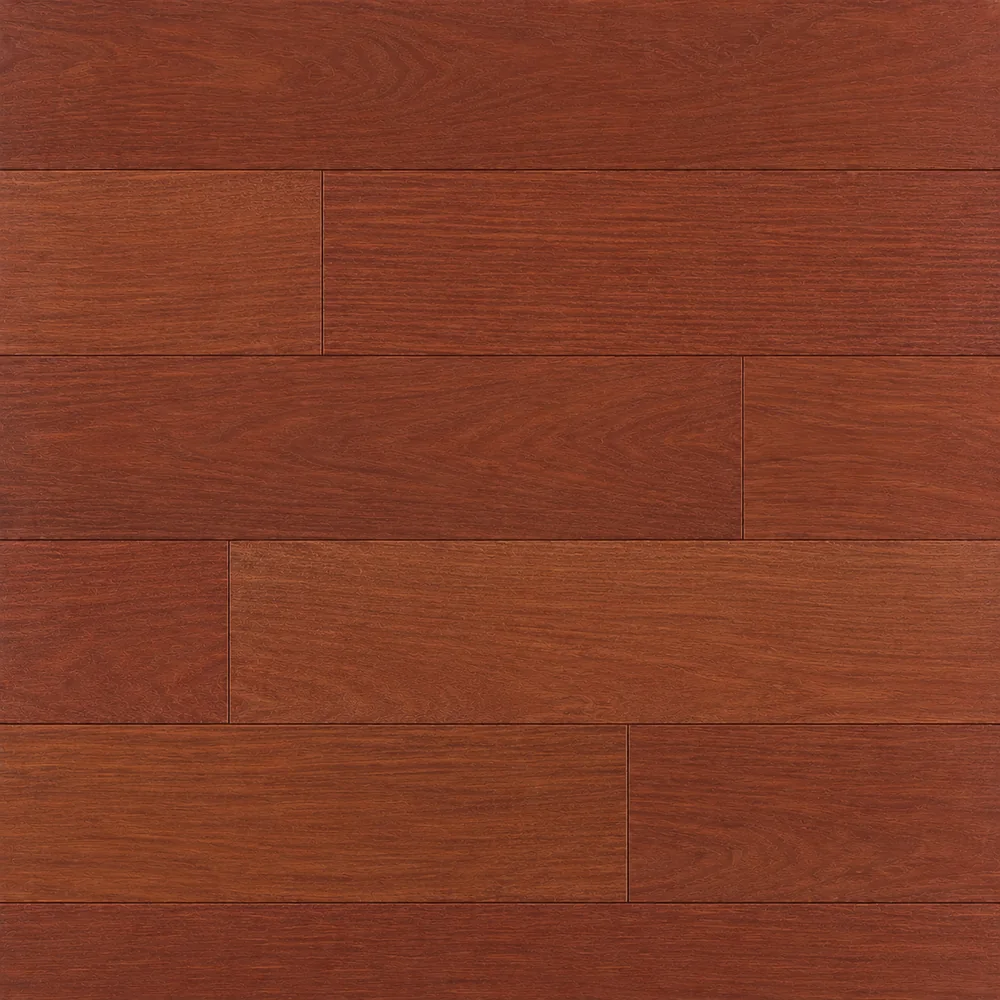
Santos Mahogany close-up
Santos Mahogany (Cabreuva)
Rich, deep red-brown, and refined
Janka 2,200 · S. Mexico, Central & South America
A dense hardwood with a deep red-brown appearance and a refined, consistent look. It's often chosen when a project calls for warmth, depth, and a more formal feel.
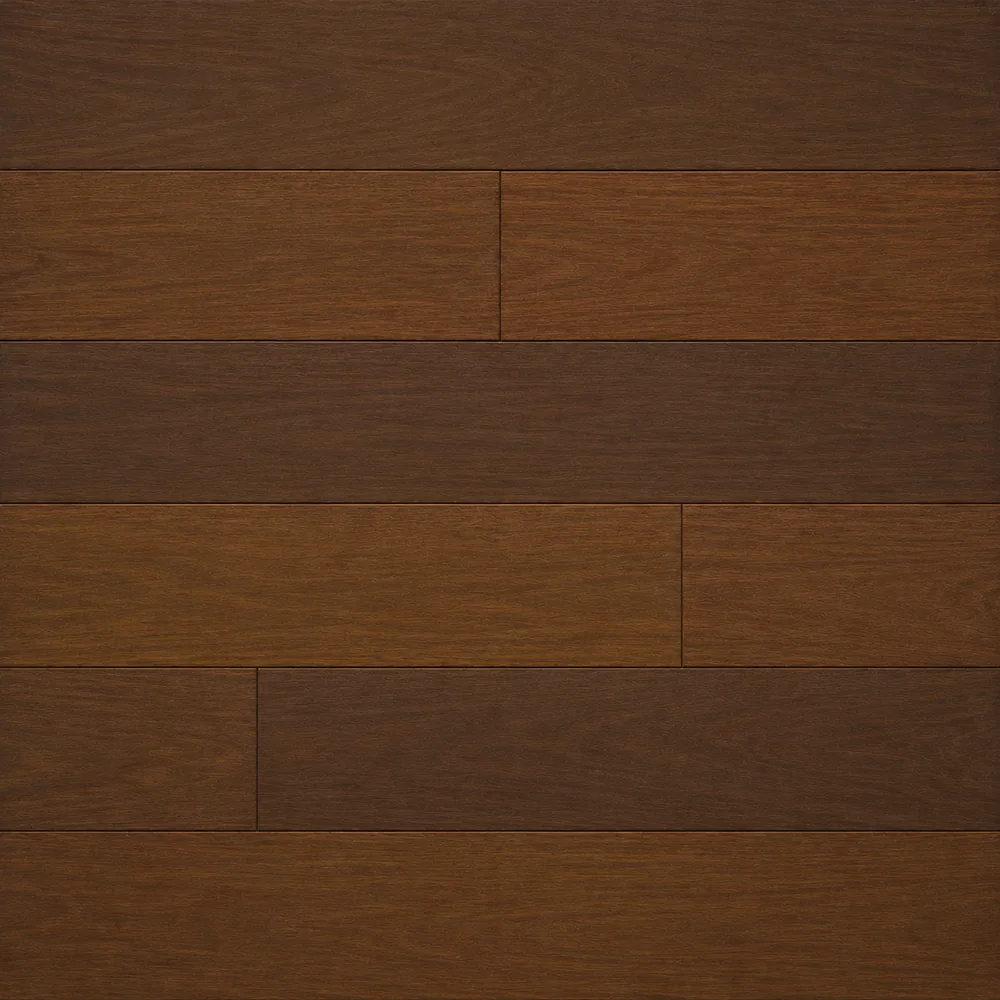
Brazilian Teak (Cumaru) close-up
Brazilian Teak (Cumaru)
Golden-brown, dense, and durable
Janka 3,540 · South America
A very dense exotic hardwood with golden-brown to tan coloring and subtle grain movement. Cumaru is a strong option when durability and a warm natural tone are both priorities.
Janka Hardness Scale

Dent resistance, by species

A quick reference for how each species stands up to dents and daily wear.

SofterHarder
American Cherry950
American Walnut1,010
Teak1,070
Yellow Birch1,260
Red Oak1,290
Beech1,300
White Ash1,320
White Oak1,360
European Oak1,360
Hard Maple1,450
Hickory1,820
Pecan1,820
Santos Mahogany2,200
Brazilian Cherry (Jatoba)2,350
Cumaru (Brazilian Teak)3,540
Brazilian Walnut (Ipe)3,680
Harder isn’t pricier. Janka measures dent resistance — not cost, quality, or looks. We help you weigh hardness against the look you want and how the room is used.

Janka values are industry reference figures and vary by source and by individual board.

Installation Patterns

One board, three patterns

The same plank can be laid three ways — the pattern changes the entire character of the room.

Blueprint diagram of straight plank flooring layout
Straight
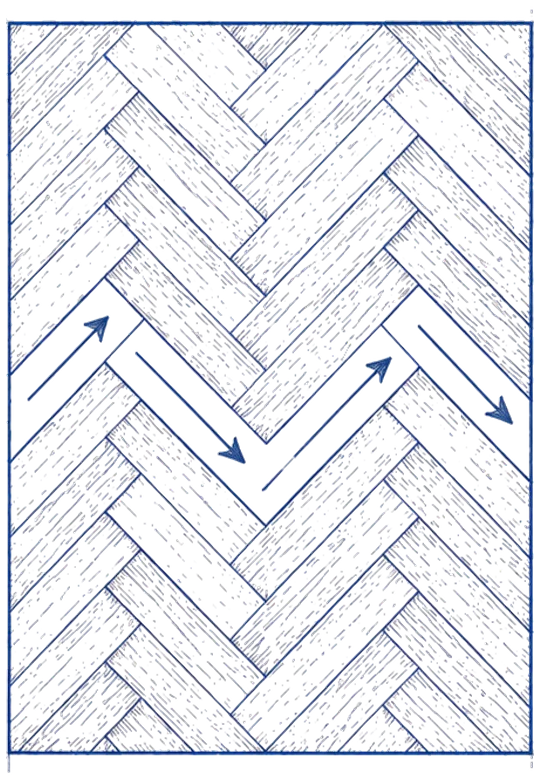
Blueprint diagram of herringbone flooring pattern
Herringbone
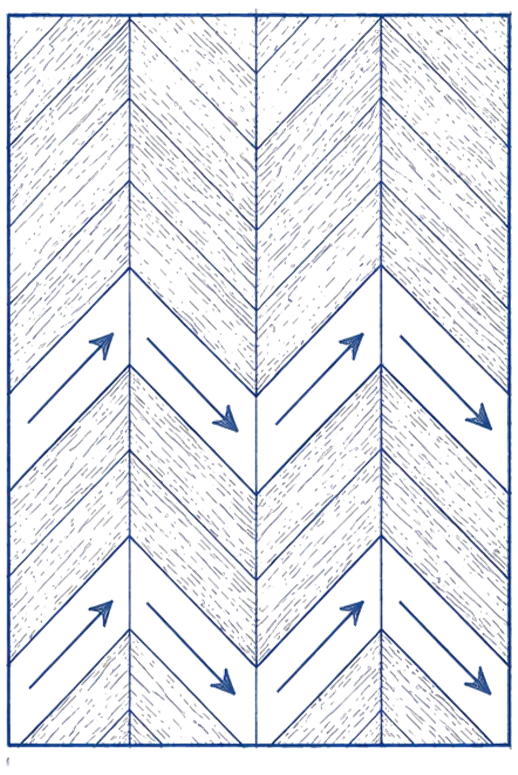
Blueprint diagram of chevron flooring pattern
Chevron

Straight — the classic. Clean lines, timeless, and the most efficient use of material.

Herringbone — boards woven in a broken zigzag. Tailored, European, quietly formal.

Chevron — boards meeting at a point, driving the eye down the room in continuous arrows.
Patterns turn the floor into architecture. Herringbone and chevron take more material and labor — run them wall-to-wall, frame a single room, or border an entry. Ask to see pattern layouts with your sample boards.
In the Room
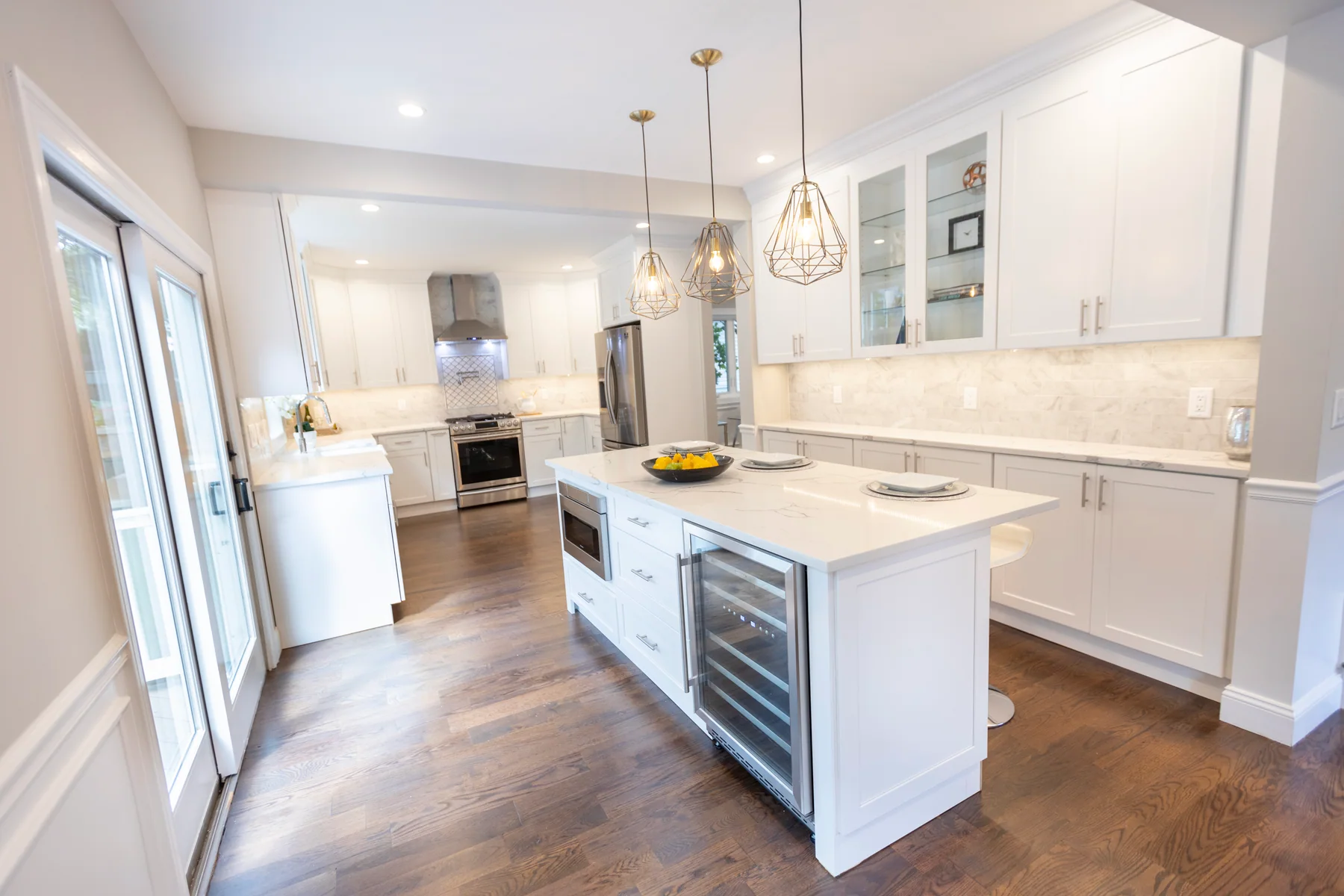
Warm hardwood in a white kitchen with an island, looking out to a deck through sliding doors
Dark hardwood in a white kitchen with a marble island and pendant lighting
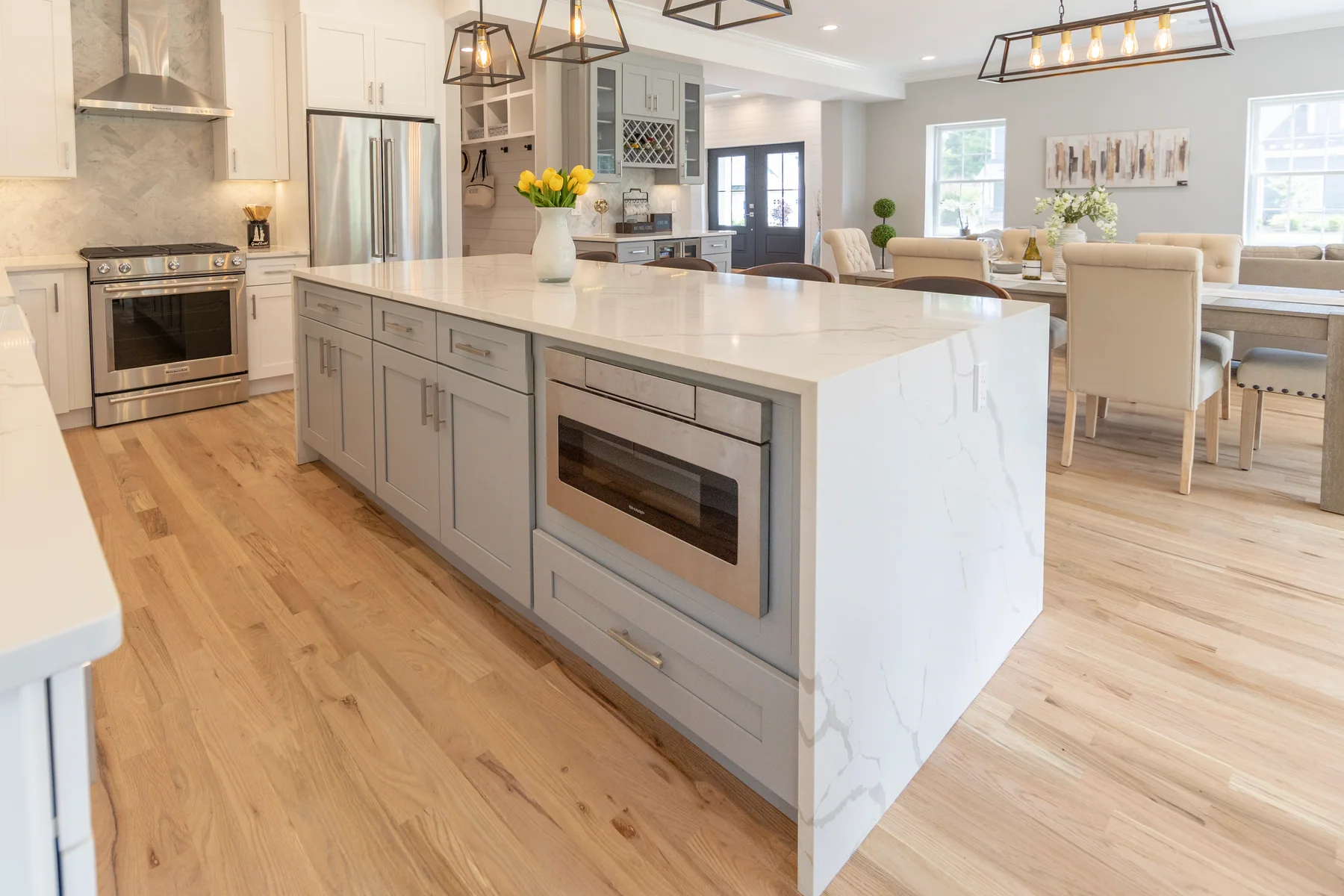
Pale hardwood in a kitchen with a marble-topped island and a built-in microwave drawer
See samples in your own space.Color, grain, and sheen can look different from room to room — samples help you choose with confidence.
Request Samples
Format

Longer and wider planks with better stability

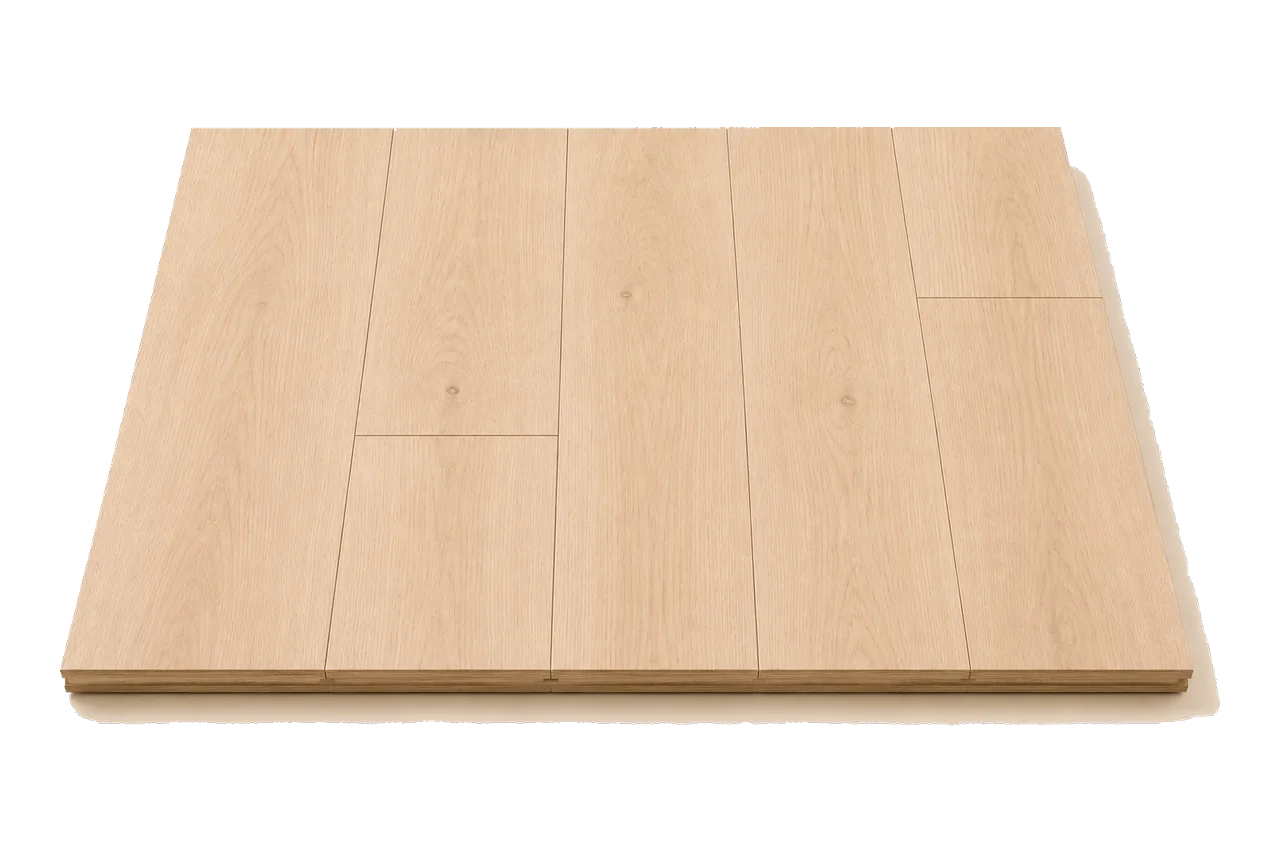
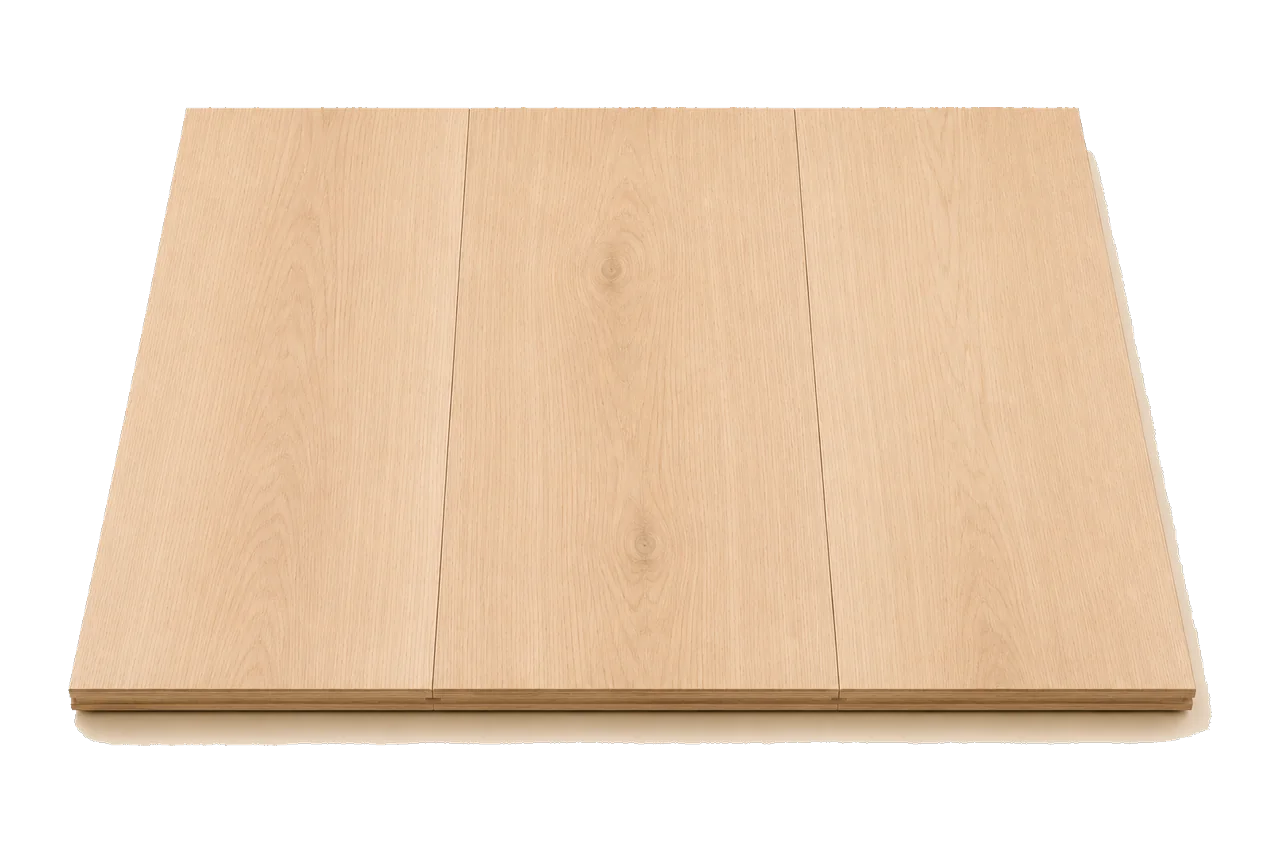
Because engineered flooring is built in layers, it can support wider widths and longer lengths with less seasonal movement than many solid options. The result is a calmer, more architectural floor with fewer seams.

Plank Width

More width. Fewer seams. A calmer floor.

Narrow Strip · 2¼″Traditional scale, more board lines
Standard · 5″A balanced everyday width
Wide Plank · 7″Calmer look with fewer seams
Extra-Wide · 10″+Bold architectural scale — best suited to engineered construction
Plank Length

Longer lengths create flow and reduce end joints.

Mixed Lengths · 12–36″More end joints, busier rhythm
Long Plank · 48–72″Cleaner visual flow
Extra-Long · 84″+Fewer end joints, expansive look
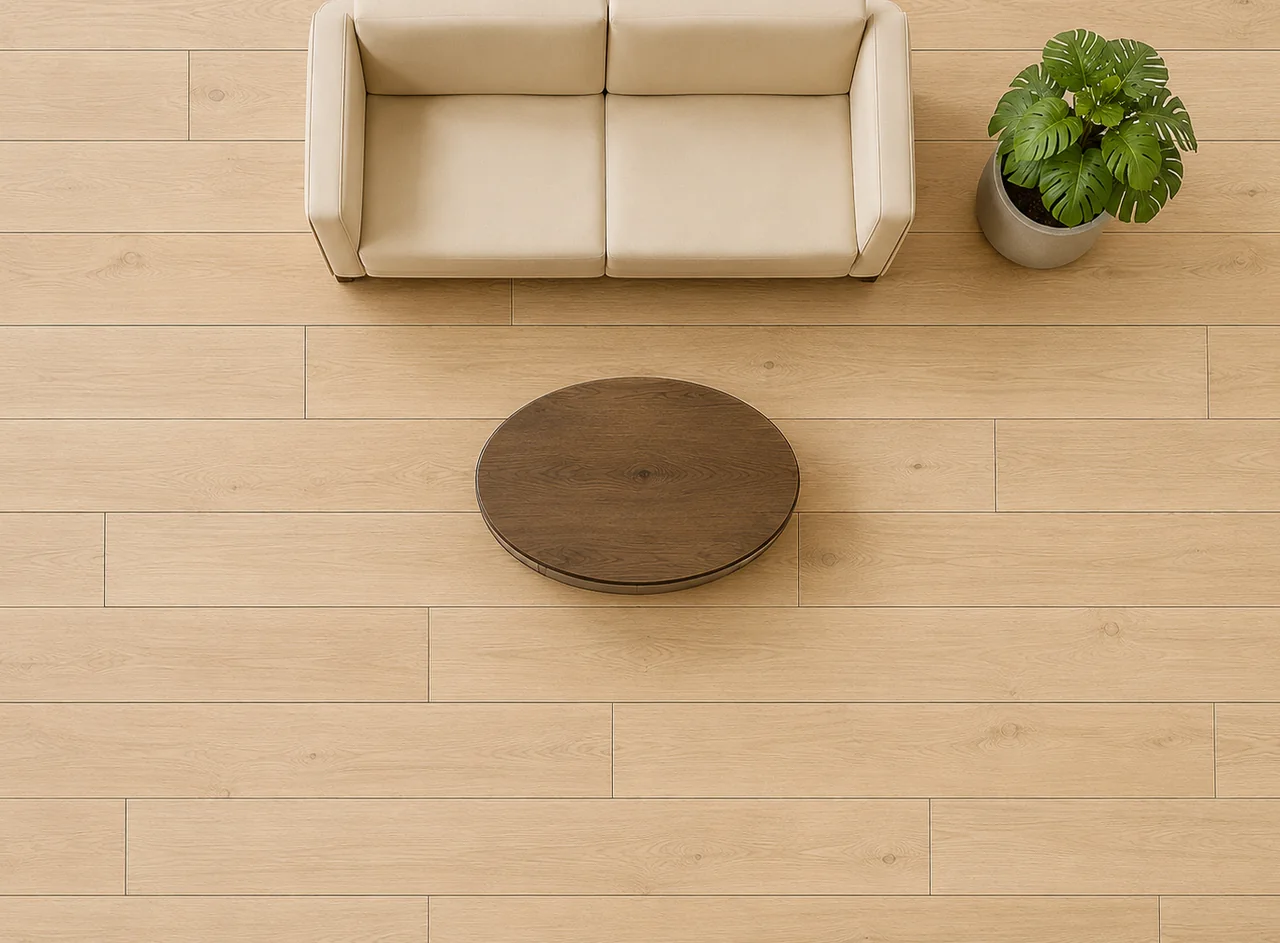
Visual Impact: Seam Density

Top-view comparison of how width and length influence the look of your floor.
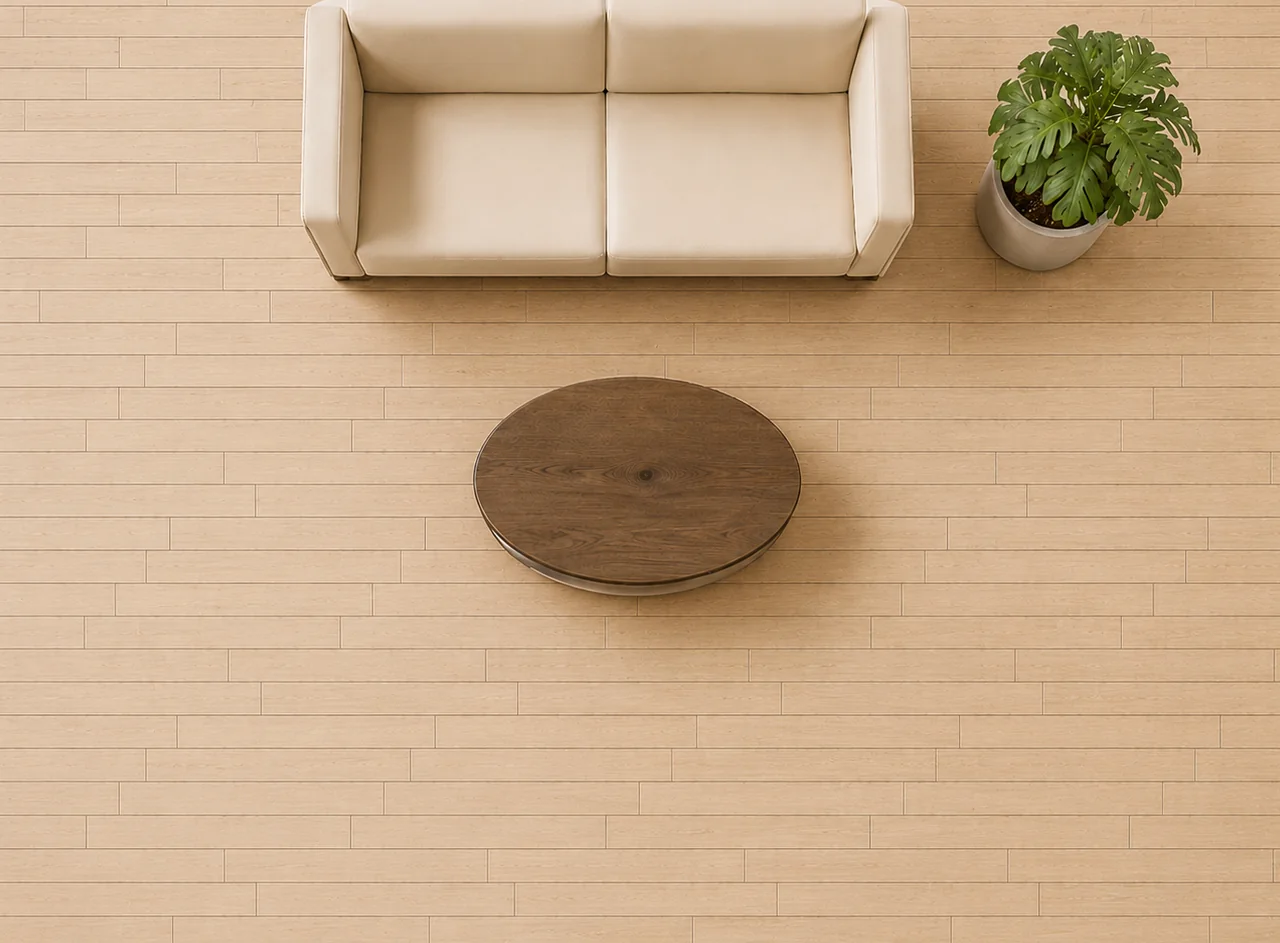
Top view of a living room floor in narrow, short boards — many board lines create a busier surface
More seamsBusier look
Top view of the same living room in mid-width planks — a balanced amount of board lines
BalancedSmoother flow
Top view of the same living room in wide, long planks — few board lines, calm and architectural
Fewer seamsCalmer, more architectural
Why It Matters

Wider and longer planks, enabled by engineered construction, elevate the way your space looks — and lives.

Fewer seams

Less visual interruption for a more continuous floor.

Calmer visual field

Wider boards and longer lengths create a sense of space and serenity.

More architectural scale

Proportions that feel intentional, elevating both modern and classic interiors.

Best performance in engineered construction

Designed to resist seasonal movement while maintaining beauty over time.

Placement

Built for places solid can’t go

The engineered core barely moves with humidity, so it installs above, on, or below grade — plywood or concrete, even over radiant heat.
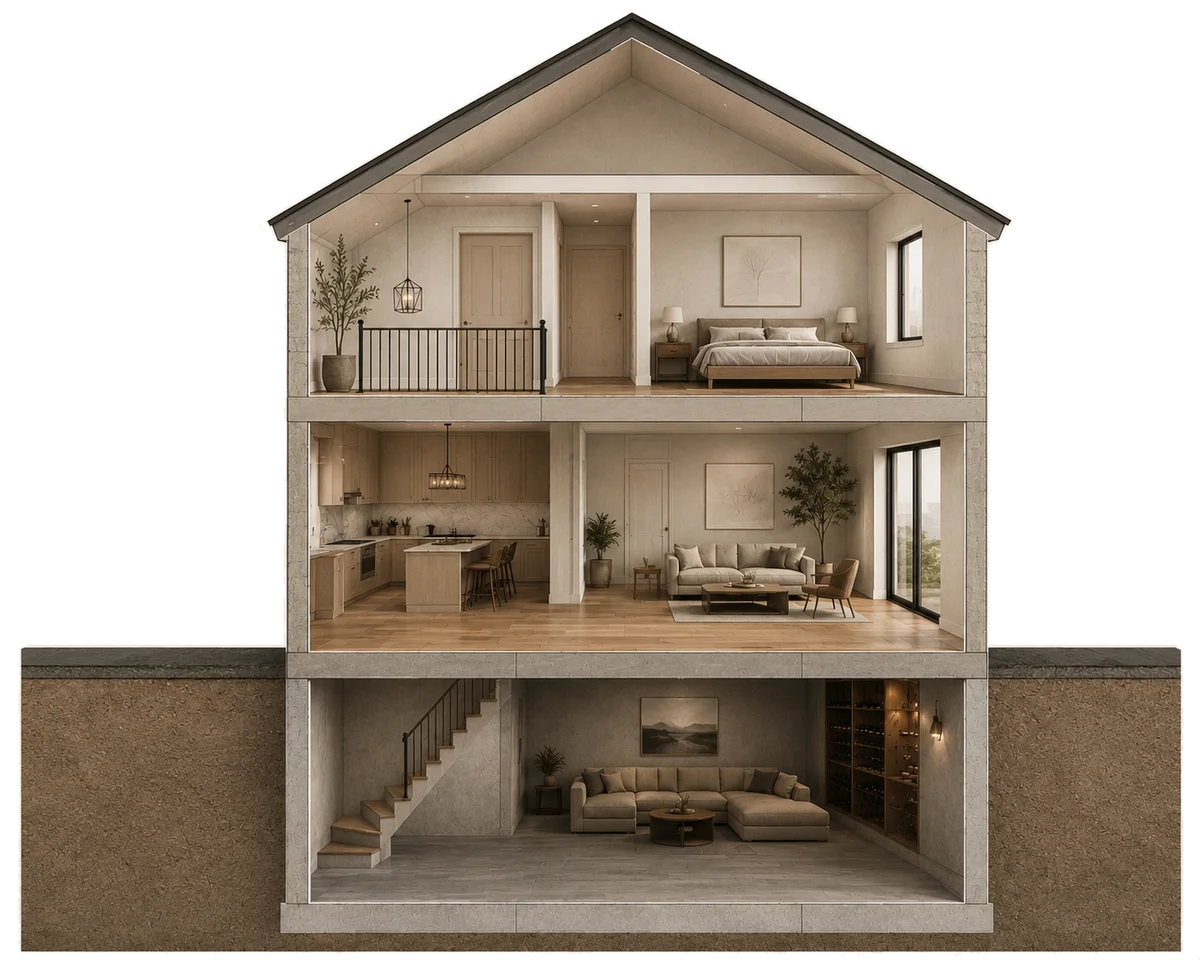
Above GradeBedrooms, hallways, and upper floors — both solid and engineered can work beautifully here
On GradeMain levels over plywood or concrete slab — engineered gives you more installation flexibility
Below GradeFinished lower levels and basements — engineered is usually the better real-wood option
Concrete SlabsFinished BasementsRadiant HeatPlywood Subfloors
Installation Methods

The right method for your subfloor

Nail-down, glue-down, or floating — it depends on what’s under the floor and the construction you choose. Our crews install all three.

Nail-Down
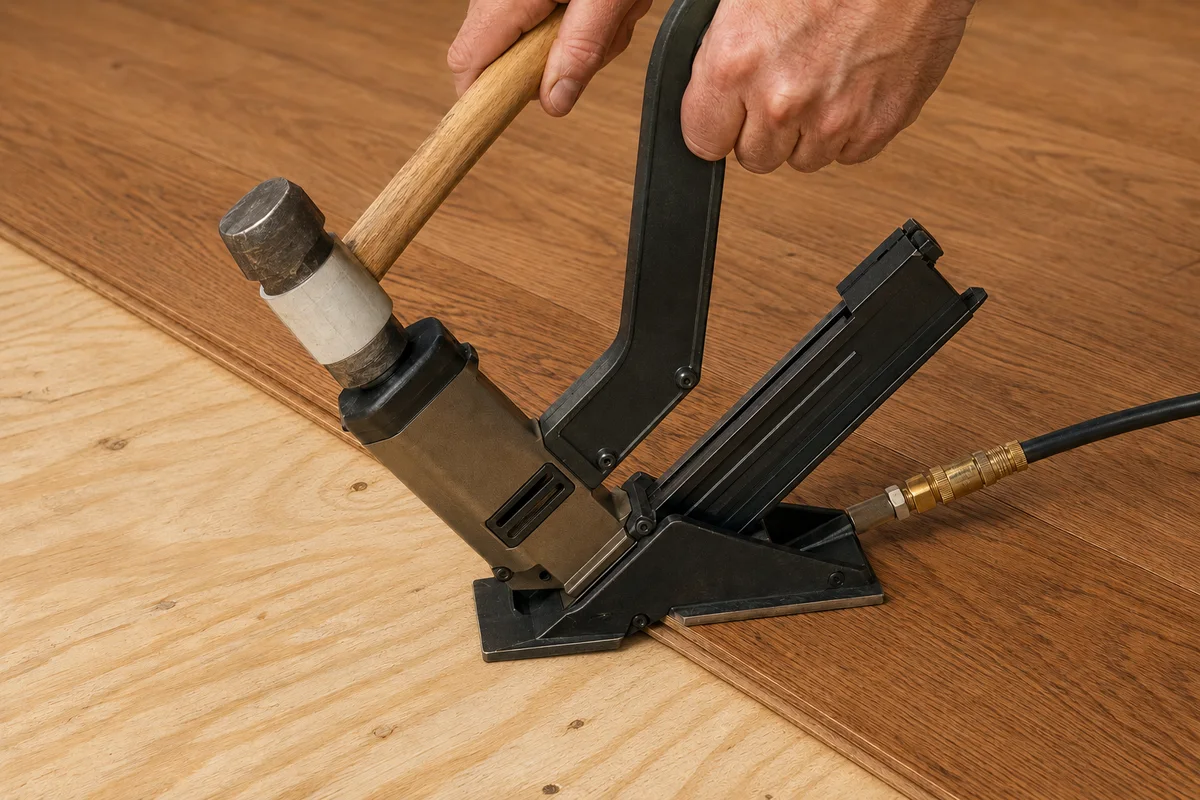
Solid hardwood plank being blind-nailed through the tongue into a plywood subfloor
Wood subfloors — plywood or plank
Solid & engineered hardwood
Pros

Rock-solid, permanent hold

The traditional feel underfoot

Cons

Needs a wood subfloor — nails can’t grip concrete

Glue-Down
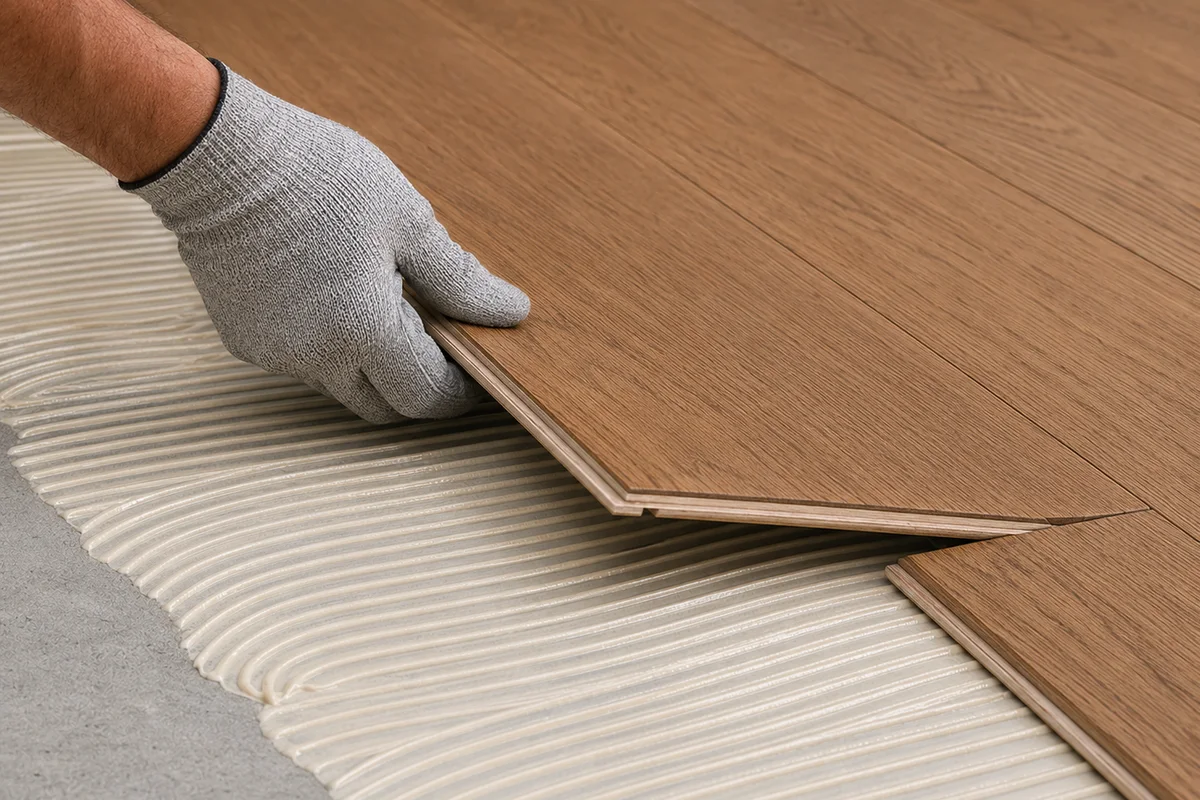
Engineered hardwood plank being set into troweled adhesive ridges over a concrete slab
Concrete slabs & wood subfloors
Engineered hardwood & LVP
Pros

Direct, stable bond — quiet underfoot

The standard over concrete

Cons

Slower installation; harder to replace later

Floating
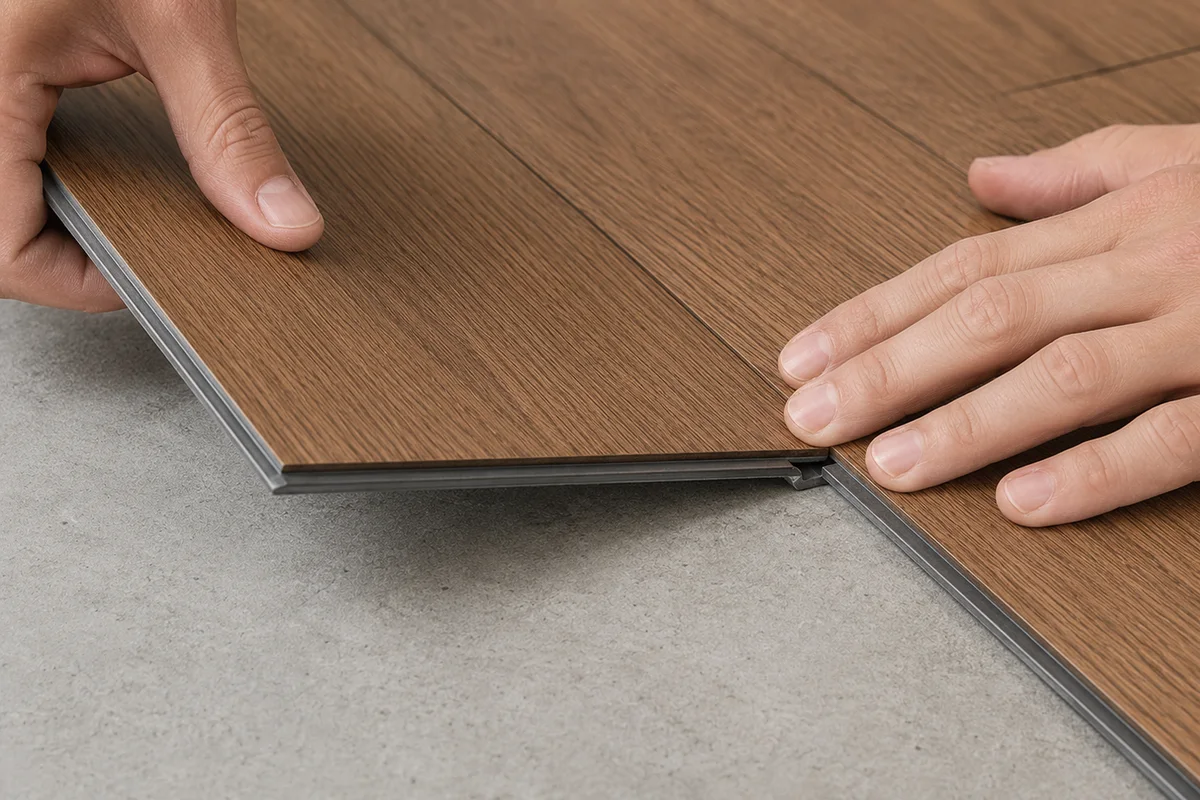
Floating plank being angled into the locking edge of the previous row over an underlayment pad
Most subfloors, over a pad
LVP & floating engineered
Pros

Fast, clean installation

Forgiving of minor subfloor flaws

Cons

Softer sound underfoot; not for floors finished on site

Which Construction Goes Where
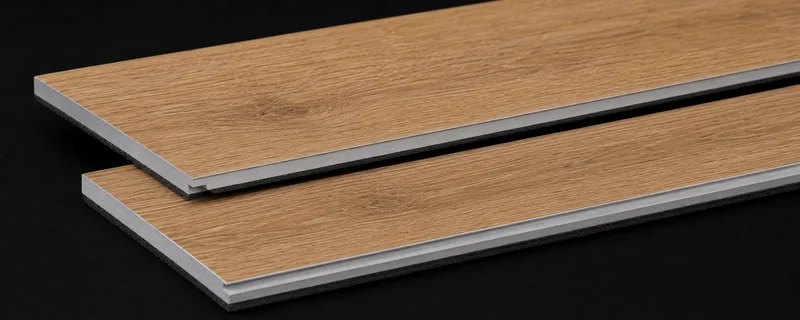
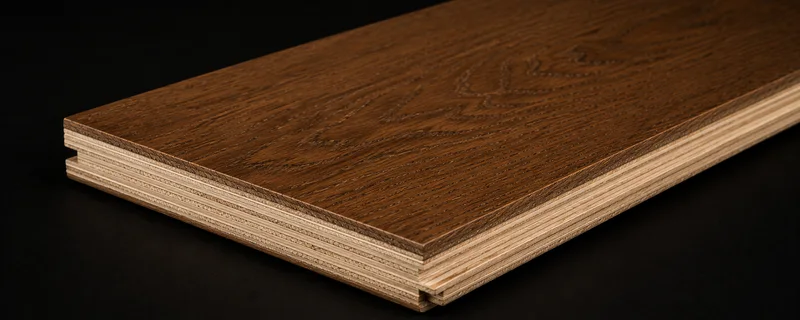
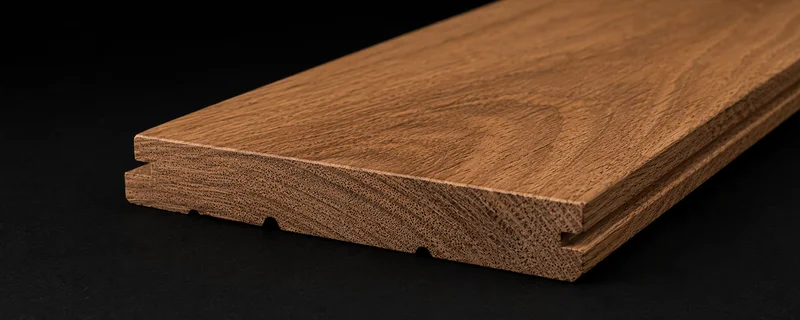
SUBFLOORWaterproof LVP plank cross-sectionWaterproof & LVPEngineered hardwood cross-section showing plywood core layersEngineeredOn This PageSolid hardwood plank cross-sectionSolid
PlywoodAt or above ground
ConcreteAt ground level*
Concrete basementBelow ground

* Solid can sometimes be glued to a dry, tested slab at ground level — ask us. We usually recommend engineered there. Every floor is installed to its manufacturer’s specifications.

Quick Inquiry

Prefer we call you?

Your name, a number and your town is all we need to get back to you. Call or text works too — whichever is easier.

Use the full form
We typically reply within one business day.
The Finish

Finished at the factory. Ready on day one.

Prefinished means every plank arrives sanded, stained, and sealed under factory conditions — a durable, UV-cured finish applied before it reaches your home. That means a cleaner installation, no on-site sanding or staining, and a floor that's usually ready to live on right away.

Walkable Sooner

No on-site stain or finish cure time, so the room is usable much faster.

No On-Site Sanding or Staining

The finish work happens at the factory, which means less disruption inside the home.

Durable Factory Finish

Many prefinished floors use UV-cured aluminum-oxide coatings built for everyday wear.

Predictable Color & Sheen

Approved samples give you a clear sense of color, texture, and sheen before installation.

The Micro-Bevel Edge

MICRO-BEVELFACTORY FINISH COATS

Most prefinished planks have a small micro-bevel at the edge of each board. It helps factory-finished planks meet cleanly during installation, but it also leaves a subtle line between boards. If you want the smoothest continuous surface, site-finished hardwood is usually the better fit.

Sheen Range

MatteSatinSemi-Gloss

With prefinished flooring, sheen is chosen from the collection you select. Most current looks fall in the matte-to-satin range, because lower sheen tends to read more natural and hide daily wear better.

Collection Colors

Prefinished floors arrive in ready-made collection colors. Most fall into these tone families — from light and blonde through grey and whitewashed — so you can start by picking the direction, then choose the exact collection.

Light & Blonde
Natural
Warm Brown
Dark & Espresso
Grey & Whitewashed
Quality & Price

What you're paying for, level by level

Engineered ranges from budget-friendly to true luxury, and the difference isn't just color. Price usually reflects the thickness of the real wood surface, the core construction, the cut of the veneer, the finish system, the plank size, and the grade of the wood. Here's what moves a floor up the range, each from more affordable to more premium.

Wear Layer

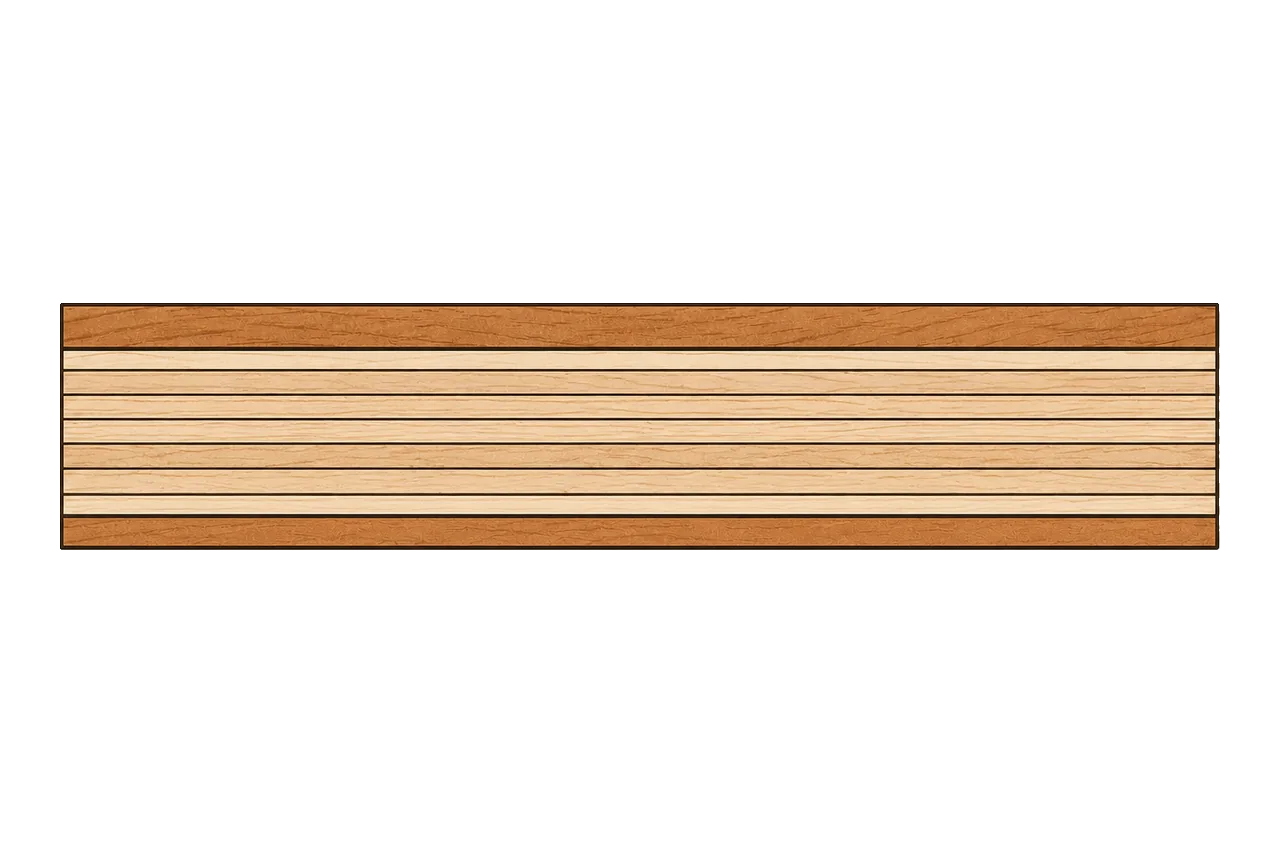
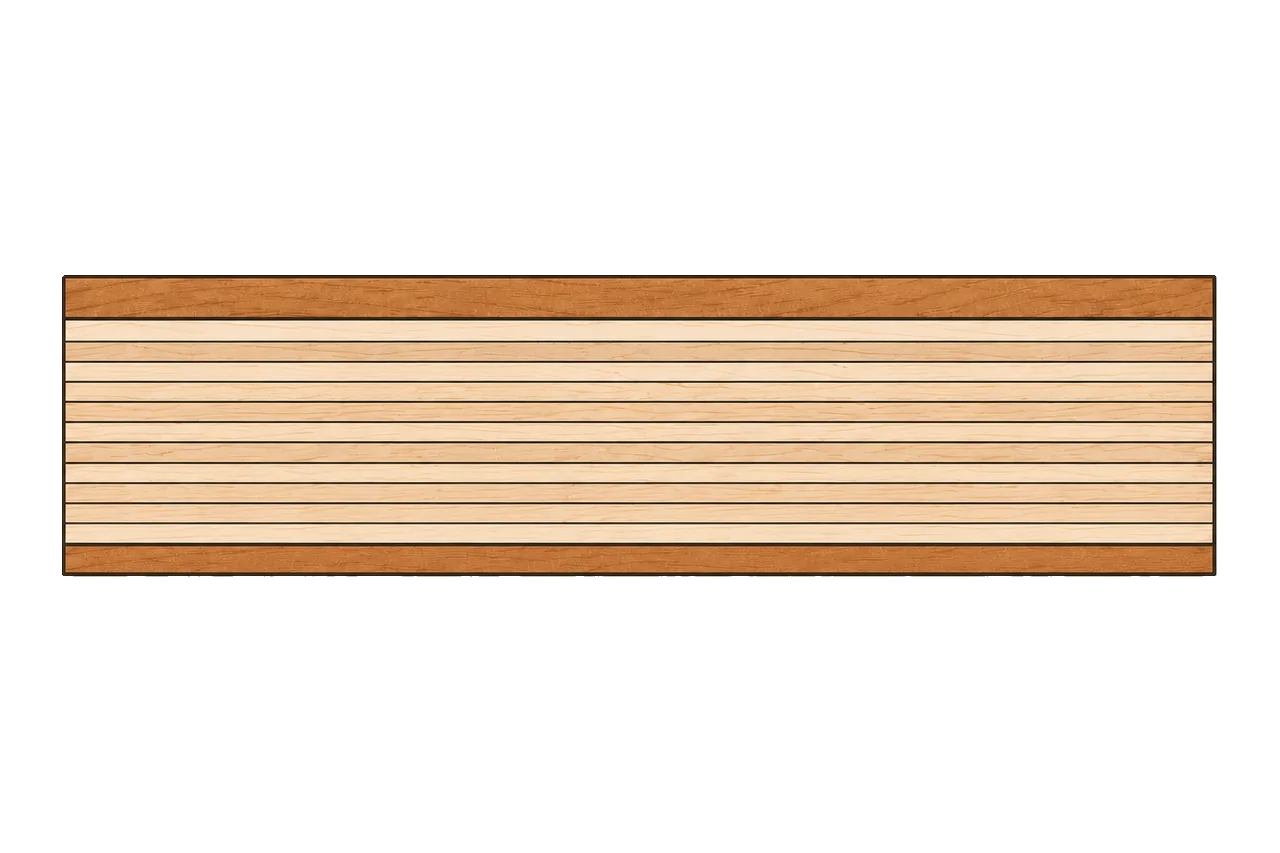
The real wood surface on top. It affects appearance, long-term wear, and whether the floor can be refinished in the future.
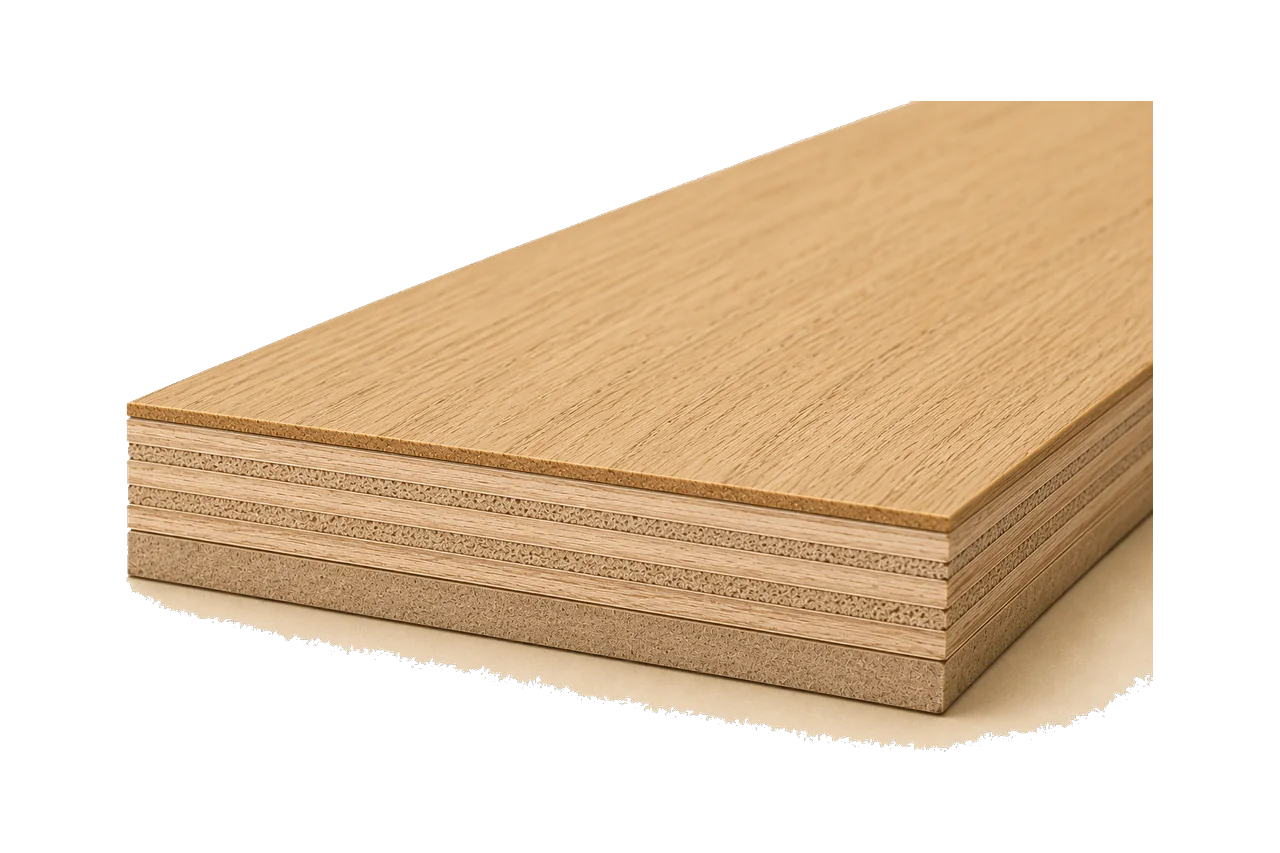
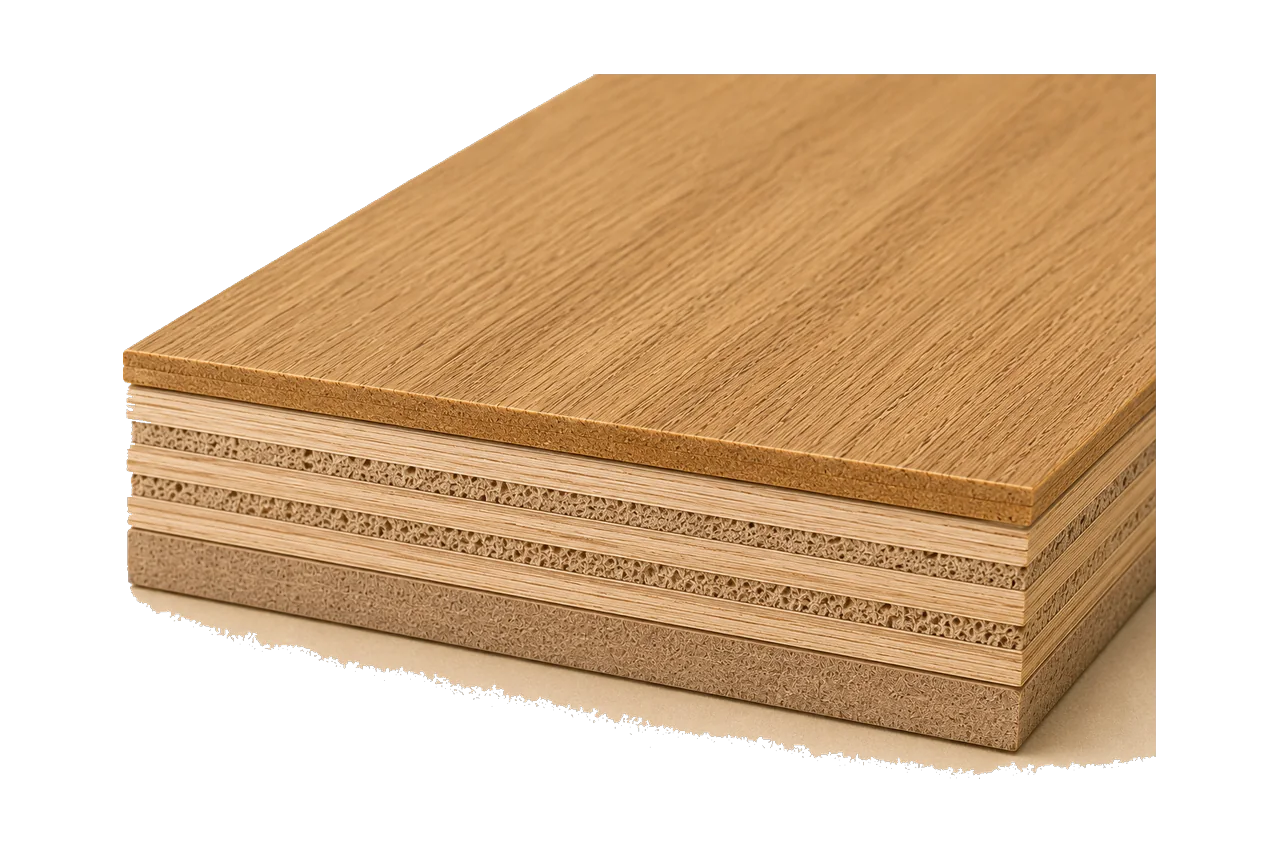
More affordableMore premium
The Big One
Entry
0.6–1.5 mmThin surface · not for refinishing
Mid
2–3 mmLimited future refinishing
Premium
4–6 mmStrongest refinish potential

Veneer Cut

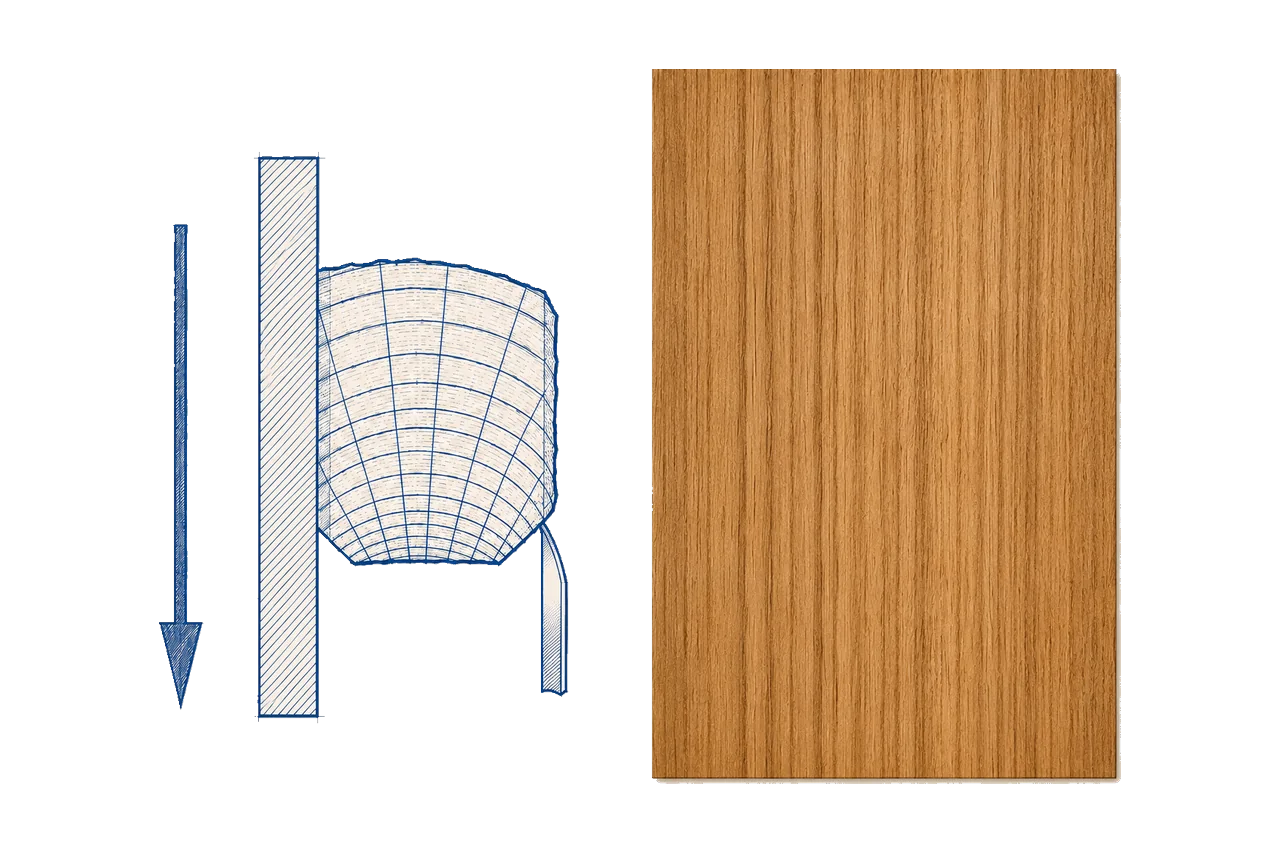
How the real wood surface is cut from the log affects how natural, varied, and solid-like the grain appears.
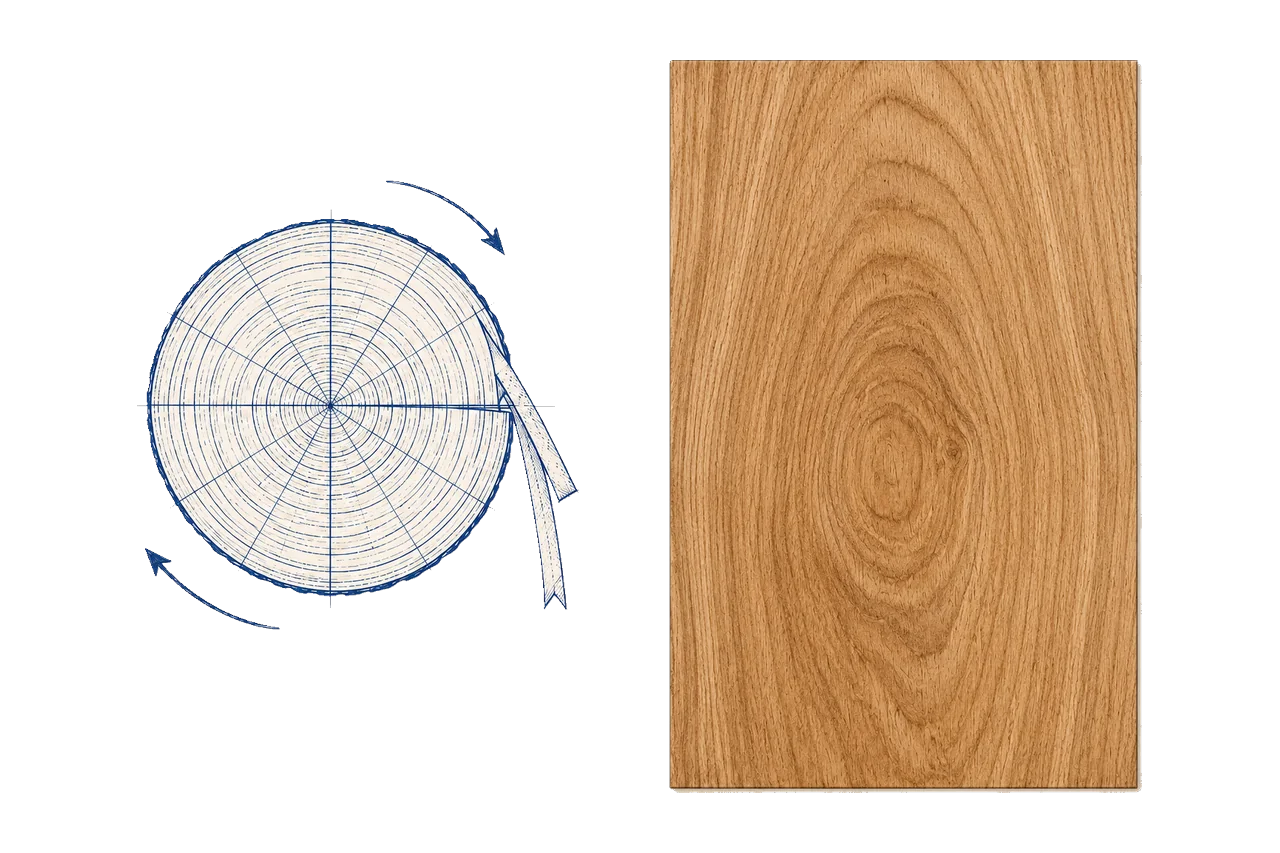
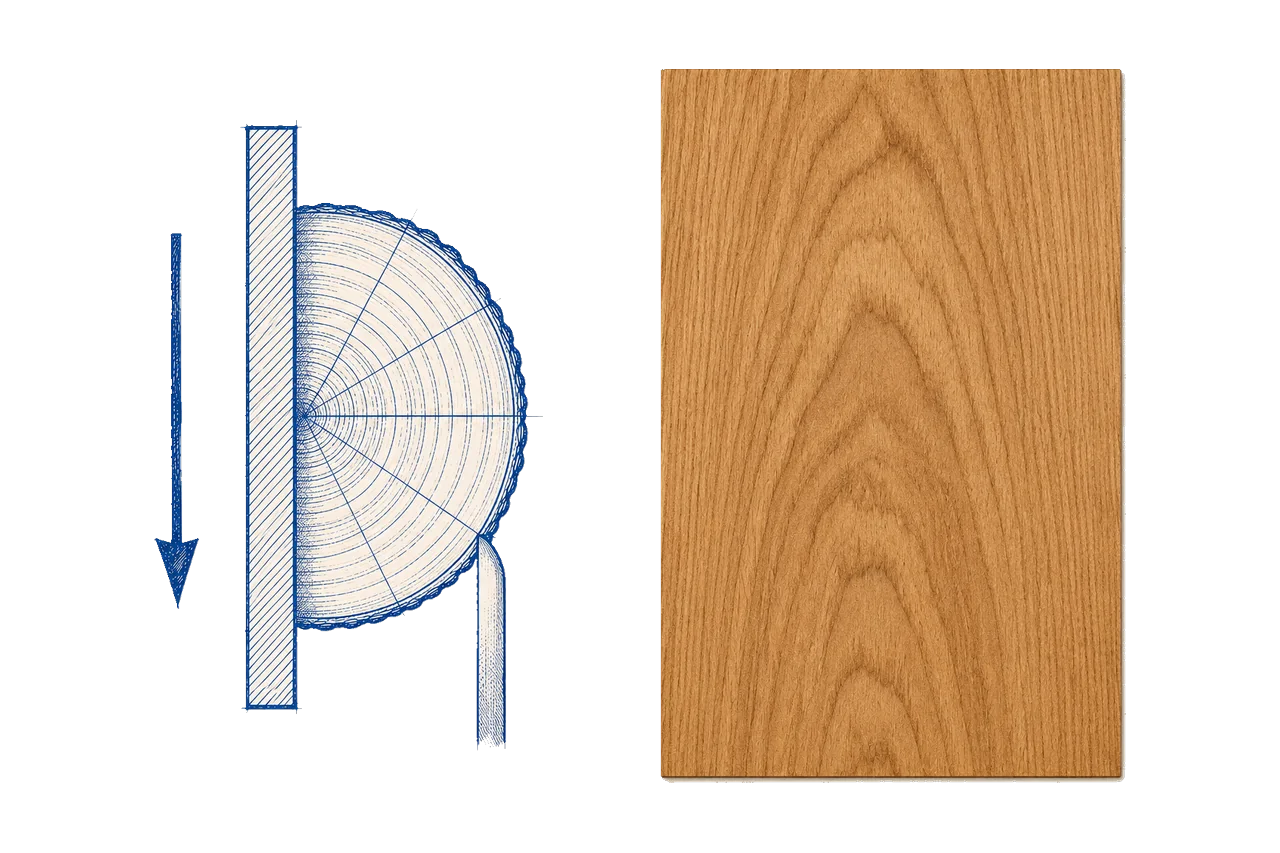
More affordableMore premium
Entry
Rotary-PeeledWider, more repetitive grain
Mid
SlicedCleaner, more natural grain
Premium
Sliced / Dry-SawnReads like solid plank

Core & Plies

The core affects stability, flatness, installation method, and how the floor performs over time.
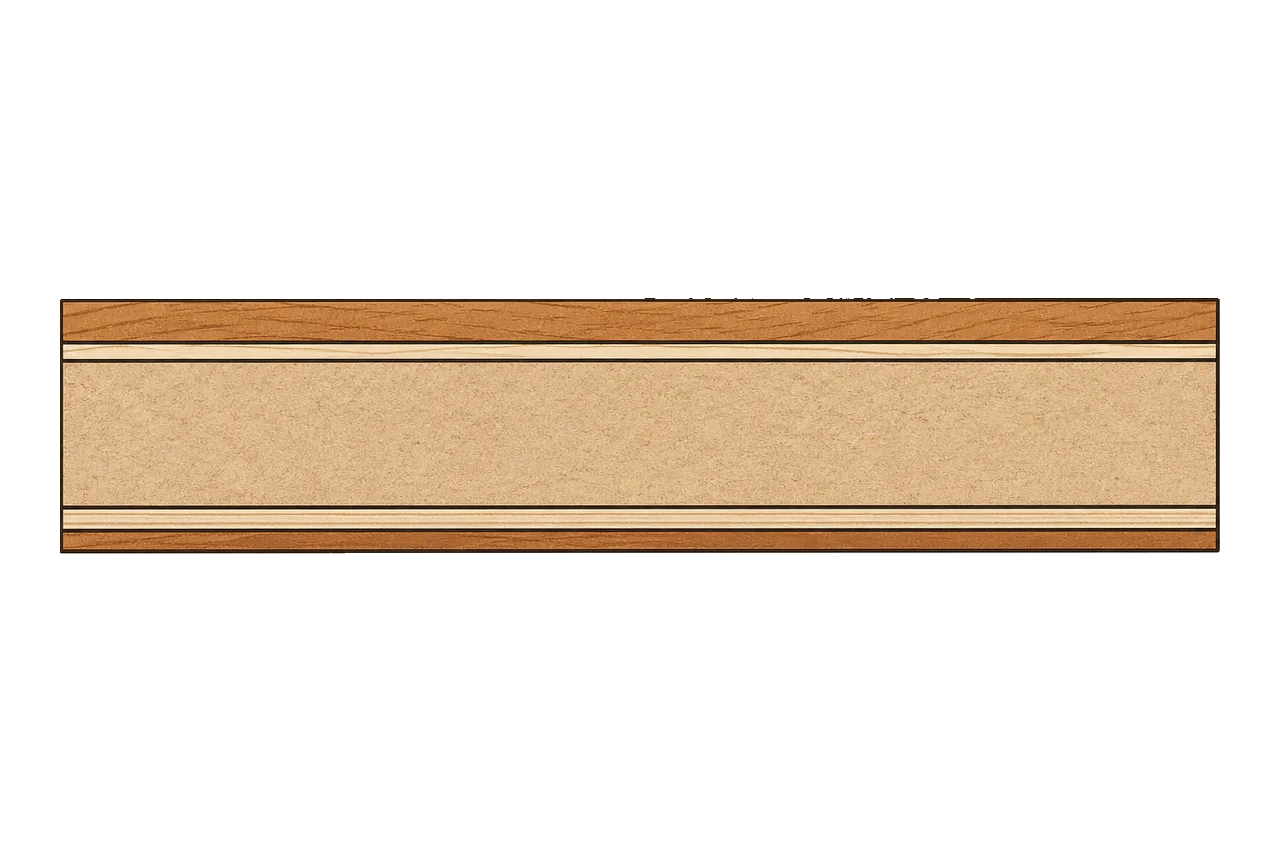
More affordableMore premium
Entry
HDF / Softwood CoreMore economical build
Mid
Multi-Ply PlywoodThe dependable standard
Premium
Hardwood / Baltic BirchMost plies, flattest, most stable

Total Thickness

Total thickness affects the feel underfoot, transitions to adjoining rooms, and overall floor substance.
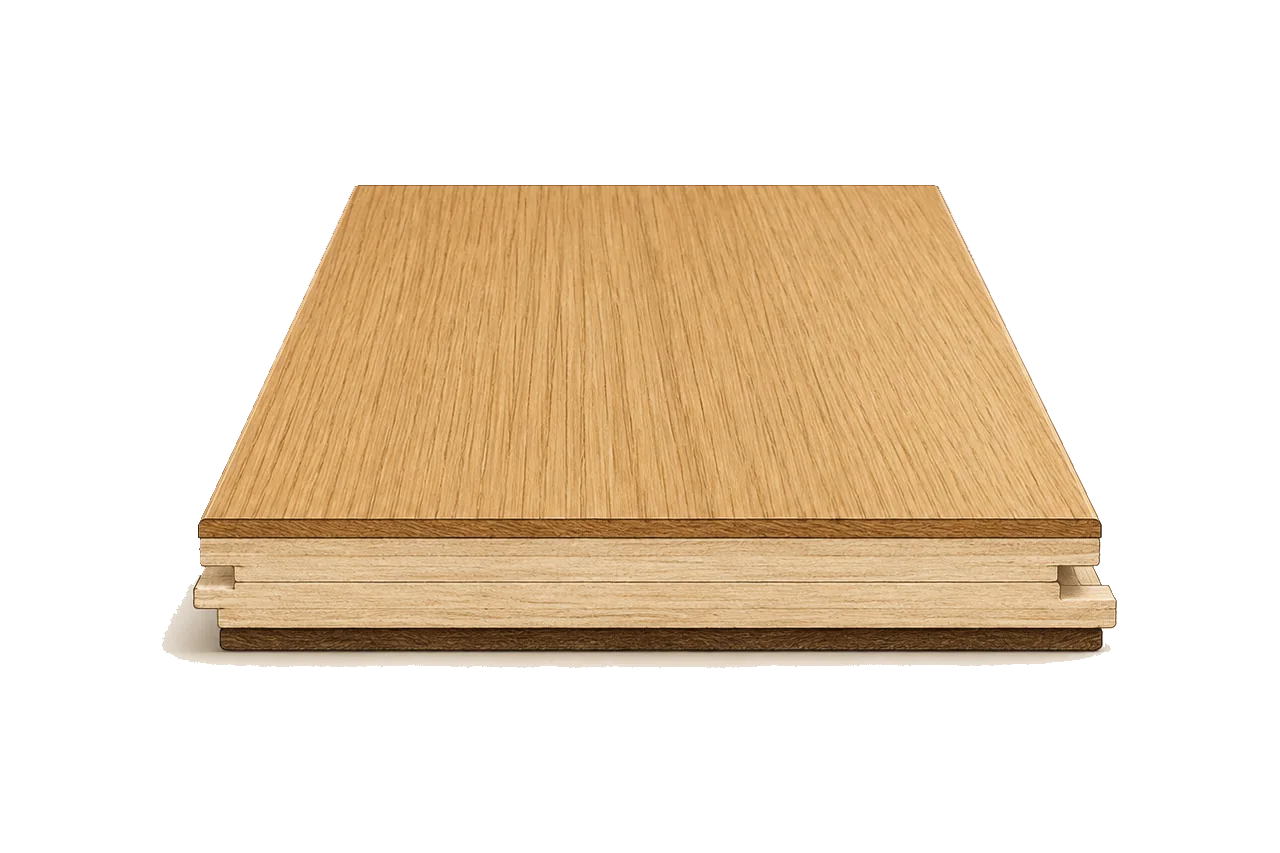
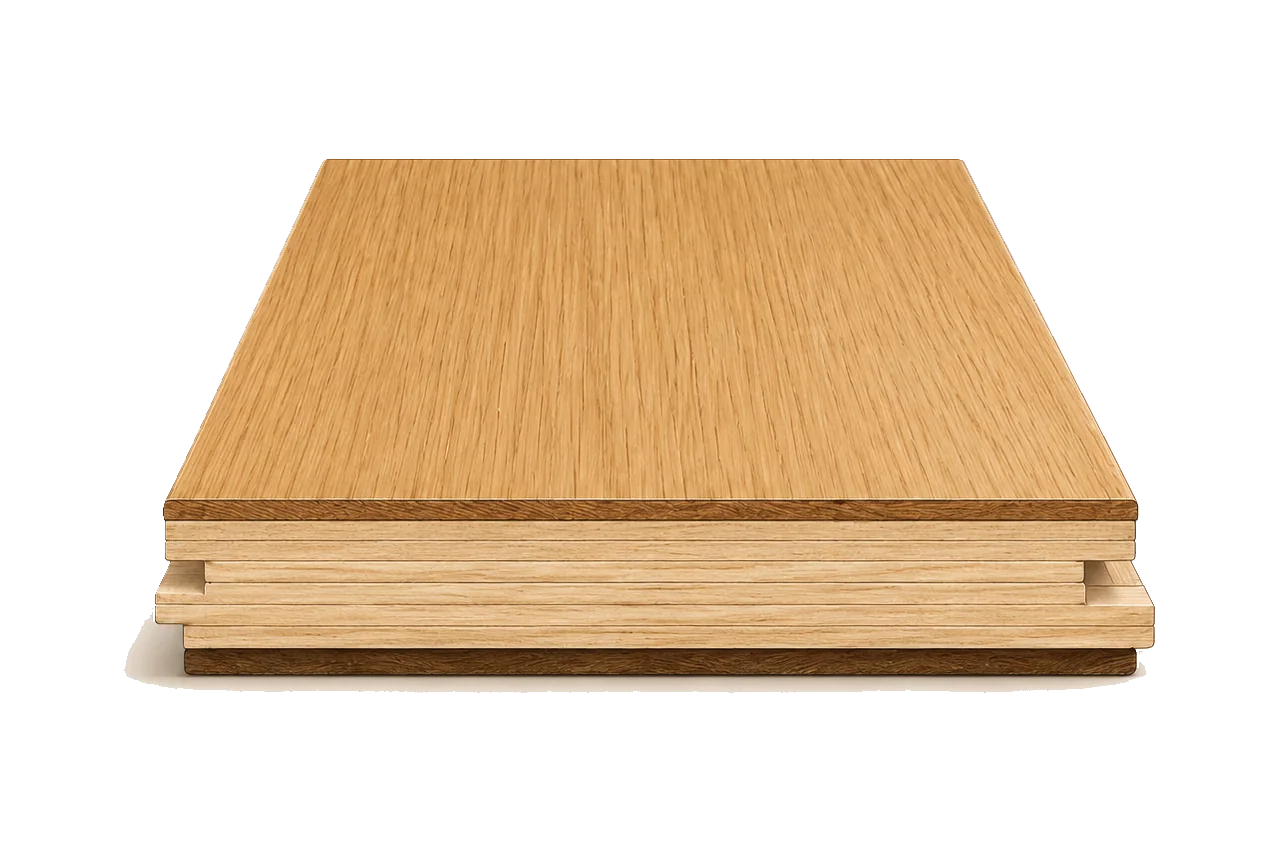
More affordableMore premium
Entry
~3/8 inLighter build
Mid
~1/2 inStandard heft
Premium
5/8–3/4 inSolid-like substance

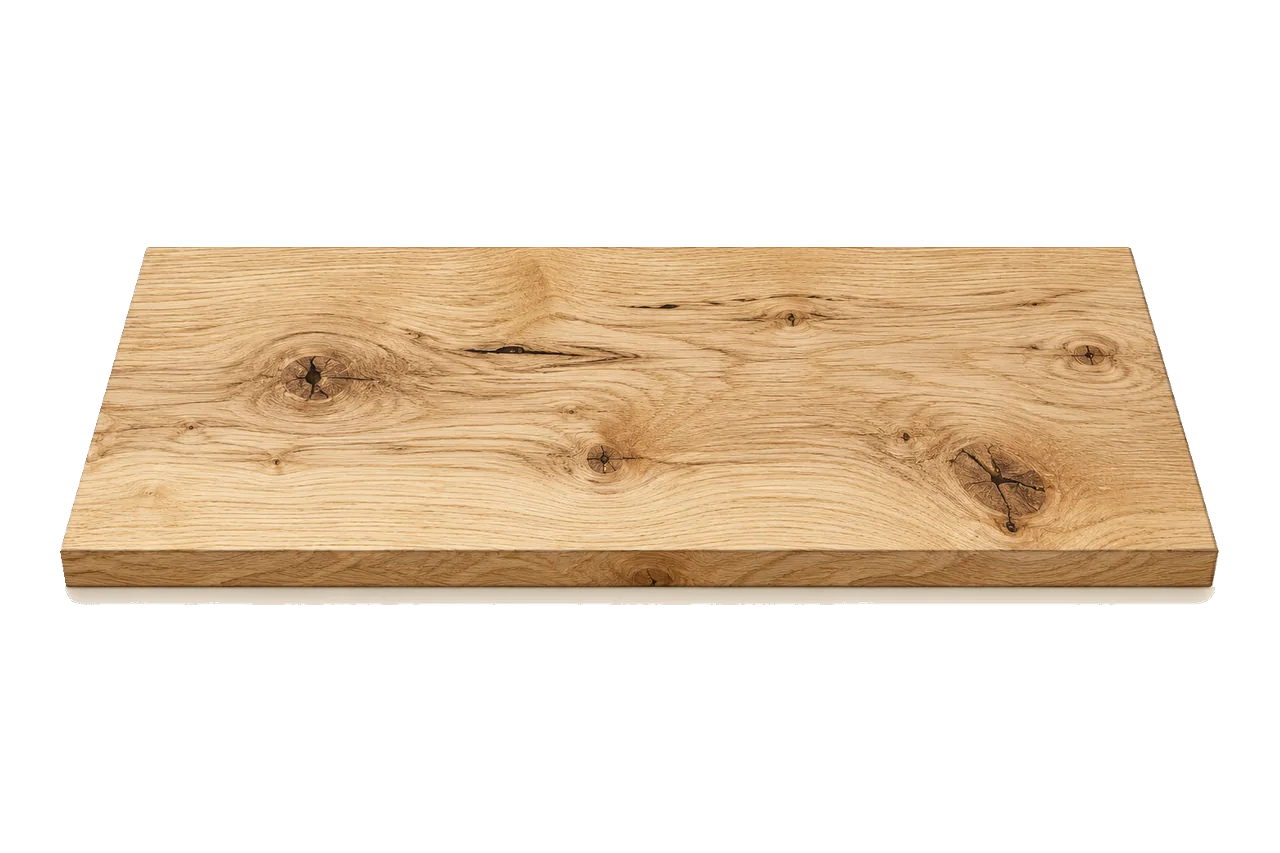
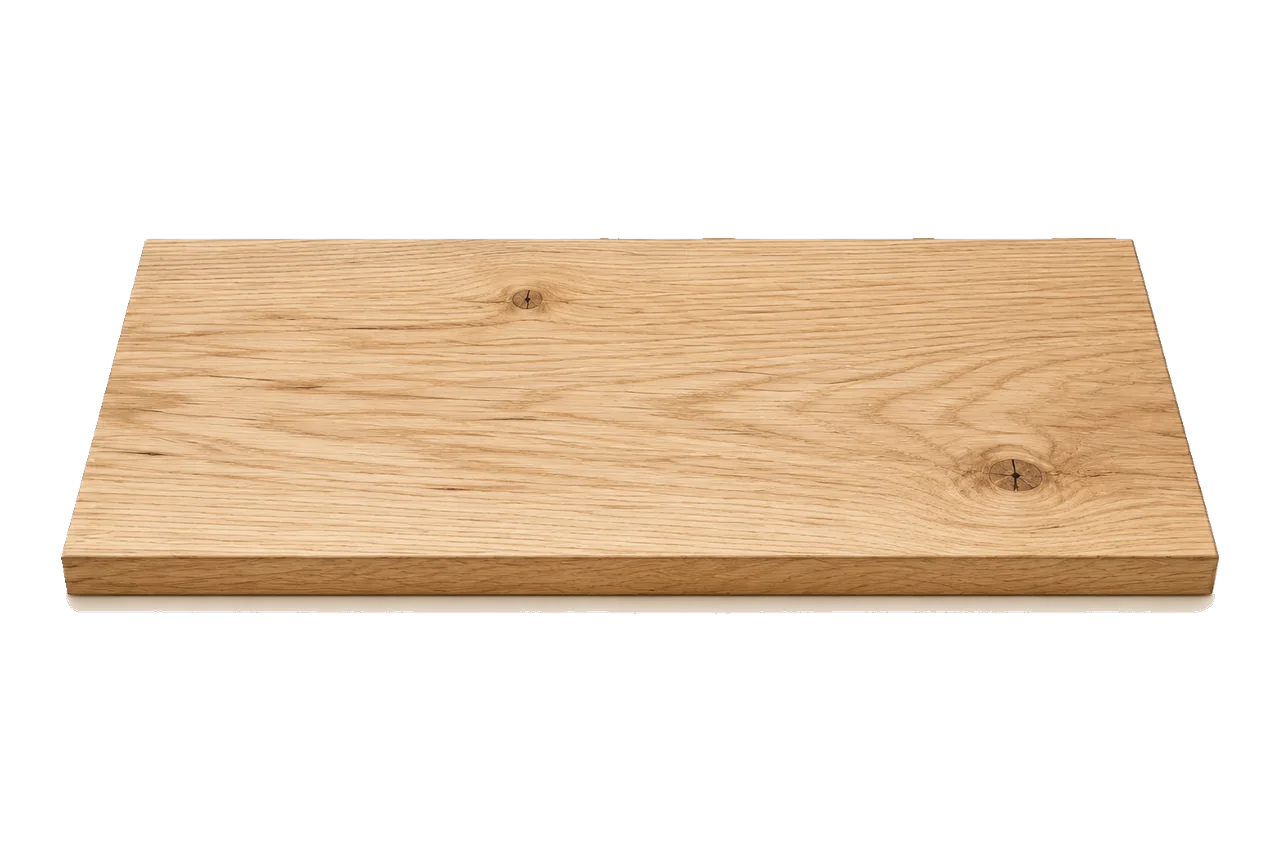
Grade & Character

Grade affects how clean, varied, knotty, or character-rich the boards appear — it’s about the look you want, not simply better or worse.
More affordableMore premium
Entry
Common / CharacterMore knots, color variation & movement
Mid
Select & CharacterBalanced character & natural variation
Premium
Select & Better / ClearCleaner, more uniform appearance

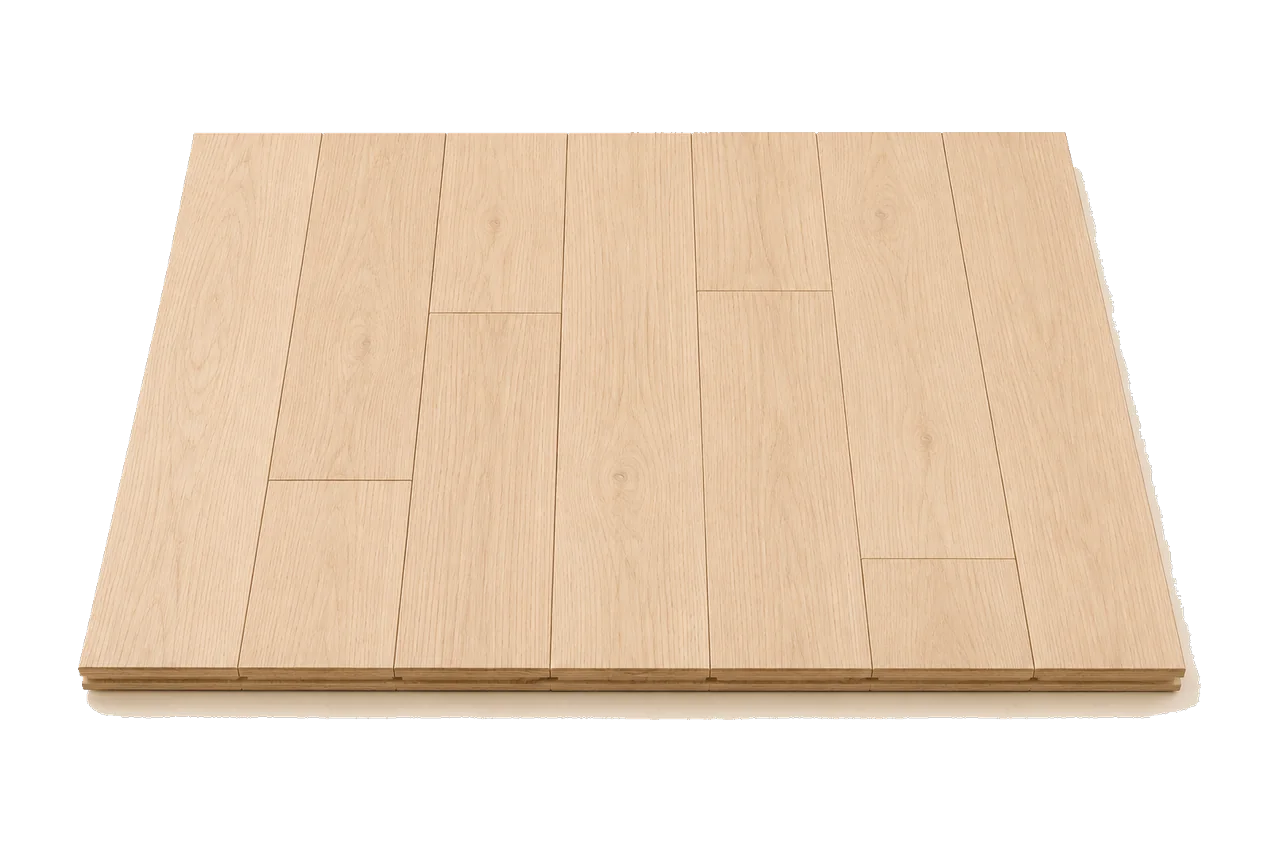
Width & Length

Wider, longer planks create a calmer floor with fewer seams and a more architectural feel.
More affordableMore premium
Entry
3–5 in · ShorterMore seams, busier floor
Mid
5–7 in · LongerCalmer, more current
Premium
7–10+ in · Long PlanksArchitectural, fewest seams

Texture

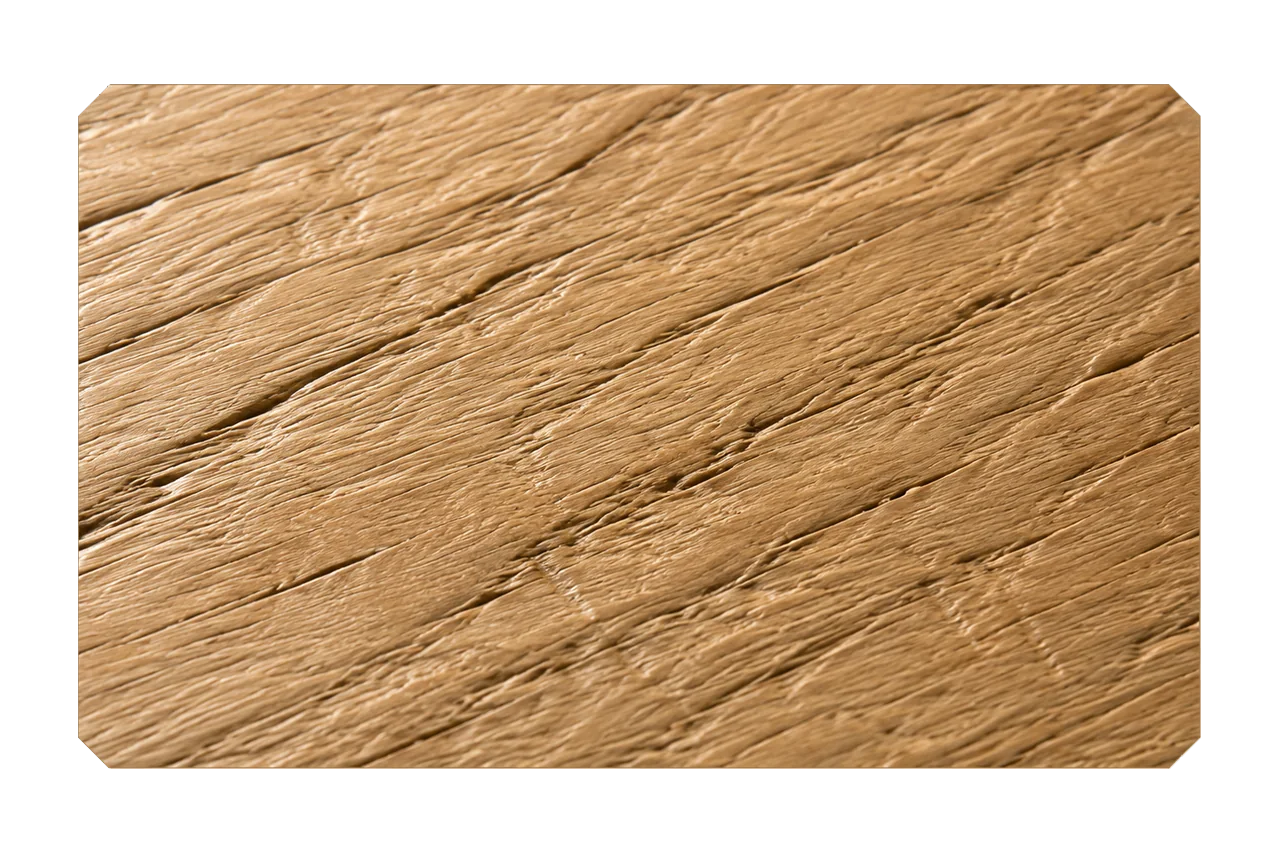
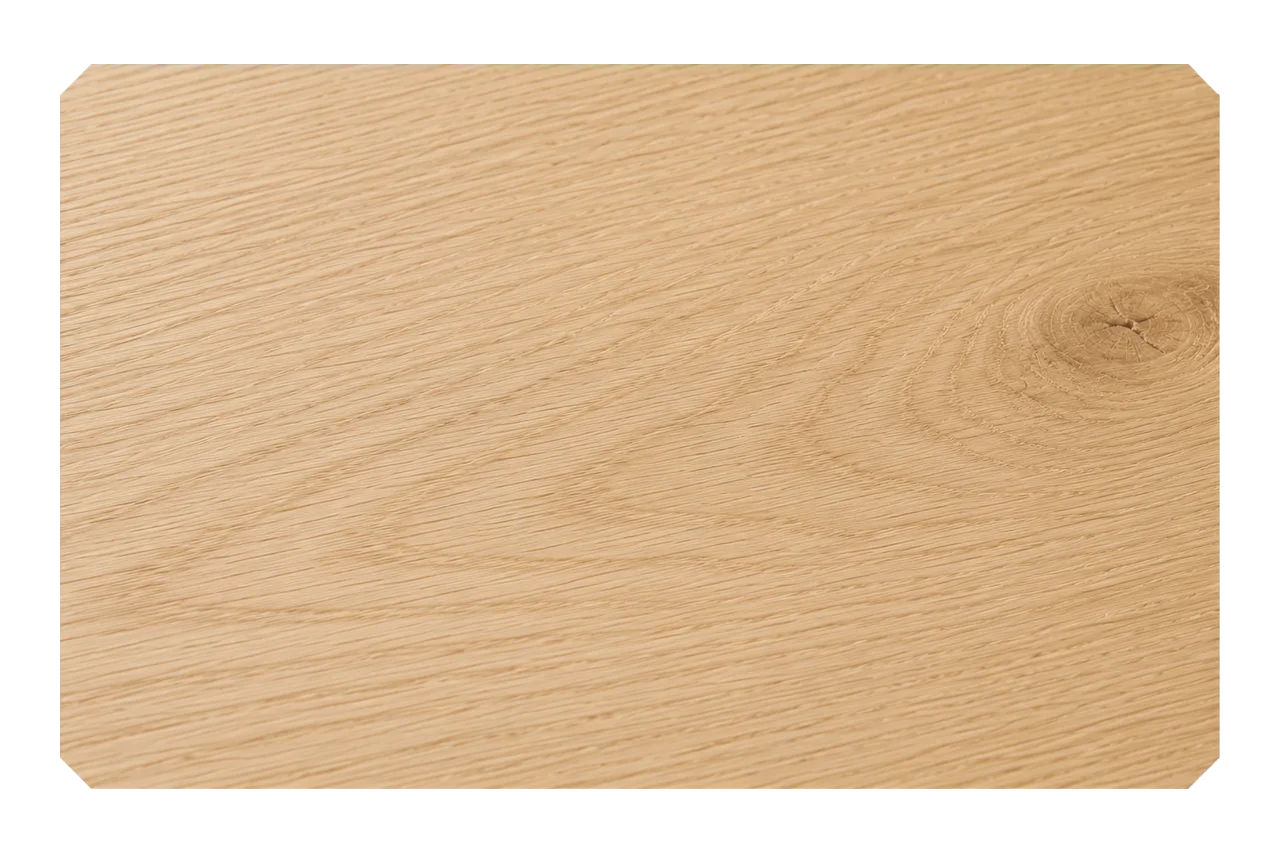
Surface character — from sleek and smooth to deeply sculpted.
More affordableMore premium
Entry
SmoothSleek, contemporary
Mid
Wire-BrushedSubtle grain relief
Premium
Hand-Scraped / DistressedSculpted, characterful

Finish Quality

The finish system affects scratch resistance, sheen consistency, maintenance, and warranty coverage.

More affordableMore premium
Entry
Basic UV FinishEntry-level protection
Mid
Multi-Coat Aluminum OxideStrong everyday wear
Premium
Premium Multi-Coat SystemsLongest warranties
Ask about the wear layer first.
It tells you how much real wood is on top, how the floor may wear over time, and whether future refinishing is realistic.
Not sure which level makes sense?A short visit usually makes the right range clear.
Book a Free Consultation
Why Riftline

The Riftline Edge

Every Grade, Every Subfloor

We match the product and installation method to your subfloor — plywood, concrete, radiant heat, above, on, or below grade.

Statewide Reach

Based in Northern New Jersey, with a second hub in Ocean County — serving homeowners and contractors throughout the state.

Job-Site Fluent

Clean work, clear scheduling, and coordination with homeowners, designers, GCs, builders, and remodelers.

Residential & Commercial

From single rooms and renovations to multi-room homes, buildouts, and larger projects.

For builders, GCs, and remodelers.Trade pricing, product specs, lead times, samples, and submittal-ready details from a partner who knows the job site.
Get Started

Let's find the right engineered floor.

Tell us where the floor is going, what kind of subfloor you have, and the look you're after. We'll help compare the right engineered options, bring samples, measure on site, and give you clear numbers.

Free In-Home Consultation

We review the space, check the subfloor, and help narrow the right options.

Request Samples

Free — see color, grain, texture, and sheen in your own light.

Match My Floor

Send a photo of your room, cabinets, or existing flooring and we'll recommend close-fit options.

Get a Project Quote

Clear pricing based on the actual space, product, and installation method.