Restore the floor you already love.
Professional sanding, custom stain matching and durable finish systems that bring worn hardwood back to life — without replacing its history.
Dust-contained sanding · Custom stain samples · Premium finish systemsMore than a new coat. A true reset.
Refinishing removes years of worn finish, shallow scratches, fading and uneven color — revealing clean wood beneath and giving you control over the floor’s next chapter. Riftline handles the full process: assessment, repairs, dust-managed sanding, stain sampling, color application and protective topcoats. The result is a floor that feels original to the home, only renewed.
Controlled sanding
Professional equipment, progressive abrasives and extraction systems produce a flatter, cleaner foundation.
Color in your light
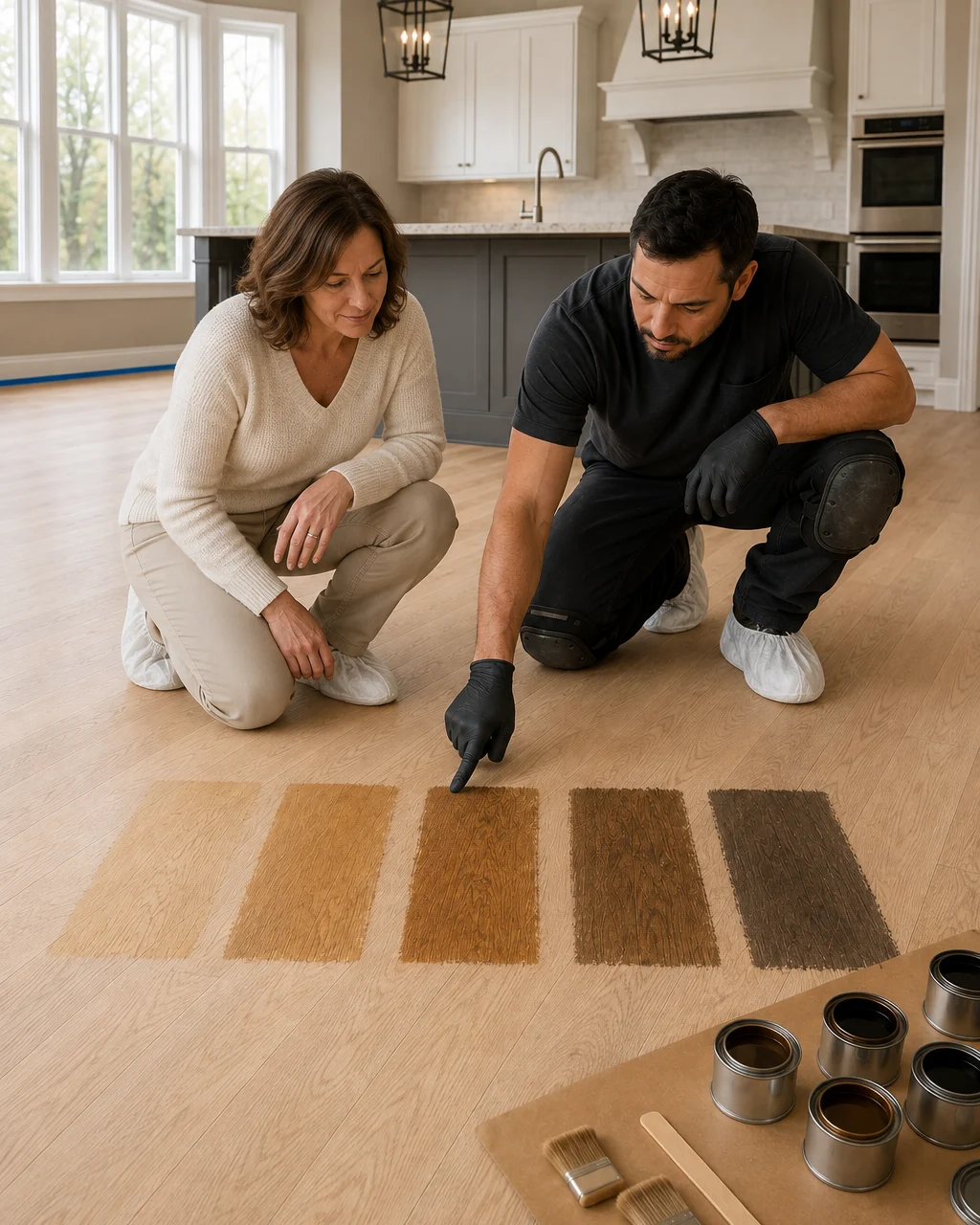
Samples are applied to the actual floor so undertones can be judged beside your walls, cabinetry and daylight.
Finish for the way you live
We help balance clarity, warmth, sheen, cure time and durability — not simply choose what is easiest to apply.
Details at every edge
Perimeters, corners, transitions and repairs receive the same attention as the open field of the floor.
Keep the wood. Change everything else.
- Worn traffic lanes
- Dull, gray or exposed areas where the old finish has failed.
- Surface scratches
- Everyday marks that have not penetrated too deeply into the boards.
- Outdated color
- Orange, red or overly dark tones that no longer suit the space.
- Uneven sheen
- Patchy gloss, cloudy coatings or inconsistent previous work.
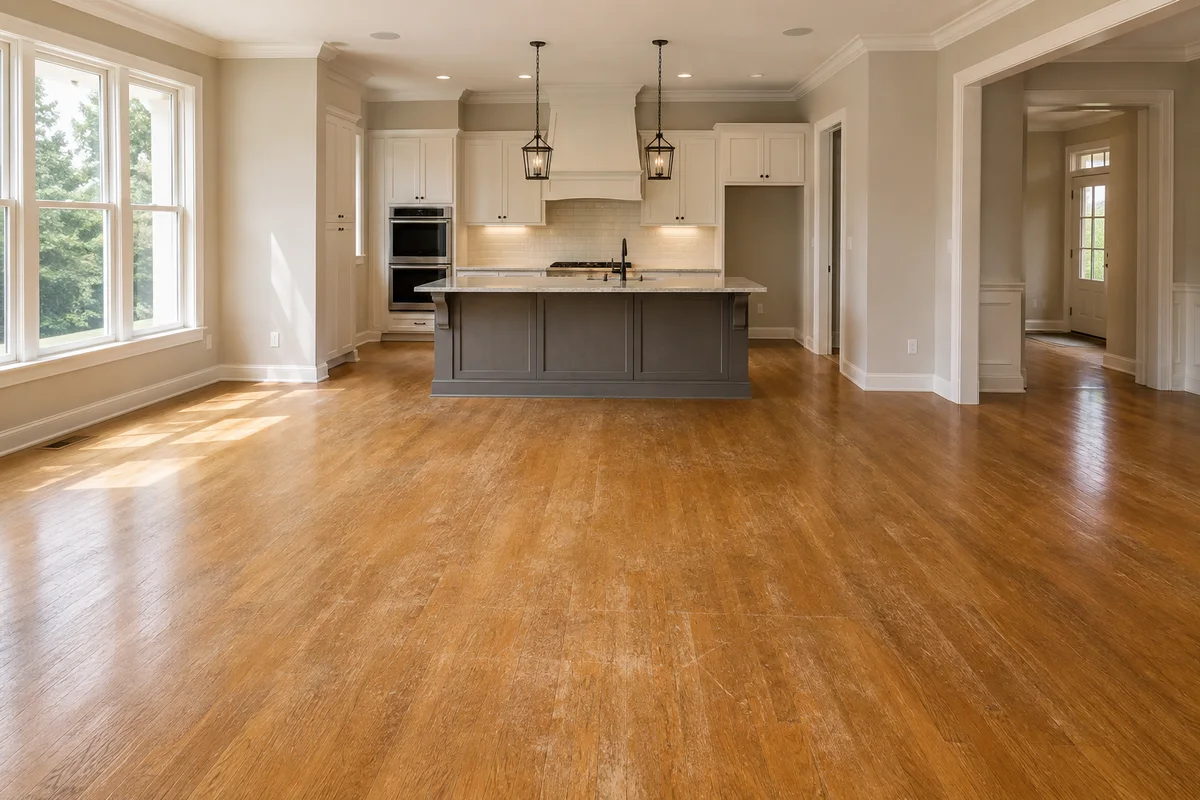 BeforeWorn finish, dated color
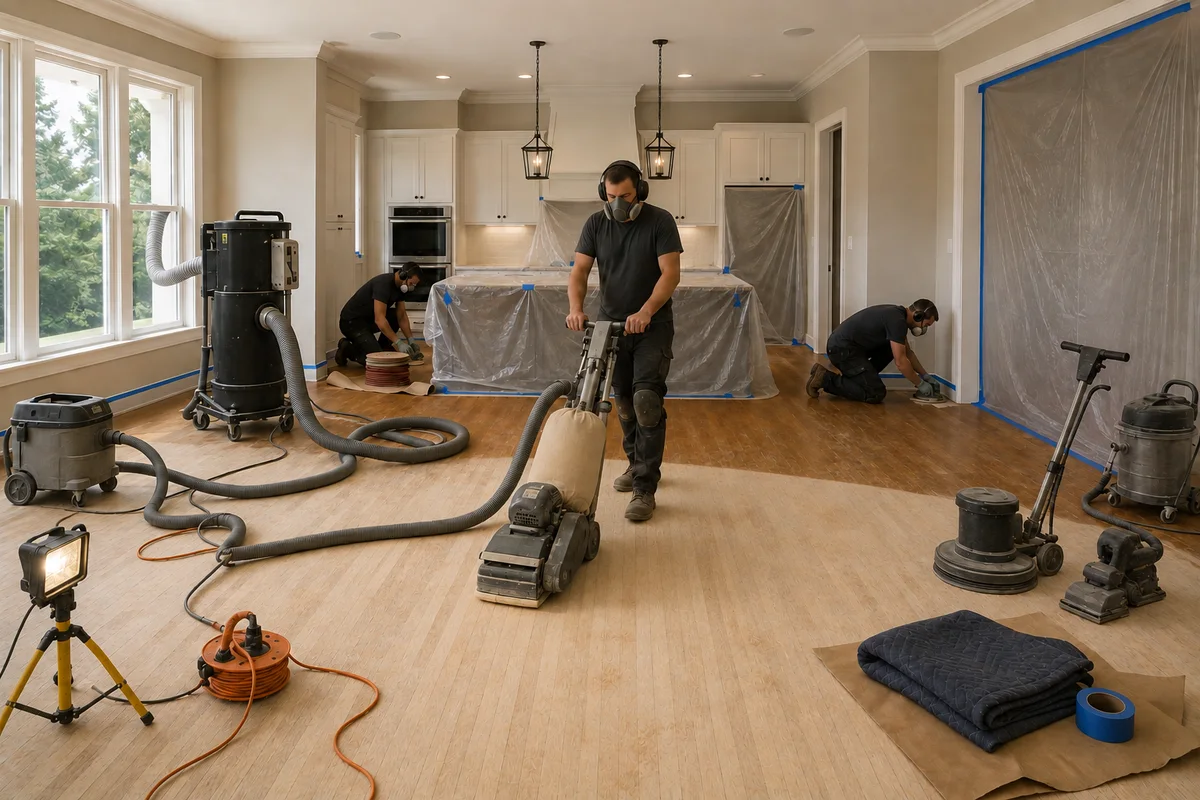 DuringDust-contained sanding
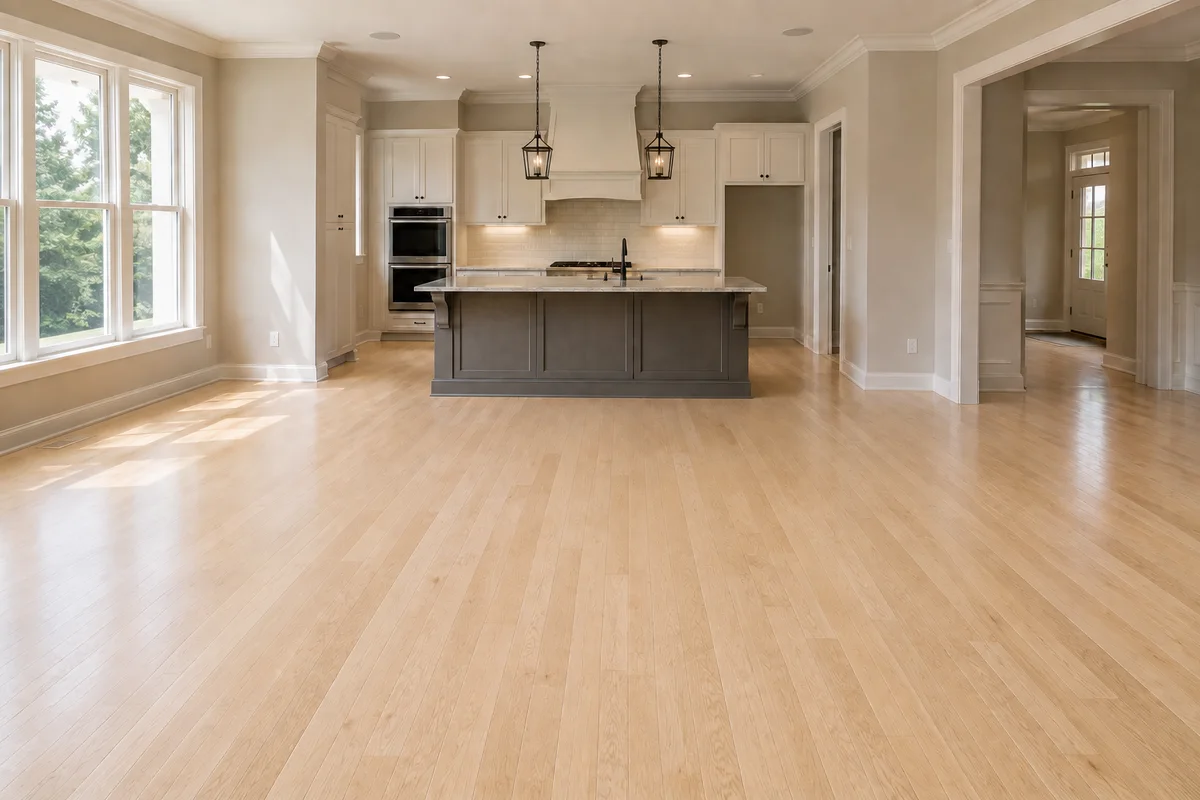 AfterEven color, satin sheen
From worn finish to renewed hardwood.
Every stage builds on the last. Careful preparation and controlled application matter just as much as the final coat.
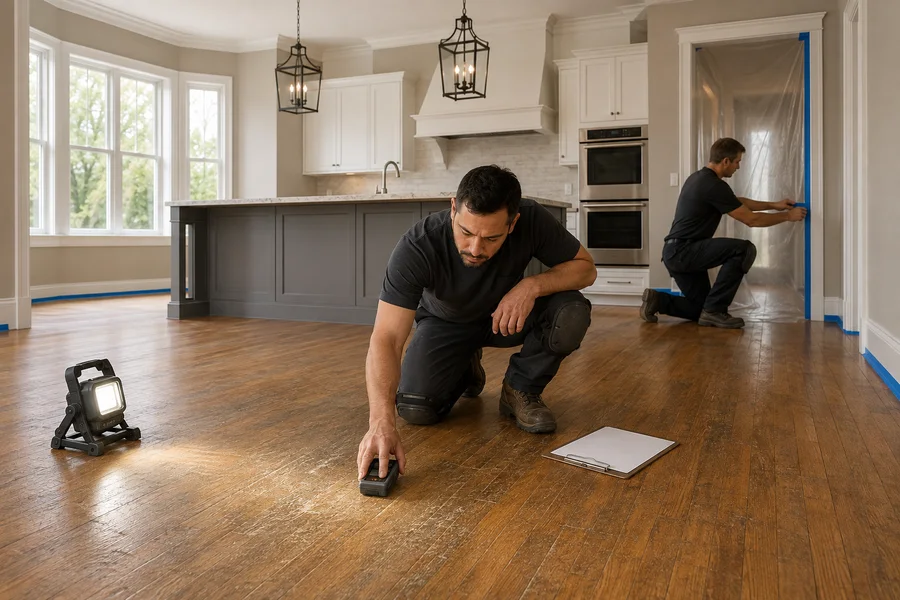
Assess & protect
We inspect board thickness, damaged areas and previous coatings, then protect adjacent surfaces and establish a clean work zone.
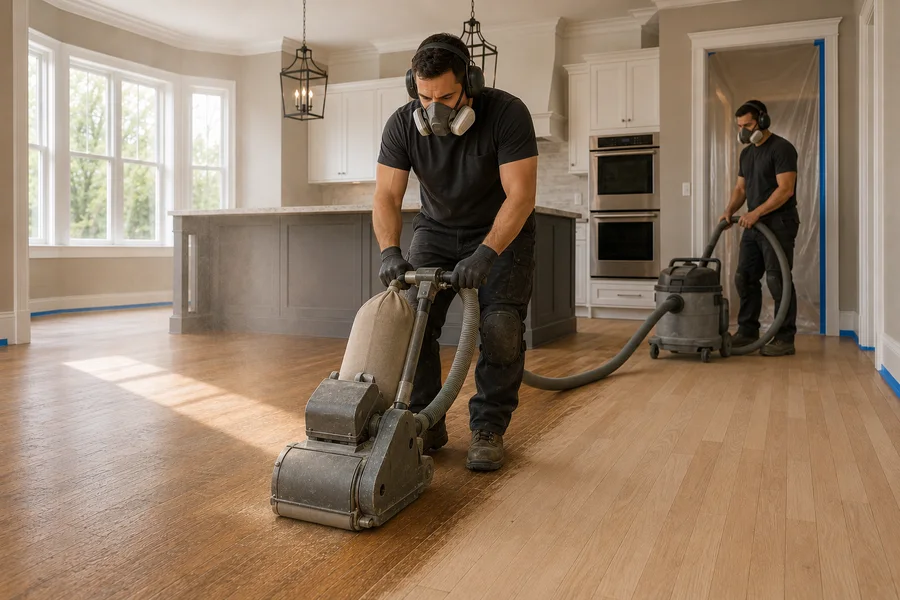
Sand to clean wood
Progressive sanding removes worn finish, surface scratches and discoloration while preserving the floor’s character.
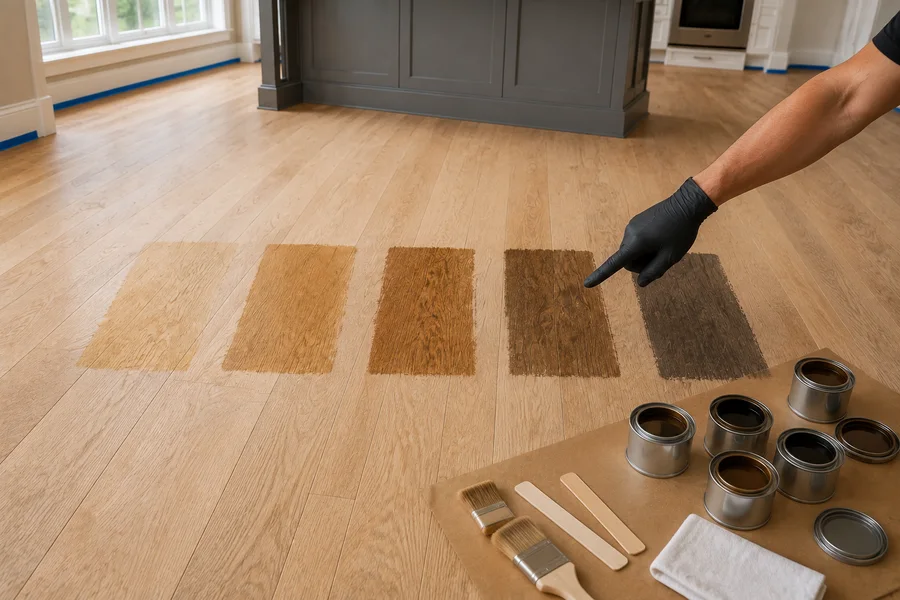
Choose the color
We make samples on your actual floor, in your light, so you can compare undertone and depth before committing.
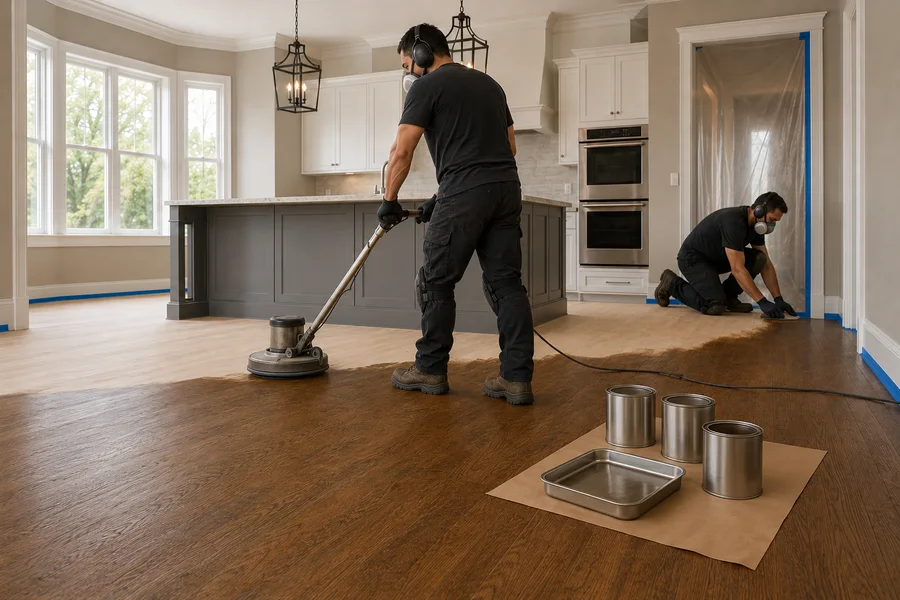
Apply the stain
The selected color is worked evenly into the grain, then carefully detailed at walls, transitions and corners.
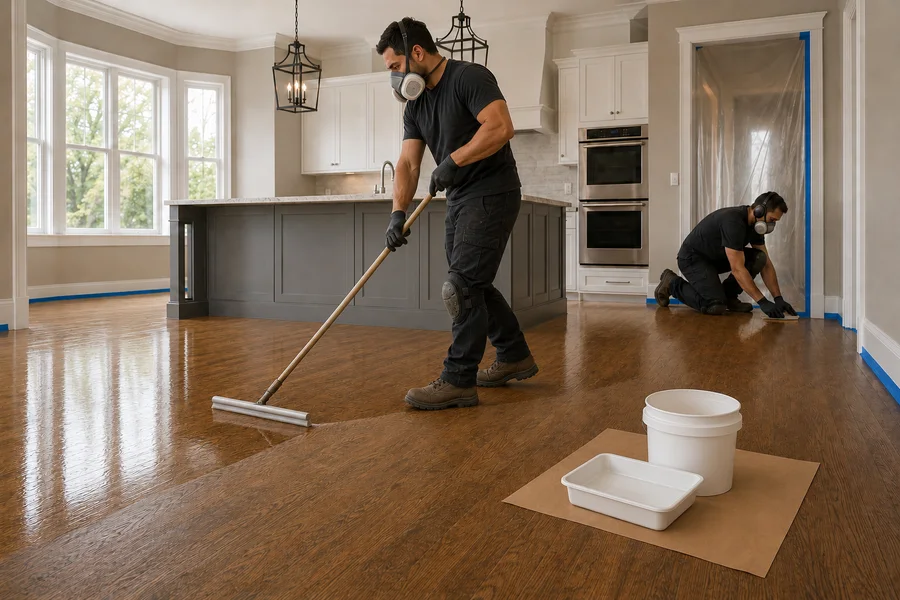
Seal & finish
Protective finish coats are applied with controlled coverage and proper cure time for a smooth, durable final surface.
See the stain on your floor.
Wood species, sanding sequence and room light all affect color. Small samples on a separate board can only tell you so much. We apply a curated group of options directly to the prepared floor, then refine the direction from there. You see the real grain, the real undertone and the way the color changes throughout the day.
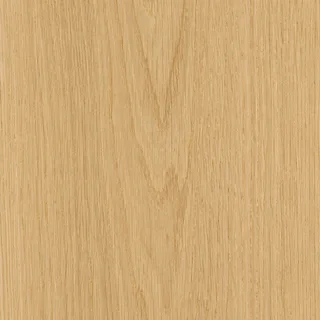 Natural
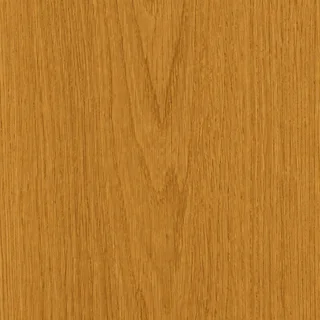 Honey
Honey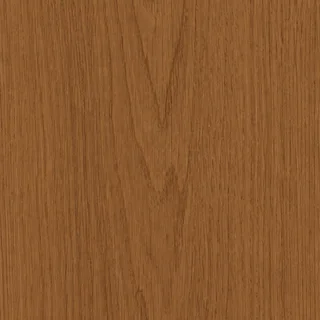 Provincial
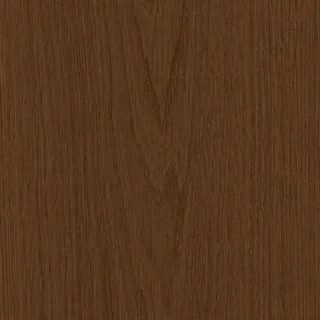 Walnut
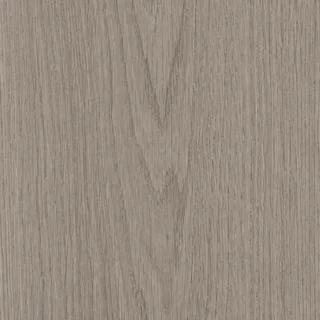 Driftwood
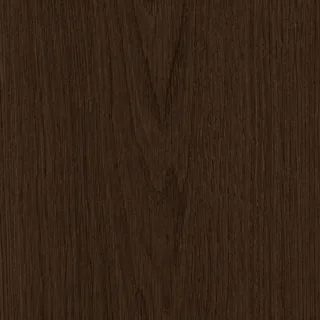 Jacobean
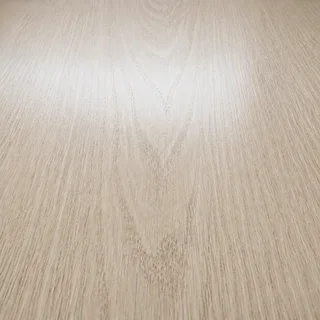
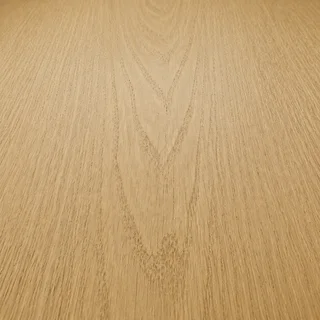
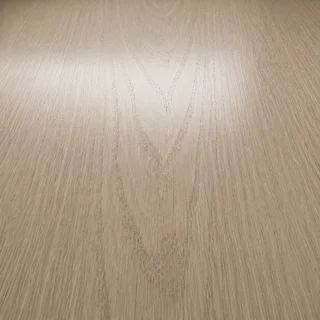
Indicative tones on white oak. Final color is always confirmed with samples on your own floor, in your own light.
The protection you need. The look you want.
There is no universal “best” finish. We recommend the system that fits your schedule, color preference, household and performance expectations.
- DuraSeal Polyurethane
- Varathane Oil-Based
- Minwax for Floors
- Loba EasyFinish
- Bona Mega ONE
- DuraSeal Water-Based
- Rubio Monocoat Oil Plus 2C
- Osmo Polyx-Oil
- Bona Hardwax Oil
- Bona Traffic HD
- Loba 2K Supra AT
- Pallmann Pall-X 98 Gold
Sheen options typically include matte, satin, semi-gloss and gloss. Satin and matte are the most forgiving in active homes.
We start with an honest assessment.
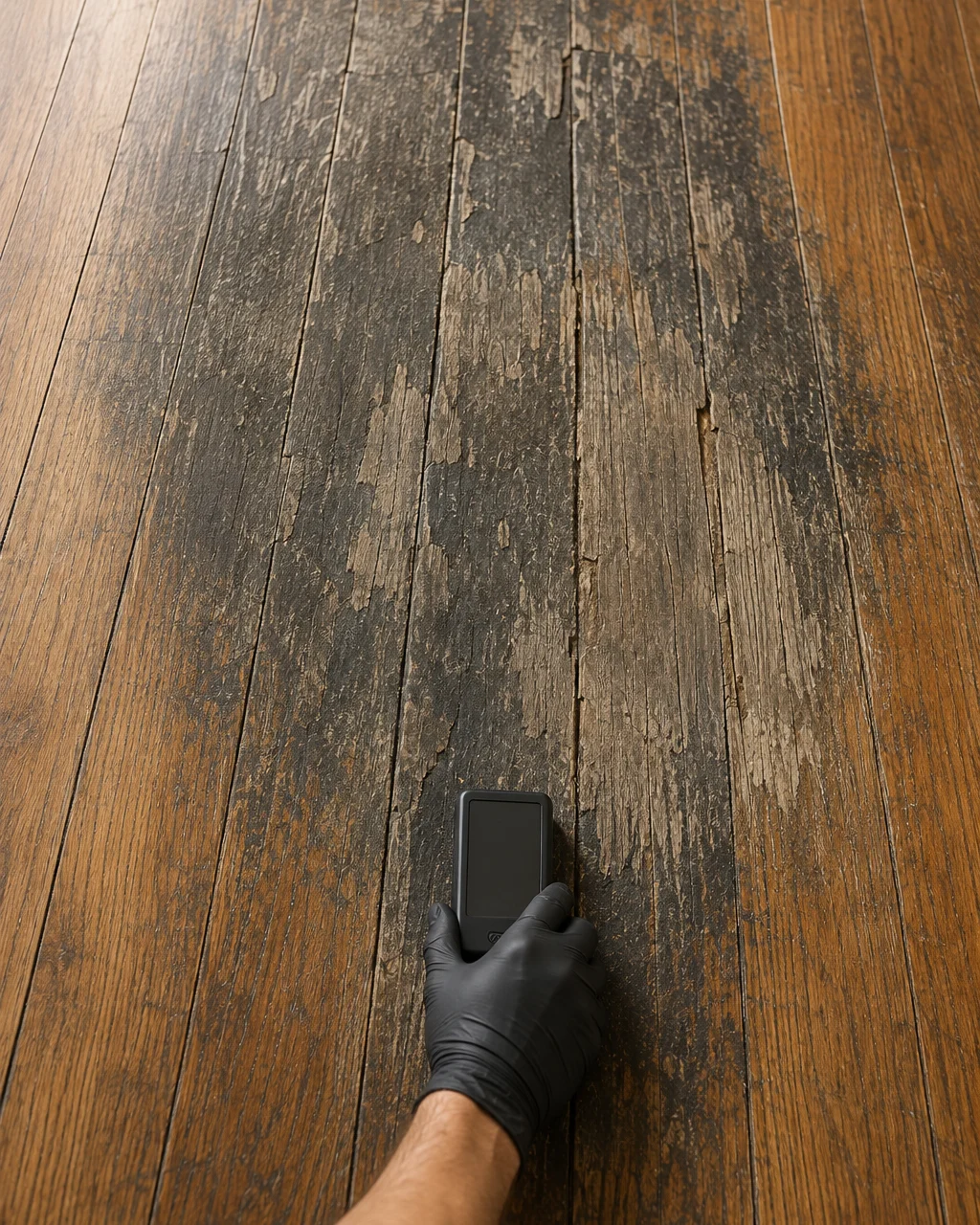
Refinishing is often the best value when the wood itself is sound. But deep pet stains, extensive movement, previous over-sanding or a thin engineered wear layer may require a different solution.
- Worn or dull finish
- Light scratches
- Faded color
- Minor board repairs
- Deep black staining
- Severe cupping
- Loose subfloor
- Thin engineered wear layer
A range — and then we measure.
A hardwood floor is a finite thickness of wood, and every sanding spends some of it. How much is left is the question behind “can this be refinished again?”, and it is not one to answer from a photograph or over the phone.
How many times can a hardwood floor be refinished?
We give a range, but we like to visually inspect, measure and discuss it with the customer rather than answer it blind. Usually we can tell near a threshold, and if necessary a board in an unnoticeable place can be pulled up and inspected.
A ¾-inch solid hardwood floor can typically be sanded and refinished several times over its life — often around four to six full refinishing cycles, sometimes more — allowing a properly maintained floor to last for generations.
Can engineered hardwood be refinished?
Yes, we refinish them if enough veneer layer is present. The NWFA minimum for a factory-finished engineered hardwood floor to be considered refinishable is a 2.5 mm (3/32-inch) wear layer, and the NWFA’s sanding guidance says that, generally, if the remaining wear thickness is less than 2.5 mm, the floor should not be sanded.
Practically, low-end engineered floors may not be able to be refinished at all, some once, some twice if they have a thick wear layer. For Riftline, 3 mm is the threshold where we would comfortably tell a customer this floor can be sanded and refinished, while recognizing that 2.5 mm is the NWFA technical minimum.
Five signs a floor has been refinished as many times as it can be
- Tongue-and-groove is exposed or nearly exposedOn solid hardwood this is probably the clearest sign. If previous sandings have left very little wood above the tongue and groove, another sanding could expose the tongue or the fasteners, or cause boards to split.
- Nail heads or fasteners are showingIf flooring nails or staples are becoming visible across the field of the floor — not just at an isolated repair — it often indicates that the wear surface has been sanded too thin.
- An engineered floor’s wear layer is too thinIf there is not sufficient real-wood veneer remaining above the plywood or core, sanding risks going straight through the hardwood face. Once the substrate is exposed, it cannot be restored by refinishing.
- Widespread splitting, cracking or structural deteriorationIndividual damaged boards can usually be replaced. But if boards throughout the floor are excessively thin, brittle, cracked, badly cupped or otherwise structurally compromised, refinishing is not going to solve the underlying problem.
- Deep damage that extends beyond the sandable surfaceSevere pet stains, water damage, rot, deep gouges or discoloration sometimes penetrate farther than can safely be sanded. You might technically have some wear layer remaining, but not enough to remove the damage.
When the damage is more than wear.
Not all of these are the answers a homeowner hopes for. They are the answers we would give you on the phone, so they may as well be on the page.
Do pet stains come out of a hardwood floor?
There is no honest universal hit rate: light, shallow staining often sands out, but a black patch is unpredictable.
Black usually means repeated moisture has penetrated and chemically discolored the wood, so sanding may improve it without removing it completely.
Once the floor is bare, we reassess and choose between accepting some variation, using a darker color to reduce the contrast, or replacing the affected boards.
Does urine odor go away when the floor is refinished?
Yes — but only when every layer it reached is dealt with; sanding and fresh finish alone are not an odor treatment.
If urine has reached the board joints or subfloor, the affected material may need cleaning, sealing or replacement before refinishing.
That is where a standard sanding job becomes a separately priced repair, with a subfloor specialist brought in if structural work is required.
How long do dogs have to stay off a refinished floor?
Dogs stay off throughout sanding and finishing, then until the final coat reaches the manufacturer’s stated cure time.
Allow around three days for a fast-curing two-part water-based finish; slower systems may need seven days or longer, and cool or humid conditions extend that.
We confirm the exact return date for the product used — especially for larger dogs, whose claws can mark a finish that feels dry but is not fully cured.
Do you ever decline a pet-damaged floor?
Yes — we recommend replacement when there is too little wear layer to sand safely, boards are soft, rotten or loose, or urine damage is widespread into the subfloor.
A few damaged boards can often be replaced individually and the rest refinished; a whole contaminated floor is a different proposition.
If repairing and refinishing will cost close to replacement, or cannot reliably solve the odor, we will say so before taking the job.
Do you take on water damage and standalone repairs?
We would not flatly refuse any of it. Standalone board repairs, burst pipes, appliance leaks, cupping and crowning are taken case by case, because the only way to answer honestly is to look at the floor.
What we do not do ourselves is the remediation and the drying. We have partners we can recommend for that, and if the floor is still wet or the source has not been dealt with, that work comes first. Once it is dry, we can tell you what refinishing will and will not fix.
Can your floor just be recoated?
A screen and recoat abrades the existing finish and seals over it, without sanding down to bare wood. We do offer it, but it suits a narrow window of floors.
A standard screen and recoat will not bond to an aluminum oxide factory finish, which is what most floors prefinished in the last fifteen or twenty years carry. Floors cleaned with wax or residue-leaving products such as Murphy’s Oil Soap or Mop & Glow need a separate removal process first. And because a recoat only deals with the finish and not the wood, it will not fix damage to the boards themselves.
Where a floor fits, we offer it. Where it does not, the honest recommendation is a full sand and refinish — and if the floor is really beat up, sometimes a new floor.
Three floors it does not suit
An aluminum oxide factory finish
Any floor prefinished in roughly the last fifteen or twenty years was likely done with an aluminum oxide finish, and a standard screen and recoat will not bond to it. For those floors the honest recommendation is a full sand and refinish.
Wax or residue-leaving cleaners
Murphy’s Oil Soap, Mop & Glow, Pledge for floors and similar products leave a wax residue behind. Those floors need another whole process on top of the screening to remove the chemicals first.
Any damage to the wood itself
A recoat only deals with the sealer — the sacrificial part of the floor finish — and not the wood. If there is any damage whatsoever to the floor itself, it is not going to help.
And whichever one you are having done, the preparation is the same. All the furniture moves, and plastic goes over all the cabinets. It is a similar amount of preparation either way — which is why the price difference is not extreme. The arithmetic for that is in the next section, because it is the part nobody publishes.
Our numbers, on the page.
Sanding and refinishing runs $4.00 to $6.50 per square foot for a natural or clear finish, with stain adding $1.00 to $1.75 per square foot. A screen and recoat, where a floor qualifies for one, is $3.00 per square foot. Our project minimum is $2,500.
Those figures assume whole-floor projects with the rooms emptied, straight-lay flooring and no major repairs. Stairs are quoted after an inspection. The estimate we give you once we have seen the floor is the real number.
Figures current as of August 2026.
| Sanding and refinishingNatural or clear finish | $4.00–$6.50per sq ft |
|---|---|
| StainAdded to the rate above | + $1.00–$1.75per sq ft |
| Screen and recoatWhere the floor qualifies for one | $3.00per sq ft |
| Project minimumApplies to every job | $2,500total |
| StairsTreads, risers, handrails and spindles | Quotedafter an inspection |
Why “a recoat is half the price” is not a fair comparison
You will see a screen and recoat quoted at roughly half the cost of a full refinish. That comparison is not a fair one, and the reason is worth a minute of your time.
You would never recoat a floor that needed an expensive refinish. A floor that qualifies for a recoat is sound by definition — no damage, no aluminum oxide, no wax — and that same floor, sanded and refinished, sits at the bottom of our range rather than the top. So the honest comparison is $3.00 against about $4.00–$4.50 per square foot: a saving of roughly 25 to 33 percent, not half. On 1,000 square feet, $3,000 against about $4,250.
And why a single-room recoat saves nobody anything
The $2,500 minimum changes who a recoat is for. At $3.00 per square foot it bites at 833 square feet. Below that you pay the minimum, and the effective rate climbs:
| Floor size | What you pay | Effective rate |
|---|---|---|
| 300 sq ft | $2,500 | $8.33 / sq ft |
| 400 sq ft | $2,500 | $6.25 / sq ft |
| 500 sq ft | $2,500 | $5.00 / sq ft |
| 800 sq ft | $2,500 | $3.13 / sq ft |
| 833 sq ft and above | $3.00 / sq ft | $3.00 / sq ft |
At 400 square feet you would pay more per square foot than a large full refinish costs. We would rather tell you that here than have you read “$3.00” and expect $1,200. For a full refinish the minimum bites below 625 square feet, at the $4.00 end of the range.
What moves the number
- Square footage
- Below the $2,500 minimum the effective rate per square foot climbs, and it climbs steeply on small jobs. Above it, the per-square-foot range applies.
- Stain or natural
- A natural or clear finish sits in the base range. Color adds $1.00–$1.75 per square foot on top of it.
- Repairs
- Board replacement, subfloor cleaning or sealing, and pet or water damage are priced separately from the sanding, once we have seen what is there.
- The finish system
- The four systems above differ in material cost and in how long the floor is out of use. Neither is a detail you should find out about after the estimate.
- Stairs
- Quoted after an inspection, separately from the floor. Treads, risers, stringers, handrails and spindles are all different amounts of work, and no two staircases are alike.
- Condition and access
- Previous coatings, wax residue, an aluminum oxide finish, closets, tight rooms and long detailed perimeters all change how much work the floor is.
What the days actually look like.
The work itself takes about three days in most homes. After the final coat you can walk on the floors in a further 12 to 24 hours, and furniture can come back at 48 to 72 hours — light items first, on felt pads.
Pets can return in around three days with a fast-curing two-part water-based finish, and longer with slower systems. Area rugs wait a full week, which is deliberately longer than furniture: a rug seals the surface and traps solvent against a finish that is still off-gassing, where furniture on felt pads lets it breathe.
| Stage | When |
|---|---|
| The work itself | About three days in most homes |
| Before you can walk on the floors | A further 12–24 hours |
| Before furniture returns | 48–72 hours — light items first, on felt pads |
| Before pets return | Around three days for a fast-curing two-part water-based finish; longer for slower systems |
| Before area rugs go back | A full week — deliberately longer than furniture |
Pets come back before area rugs do, and that is deliberate. They are two different risks. A dog is a scratch risk, and it ends once the finish reaches cure. A rug is a moisture risk: it seals the surface and traps solvent against a finish that is still off-gassing, which can cloud, discolor or soften it — so it needs margin beyond cure, not just cure.
Water-based sealers are why these numbers are shorter than they used to be — they cut what a sand and refinish once took. The system you choose still moves them, and the four above list their cure times.
Before the first sanding pass.
We set expectations clearly — from dust control and timing to stain approval and cure schedules.
How long does refinishing take?
Most projects take three to five working days, depending on square footage, repairs, stain selection, finish system and drying conditions.
How much dust should we expect?
Our sanding equipment is connected to professional dust-extraction systems, and we use HEPA air filtration and careful containment. No sanding process is literally dust-free, but the difference from older methods is substantial.
Can you match an existing stain color?
Often, yes. We test custom blends directly on the sanded floor and evaluate them in the home’s natural and artificial light before proceeding.
Do we need to leave the house?
You will need to remain off the floors during application and curing. Whether you need to leave completely depends on the finish system, layout and access to unaffected areas.
Can every hardwood floor be refinished?
Most solid hardwood and many engineered floors can be refinished, but remaining wear-layer thickness, structural condition and prior damage must be evaluated first.
Where does Riftline refinish floors?
Riftline is based in Northern New Jersey, with a second hub in Ocean County, and refinishes floors for homeowners and contractors throughout the state.
Curious how finished floors turn out? See recent projects in the gallery.
Let’s see what can be restored.
Tell us about your home, your existing floor and the look you have in mind. We’ll help you understand the right process.